

Published plans and annual reports 2025–2026: Ministry of Education
Plans for 2025–2026, and results and outcomes of all provincial programs delivered by the Ministry of Education in 2024–2025.
Ministry Overview
The Ministry of Education is responsible for delivering a world-class, high-quality, publicly funded education system from early childhood to Grade 12. The ministry is committed to ensuring Ontario remains a leading education system, both in English and French, with a focus on foundational skills like reading, writing, and math.
2025–26 Strategic Plan
Ministry Programs
Early Years and Child Care Programs
Ontario is committed to ensuring more children have access to a range of high-quality, inclusive, and affordable early years and child care programs. By providing more families with the support they need, we will help build a stronger economy into the future.
On March 28, 2022, Ontario secured a $13.2 billion commitment from Canada that will ensure Ontario’s families benefit from a more affordable and accessible child care system. Under the Canada-wide Early Learning and Child Care (CWELCC) system, the governments of Canada and Ontario have committed to a shared goal of reducing child care fees to an average of $10 per day per child under age six by March 31, 2026.
In the upcoming year, the ministry will continue working with municipalities and the sector to increase licensed child care spaces for children under six in communities that need it most. The ministry will also continue implementing the Child Care Workforce Strategy to support the recruitment and retention of qualified Registered Early Childhood Educators across the province, and work with the federal government to finalize extensions to Ontario’s early years bilateral agreements, including extending the CWELCC agreement beyond March 2026.
In addition to supporting licensed child care, the ministry provides funding for more than 1,200 EarlyON Child and Family Centres in communities across the province, which deliver free, high-quality programs, and resources for families with children from birth to six years old.
Kindergarten to Grade 12
The ministry oversees and provides financial support to the publicly funded elementary and secondary education system, district school boards, school authorities, and agencies. It is the ministry’s expectation that school boards use these funds effectively to support teachers and students in the classroom.
The ministry is responsible for developing curriculum, teaching, and learning resources, including online learning courses and resources. The ministry also sets provincial standards and guidelines for assessment, evaluation, and reporting.
Additionally, the ministry develops policies and programs including eliminating barriers to success and supporting students in their education and career/life planning. This includes job skills programs such as Dual Credit and Specialist High Skills Major (SHSM). The ministry is focused on strategic investments to support student success in core academic skills such as reading, writing, and math. These efforts will help continue Ontario's progress in reading and mathematics in national and international education assessments.
Education Funding
Ontario provides most of the operating revenue for publicly funded school boards through Core Education Funding. For the 2025–26 school year, the Core Education Funding is $30.3 billion, with the average funding per student projected to be $14,561.
The province also provides time-limited funding for education programs and third-party recipients to run temporary special projects and activities like pilot programs. Examples include STEM programs, job skills training, or the creation of learning resources to support curriculum implementation.
Through this funding, school boards and third-party partners are projected to receive up to $420.4 million for time-limited projects to support student learning and well-being through Responsive Education Programs (REP) and Funding to External Partners (FEP).
Accountability and Transparency
While Ontario provides annual funding for the province’s school boards, boards are responsible for the delivery of effective and appropriate educational programs, promoting student achievement, and the prudent management of financial resources. The province is taking a variety of steps to enhance transparency and strengthen accountability in schools to ensure resources are focused on improving student achievement.
On May 29, 2025, Ontario introduced the Supporting Children and Students Act, 2025, that, if passed, would strengthen government oversight, accountability, and transparency in public school boards, postsecondary education, and children’s aid societies.
The proposed enhanced measures would increase government’s oversight of school board finances, governance, and program performance, including giving the Minister of Education the ability to respond quickly to matters of public interest.
The ministry also continues implementation of the Better Schools and Student Outcomes Act, 2023 to improve transparency and accountability for parents and families. In 2024–25, the ministry made significant progress on implementation of the act as outlined in the Annual Report section.
The ministry will also continue taking action to address several cases of financial mismanagement by school boards. Since April 2025, Ontario has appointed a supervisor to oversee the Thames Valley District School Board and launched financial investigations at the Toronto District School Board, Toronto Catholic District School Board, Dufferin-Peel Catholic District School Board, and Ottawa-Carleton District School Board. These financial investigations are an essential part of the government’s ongoing efforts to uphold trust in the province’s publicly funded education system.
The ministry is also requiring the Brant Haldimand Norfolk Catholic District School Board to submit an implementation plan to meet the ministry’s fiscal and governance expectations.
Capital Programs
The ministry continues to invest in building, expanding, and renewing schools to support healthy and safe learning environments, including in growing areas of the province.
Each year, the ministry’s Capital Priorities Program provides funding for major school capital construction projects, including child care spaces in schools that are part of a new build, extension, or retrofit.
The ministry continues to implement the measures first introduced in 2023 to help build schools faster to meet the needs of a growing population. These initiatives include design standardization, streamlined approval requirements, and ensuring better use of current school space to help speed up construction of schools.
For the 2025–26 school year, school renewal funding is increasing to $2 billion to address specific areas of modernization and improvement. This includes the annual investment of $1.4 billion to renew and improve schools, along with new targeted investments to support accessible and healthy learning environments.
Preparing Students for the Jobs of the Future
The ministry is committed to preparing students for successful future careers.
To help ensure that students have the critical life and job skills they need to succeed for the jobs of tomorrow, Ontario is introducing a new apprenticeship pathway beginning in September 2025. Building on the successful Ontario Youth Apprenticeship Program (OYAP), Ontario has created a new stream called Focused Apprenticeship Skills Training (FAST) that will allow students in Grades 11 and 12 to participate in more apprenticeship learning through additional co-operative education credits while completing high school.
The ministry will continue to work with stakeholders to develop and implement job skills programs, like SHSM, Dual Credit, and cooperative education. These programs support the skills and knowledge development needed for Ontario's labour market and the changing economy. Further, the ministry is committed to equipping students with the skills they need for Science, Technology, Engineering, and Mathematics (STEM). The ministry is working to increase the number of students, including females, enrolled in elective courses that lead to preparedness for STEM success.
The Ontario College of Teachers is revising guidance counsellor qualifications to support aspiring guidance counsellors with the qualifications and knowledge to deliver meaningful value to students.
Provincial Code of Conduct
In April 2024, Ontario made changes to the provincial Code of Conduct to reduce distractions caused by student use of cellphones in classrooms and banned vaping in schools to improve the health of children. The ministry will continue to support school boards as they implement their local codes of conduct in relation to these changes.
Mental Health Supports
For the 2025–26 school year, the ministry will provide approximately $124.8 million to support a variety of initiatives and staffing related to student mental health and wellness.
This includes:
- A mental health lead in every school board.
- Frontline mental health workers in secondary schools.
- Professional/paraprofessional staff (e.g. psychologists, social workers, and child/youth workers).
- Support for professional learning and training on mental health.
- Working with community partners to ensure better access through early assessment.
- Clear referral and care pathways between school and community.
Mental health programs support the critical linkage between mental health and well-being and student success, and also provide students with physical health and safety supports. The ministry will also provide a total of $16 million to school boards to support continuity of mental health services in summer 2025.
The Ministry of Education also funds School Mental Health Ontario (SMH-ON), the ministry’s implementation partner for student mental health. SMH-ON develops evidence-based and culturally-responsive mental health resources, programs, and training so there are consistent, high-quality supports across all school boards.
The ministry will also continue to work closely with the Ontario Ministry of Health and other external partners to ensure that all students and their families have access to mental health services.
Alignment of Programs with the Government’s Priorities
The following chart outlines the key government priorities that the ministry directly supports through its range of services and supports.
| Government Priority | Ministry of Education Responsibility |
|---|---|
| Better services for you |
|
| Building Highways, Transit, and Infrastructure Projects |
|
| Working for Workers |
|
| Keeping your costs down |
|
Ministry Financial Information
The following chart depicts the ministry’s investment in 2025–26 to provide Ontarians with excellent and accountable child care and elementary and secondary education, so their futures and that of the province will be characterized by continued prosperity, stability, and growth.
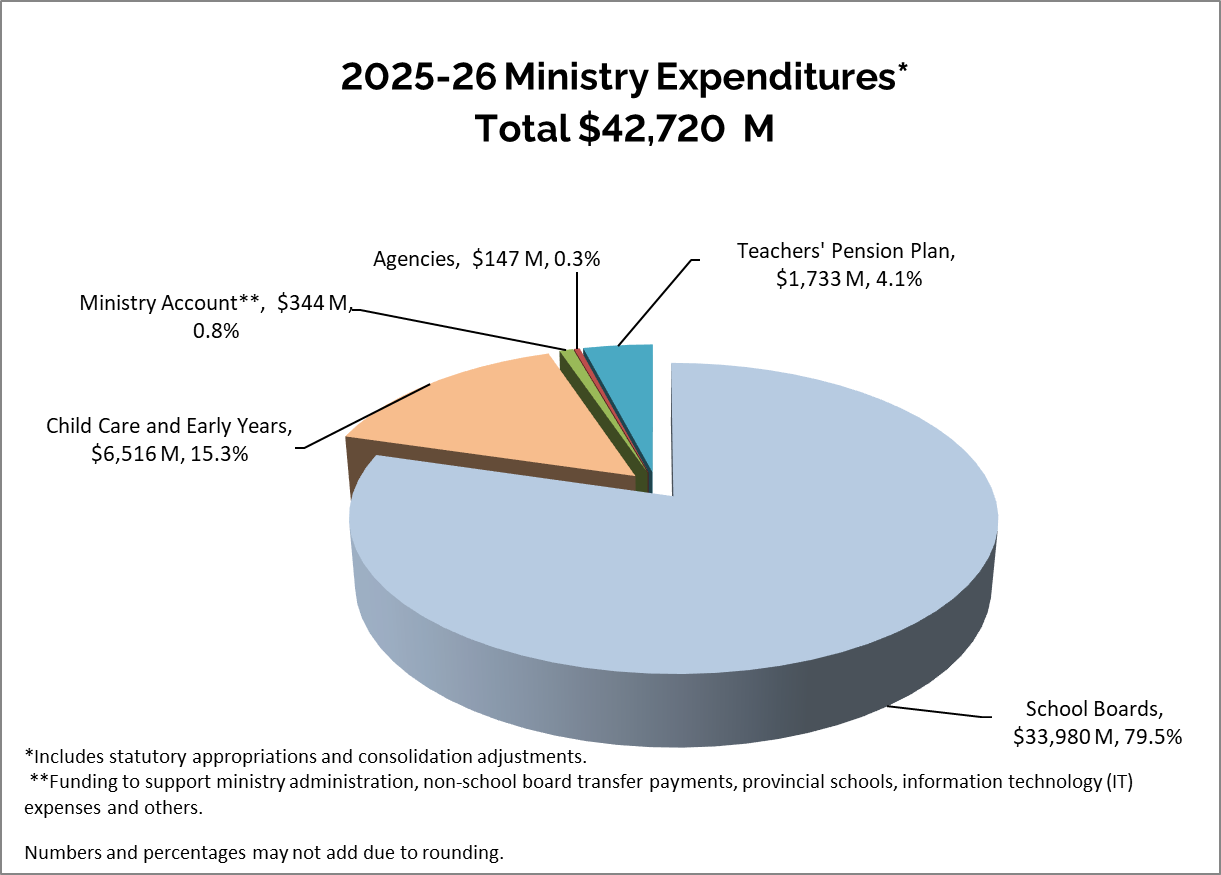
Chart: 2025–26 Ministry Expenditure footnote 1 — Total $42,720 ($M)
School Boards: $33,980
Child Care and Early Years: $6,516
Ministry Account
Agencies: $147
Teachers' Pension Plan: $1,733
Total Ministry Expense: $42,720
Note: Numbers and percentages may not appear to add due to rounding.
| Operating | 40,437.0 |
|---|---|
| Capital | 2,283.5 |
| Total | 42,720.4 |
Total Operating and Capital Summary by Vote
| Votes/Programs | Estimates 2025–26 $ | Change from Estimates 2024–25 $ | % | Estimates 2024–25 $ | Interim 2024–25 $ | Actuals 2023–24 $ |
|---|---|---|---|---|---|---|
| Ministry Administration Program | 31,908,100 | 6,994,800 | 28.1 | 24,913,300 | 27,563,400 | 28,742,902 |
| Elementary and Secondary Education Program | 31,250,132,700 | 1,826,565,000 | 6.2 | 29,423,567,700 | 30,375,457,100 | 31,422,150,286 |
| Child Care and Early Years Programs | 6,290,524,400 | 956,603,700 | 17.9 | 5,333,920,700 | 4,937,072,100 | 4,252,942,281 |
| Total Operating Expense to be Voted | 37,572,565,200 | 2,790,163,500 | 8.0 | 34,782,401,700 | 35,340,092,600 | 35,703,835,469 |
| Statutory Appropriations | 1,733,083,187 | 33,000,000 | 1.9 | 1,700,083,187 | 1,684,083,187 | 1,652,435,009 |
| Ministry Total Operating Expense | 39,305,648,387 | 2,823,163,500 | 7.7 | 36,482,484,887 | 37,024,175,787 | 37,356,270,478 |
| Consolidation Adjustment - Office des télécommunications éducatives de langue française de l'Ontario (TFO) | 2,667,000 | (1,253,000) | (32.0) | 3,920,000 | 5,558,900 | 3,825,583 |
| Consolidation Adjustment - Education Quality and Accountability Office | (219,900) | 440,700 | (66.7) | (660,600) | (2,494,700) | (1,001,407) |
| Consolidation Adjustment - Ontario Educational Communications Authority (TVO) | 15,595,800 | 1,159,700 | 8.0 | 14,436,100 | 15,561,900 | 6,594,709 |
| Consolidation Adjustment - School Board Trust Debt Payment Reclassification | (65,723,500) | N/A | N/A | (65,723,500) | (65,723,500) | (65,836,548) |
| Consolidation Adjustment - Schools | 1,225,629,000 | 380,282,700 | 45.0 | 845,346,300 | 951,837,300 | (447,246,180) |
| Consolidation Adjustment - Colleges | (29,481,600) | (4,060,400) | 16.0 | (25,421,200) | (32,268,800) | (29,246,966) |
| Consolidation Adjustment - Hospitals | (10,946,800) | (465,500) | 4.4 | (10,481,300) | (10,481,300) | (12,413,246) |
| Consolidation Adjustment - Science North | N/A | 1,200,000 | (100.0) | (1,200,000) | (425,000) | (300,000) |
| Consolidation Adjustment - Bill 124 | N/A | N/A | N/A | N/A | N/A | (3,011,520) |
| Consolidation Adjustment - Ontario Science Centre | (1,000,000) | N/A | N/A | (1,000,000) | (1,000,000) | N/A |
| Consolidation Adjustment - General Real Estate Portfolio | (5,204,400) | (91,900) | 1.8 | (5,112,500) | (5,433,500) | (5,194,536) |
| Total Including Consolidation & Other Adjustments | 40,436,963,987 | 3,200,375,800 | 8.6 | 37,236,588,187 | 37,879,307,087 | 36,802,440,367 |
| Votes/Programs | Estimates 2025–26 $ | Change from Estimates 2024–25 $ | % | Estimates 2024–25 $ | Interim 2024–25 $ | Actuals 2023–24 $ |
|---|---|---|---|---|---|---|
| Elementary and Secondary Education Program | 1,000 | N/A | N/A | 1,000 | 1,000 | N/A |
| Total Operating Assets to be Voted | 1,000 | N/A | N/A | 1,000 | 1,000 | N/A |
| Ministry Total Operating Assets | 1,000 | N/A | N/A | 1,000 | 1,000 | N/A |
Total Operating and Capital Summary by Vote (Continued)
| Votes/Programs | Estimates 2025–26 $ | Change from Estimates 2024–25 $ | % | Estimates 2024–25 $ | Interim 2024–25 $ | Actuals 2023–24 $ |
|---|---|---|---|---|---|---|
| Elementary and Secondary Education Program | 3,157,040,100 | 823,442,700 | 35.3 | 2,333,597,400 | 2,494,502,500 | 2,235,050,384 |
| Child Care and Early Years Programs | 257,496,600 | 35,069,000 | 15.8 | 222,427,600 | 187,546,600 | 109,250,671 |
| Total Capital Expense to be Voted | 3,414,536,700 | 858,511,700 | 33.6 | 2,556,025,000 | 2,682,049,100 | 2,344,301,055 |
| Statutory Appropriations | 3,609,200 | 100 | 0.0 | 3,609,100 | 3,609,100 | 3,704,649 |
| Ministry Total Capital Expense | 3,418,145,900 | 858,511,800 | 33.5 | 2,559,634,100 | 2,685,658,200 | 2,348,005,704 |
| Consolidation Adjustment — Office des télécommunications éducatives de langue française de l'Ontario (TFO) | 959,200 | (2,700) | (0.3) | 961,900 | 754,400 | 1,133,972 |
| Consolidation Adjustment — Ontario Educational Communications Authority (TVO) | 909,500 | 115,300 | 14.5 | 794,200 | 624,500 | 488,876 |
| Consolidation Adjustment — Education Quality and Accountability Office | 116,800 | (108,200) | (48.1) | 225,000 | 116,800 | 117,410 |
| Consolidation Adjustment — Schools | (1,128,040,400) | (621,987,100) | 122.9 | (506,053,300) | (515,547,700) | (301,460,329) |
| Consolidated Adjustment — Federal — Flow through Expense Reversal — Ministry | N/A | 5,041,900 | (100.0) | (5,041,900) | (5,041,900) | (60,288,629) |
| Consolidation Adjustment — General Real Estate Portfolio | (8,611,500) | N/A | N/A | (8,611,500) | (8,611,500) | (8,076,261) |
| Total Including Consolidation & Other Adjustments | 2,283,479,500 | 241,571,000 | 11.8 | 2,041,908,500 | 2,157,952,800 | 1,979,920,743 |
| Votes/Programs | Estimates 2025–26 $ | Change from Estimates 2024–25 $ | % | Estimates 2024–25 $ | Interim 2024–25 $ | Actuals 2023–24 $ |
|---|---|---|---|---|---|---|
| Elementary and Secondary Education Program | 438,500 | N/A | N/A | 438,500 | 438,500 | 504,115 |
| Child Care and Early Years Programs | 20,274,500 | 15,565,300 | 330.5 | 4,709,200 | 1,844,400 | N/A |
| Total Capital Assets to be Voted | 20,713,000 | 15,565,300 | 302.4 | 5,147,700 | 2,282,900 | 504,115 |
| Ministry Total Capital Assets | 20,713,000 | 15,565,300 | 302.4 | 5,147,700 | 2,282,900 | 504,115 |
| Ministry Total Operating and Capital Including Consolidation and Other Adjustments (not including Assets) | 42,720,443,487 | 3,441,946,800 | 8.8 | 39,278,496,687 | 40,037,259,887 | 38,782,361,110 |
| Historic Tend Analysis Data | Actuals 2022-23 | Actuals 2023–24 | Estimates 2024–25 | Estimates 2025–26 |
|---|---|---|---|---|
| Ministry Total Operating and Captial Including Consolidation and Other Adjustments (not including Assets) | 36,183,074,845 | 38,782,361,110 | 39,278,496,687 | 42,720,443,487 |
| 7.2% | 1.3% | 8.8% |
For additional financial information, see:
- Expenditure Estimates
- Public Accounts of Ontario: past editions
- 2025 Ontario Budget: A Plan to Protect Ontario
Agencies, Boards, and Commissions (ABCs)
| Agencies, Boards and Commissions | 2025–26 Expenditure Estimates $ | 2024–25 Expenditure Interim $ | 2023–24 Expenditure Actuals $ |
|---|---|---|---|
| Ontario Educational Communications Authority (TVO) — Operating Expense | 54,502,900 | 50,462,900 | 49,106,800 |
| Ontario Educational Communications Authority (TVO) — Capital Expense | 1,536,000 | 1,536,000 | 1,536,000 |
| Office des télécommunications éducatives de langue française de l’Ontario (TFO) — Operating Expense | 30,216,000 | 30,216,000 | 29,839,700 |
| Office des télécommunications éducatives de langue française de l’Ontario (TFO) — Capital Expense | 1,000,000 | 1,000,000 | 1,000,000 |
| Education Quality and Accountability Office | 32,385,200 | 31,486,200 | 26,426,164 |
| Provincial Schools Authority | 81,000 | 59,220 | 37,425 |
| Minister's Advisory Council on Special Education | 35,000 | 7,922 | 5,834 |
Operational Enterprise Agencies
Ontario Educational Communications Authority
The Ontario Educational Communications Authority (TVO) is Ontario’s publicly funded English-language education media organization. TVO’s mandate includes the provision of curriculum-linked digital resources for Ontario students. TVO provides these supports using both traditional television broadcasting and online technologies, such as distance education delivery through the Independent Learning Centre and digital learning resources for students, parents, and teachers through TVO Learn. In addition, TVO is supporting the modernization of online learning through the development of K-12 digital learning resources. TVO is governed by the Ontario Educational Communications Authority Act. Its broadcast licence is governed by the federal Broadcasting Act and the Canadian Radio-television and Telecommunications Commission (CRTC).
Office des télécommunications éducatives de langue française de l’Ontario
The Ontario French-language Educational Communications Authority (TFO) provides high-quality educational and cultural multimedia services and content to the 12 French-language district school boards, the Consortium Centre Jules-Léger, and the broader Franco-Ontarian community. The organization also provides French as a Second Language resources to Ontario’s 60 English-language district school boards. TFO’s programming, support services, and resources contribute to meeting the ministry’s student success priorities. TFO focuses on French-language and culture initiatives that support the early years, literacy and numeracy, digital educational programming, resource development, and Ontario’s Aménagement Linguistique Policy for French-language Education (PAL). TFO operates under the Ontario French-Language Educational Communications Authority Act. Its broadcast license is governed by the federal Broadcasting Act and CRTC licensing.
Operational Service Agencies
Education Quality and Accountability Office (EQAO)
EQAO conducts large-scale census assessments of student achievement: Grade 3 and Grade 6 students in reading, writing, and mathematics, Grade 9 students in mathematics and the Ontario Secondary School Literacy Test/Test provincial de compétences linguistiques (OSSLT/TPCL). Typically administered in Grade 10, the OSSLT/TPCL is the primary means of satisfying the Ontario secondary school literacy graduation requirement. EQAO publishes annual results for each of its assessments in English and French and provides the education system with board, school, and individual student level results. EQAO also supports the coordination and administration of Ontario’s participation in national and international testing such as the Pan-Canadian Assessment Program (PCAP), the Programme for International Student Assessment (PISA), the Trends in International Mathematics and Science Study (TIMSS), and the Progress in International Reading Literacy Study (PIRLS).
EQAO is also responsible for the design, development, and administration of the Math Proficiency Test MPT. Successful completion of the MPT is a requirement for new teachers to be certified to teach by the Ontario College of Teachers. The MPT is part of the ministry’s commitment to ensure teachers are prepared to teach students the fundamentals of mathematics to help build this important academic and life skill.
Provincial Schools Authority
The Provincial Schools Authority (PSA) was established as an agency of the ministry in 1975 under the Provincial Schools Negotiations Act (now the Provincial Schools Authority Act). The PSA is the employer of record for teachers employed in provincially-operated schools. These employees are represented by the Provincial Schools Authority Teachers (PSAT), which is a district of the Ontario Secondary School Teachers’ Federation. The PSA is also the employer of record for principals and vice principals in provincially operated schools. The principals and vice principals are not represented by a union and do not have a collective agreement. The PSA reviews and advises on the terms and conditions of employment for principals and vice principals. The PSA also decides on leave applications, hears grievances, provides input to the settlement of grievances, and ratifies agreements reached between the parties at the central and local negotiations tables.
Advisory Agencies
Minister’s Advisory Council on Special Education
The Minister’s Advisory Council on Special Education advises the Minister on any matters related to the establishment and provision of special education programs and services for students with special education needs.
Ministry organization chart
- Minister, Paul Calandra
- Parliamentary Assistant, Billy Pang
- Parliamentary Assistant, Jess Dixon
- Deputy Minister, Denise Allyson Cole
- Executive Assistant, Anne Sealey
- Director, Communications Branch, Ian Ross
- Director, Legal Services Branch, Amyn Hadibhai
- Director, Community Services I & IT Cluster, Rocco Passero
- Assistant Deputy Minister, Strategic Policy & Planning Division, Rupert Gordon
- Executive Assistant, Lillian Lo
- Director, Strategic Policy & Education Workforce Branch, Rupinder Johal
- Director, Strategic Planning, Coordination & Intergovernmental Affairs Branch, Anna La
- Director, Education Data Branch, Claire Corinthios
- Director, Education Analytics Branch, Nam Bains
- Assistant Deputy Minister, Education Labour & Finance Division, Andrew Davis
- Executive Assistant, Melinda Broy
- Director, Labour Relations Operations Branch, Matthew Beattie
- Director, Labour Relations Operations (Bilingual) Branch, Vacant
- Executive Director, Education Finance Office, Doreen Lamarche
- Director, Education Modelling and Forecasting Branch, Paul Duffy
- Director, Financial Analysis & Accountability Branch, Andrew Yang
- Director, Enrolment, Funding and Labour Policy Branch, Romina Di Pasquale
- Assistant Deputy Minister, Capital & Business Support Division, Didem Proulx
- Executive Assistant, Elena Wagner
- Director, Capital Policy Branch, Andrea Dutton
- Director, Capital Program Branch, Patrizia Del Riccio
- Director, School Board Advanced Supports Branch, Mehul Mehta
- Director, Business Operations Strategic Support Branch, Teuta Dodbiba
- Assistant Deputy Minister, Early Years & Child Care Division, Holly Moran
- Executive Assistant, Robyn Trew
- Director, Early Years Branch, Whitney Wilson
- Director, Child Care Branch, Karen Puhlmann
- Director, Funding Branch, Matthew DesRosiers
- Assistant Deputy Minister, Indigenous Education & Well Being Division, Claudine Munroe
- Executive Assistant, Nicole Beier
- Director, Indigenous Education Office, Nick Bertrand
- Director, Safe Schools Branch, Patrick Byam
- Director, Inclusive Education Priorities & Engagement Branch, Suzanne Gordon
- Director, Mental Health Branch, Shirley Carder
- Assistant Deputy Minister, Student Support & Field Services Division, Giselle Basanta
- Executive Assistant, Shubhina Dayal
- Director, Field Services Branch [Regional Offices: Barrie; London; Ottawa; Sudbury-North Bay; Thunder Bay; Toronto and Area], Andrew Locker
- Executive Director, Provincial & Demonstration Schools Branch, Linda Wall
- Director, Operations & Support Services Branch, Aaron Moffatt
- Assistant Deputy Minister, Student Achievement Division, Yael Ginsler
- Executive Assistant, Hannah McKibbon
- Director, Curriculum Assessment & Student Success Policy Branch, Mishaal Surti
- Director, Skills Development & Apprenticeship Branch, Katie Williams
- Director, Digital and Online Learning Branch, Bill Torrens
- Director, Special Education / Success for All Branch, Charmaine Perera
- Assistant Deputy Minister, French Language Education Division, Didier Pomerleau
- Executive Assistant, Shabbir Auhammud
- Director, French-Language Education, Policies and Programs Branch, Luc Davet
- Director, French-Language Teaching & Learning Branch, Gina Caruano
- Chief Administrative Officer / Assistant Deputy Minister, Corporate Management and Services Division, Louis Dimitracopoulos
- Executive Assistant, Denise Vanek
- Director, Strategic Human Resources Branch, Nadine Ramdial
- Director, Corporate Coordination Branch, Vanessa Bennett
- Director, Corporate Finance and Services Branch, Paul Cleaver
- Director, Transfer Payment and Divisional Finance Branch, Mersad Fard
- Director, Ontario Internal Audit Education Audit Service Team, Anne Piattella
- Assistant Deputy Minister, Education Equity Governance Secretariat, Giselle Basanta
- Executive Assistant, Nicholas Grieco
- Director, Education Equity and Board Governance Branch, Rachel Osborne
- Agencies, Boards, and Commissions
- Advisory Council on Special Education
- Education Quality and Accountability Office
- Education Relations Commission
- Languages of Instruction Commission of Ontario
- Ontario Educational Communications Authority
- Ontario French-Language Educational Communications Authority
- Provincial Schools Authority
2024–25 Annual Report
Highlights of 2024–25 Achievements
Early Years and Child Care Programs
In 2022, Ontario secured a $13.2 billion commitment from Canada to help Ontario families benefit from a high-quality child care system that is accessible, affordable, inclusive, and sustainable. In 2024–25, Ontario achieved key goals to support the implementation of the Canada-wide Early Learning and Child Care (CWELCC) system.
Lowering Fees for Parents of Children Under Age Six
To ensure child care is more affordable for families, the ministry is lowering average fees for children under the age of six in CWELCC-enrolled child care programs through a phased approach. Fee reductions began in spring 2022 as follows:
- Fee reduction of up to 25 per cent retroactive to April 1, 2022.
- Further fee reduction to an average of 50 per cent from 2020 levels, effective December 31, 2022.
- Capping fees at $22 per day, effective January 1, 2025.
- $10-a-day average child care fees by the end of March 2026.
Increasing Child Care Spaces for Children Under Age Six
To increase access, as part of the CWELCC Agreement with Canada, Ontario is committed to creating 86,000 net new licensed child care spaces for children under the age of six (above 2019 levels) by December 31, 2026. Towards this commitment, through Ontario’s Directed Growth approach, over 34,500 net new spaces have been created as of December 31, 2024.
The province continues to work with service system managers to ensure affordable child care is available in these communities through Ontario’s Directed Growth Plan. These additional spaces will enable more families to gain access to high-quality, affordable child care.
Supporting the Early Years Workforce
In November 2023, the ministry announced a strategy to boost the child care workforce. Supported by funding through the CWELCC agreement, Ontario’s plan continues to deliver increased wages to Registered Early Childhood Educators (RECEs) employed by child care operators enrolled in the CWELCC system.
In 2024, the wage floor increased to $23.86 per hour for eligible RECE program staff and to $24.86 per hour for RECE Supervisors and RECE Home Child Care Visitors. The wage floor increased by $1 per hour in 2025 and will again in 2026.
In addition, the plan supports entry into the profession and career development, cuts red tape for employers and provides them with more flexibility in staffing their programs.
Supporting Early Years and Child Care
Effective January 2025, the Ontario government introduced a new, cost-based funding approach for operators in the CWELCC program.
Informed by extensive and inclusive sector consultation over a two-year period, the new funding approach prioritizes a simple, transparent, sustainable, and easy-to-administer system. This is consistent across the province and funds operators based on the true costs of operating child care. The new approach also provides stability and predictability for operators with a reasonable amount in lieu of profit. This ensures child care operators have no risk of financial loss for the care of eligible children while at the same time safeguarding taxpayer dollars.
Funding for Kindergarten to Grade 12
Ontario’s 2024–25 Core Education Funding is projected to be $29.1 billion, which is an increase of $884.1 million in Core Education Funding compared to the year prior, or a 3.1 per cent increase. In addition, Ontario’s students were supported with the highest level of per-student funding in provincial history at $14,061.
The province also undertook a comprehensive review of education funding and recommended changes. The new Core Education Funding model now clearly identifies key funding pillars which support students – from classroom staffing to school board administration. These changes make it easier for parents and guardians to understand how funding is allocated and strengthens school board accountability on how these funds are spent.
In addition to Core Education Funding, Ontario announced $403 million in 2024–25 for Responsive Education Programs and Funding to External Partners. This investment supports high impact initiatives through the province’s collaboration with education partners. This includes more than 150 projects focused on a wide range of themes, including student readiness, STEM, Indigenous education, mental health, literacy, French-language education, supporting vulnerable students, and operations.
Capital Programs
The ministry continues its commitment to support safe and healthy learning environments. For the 2024–25 school year, the province allocated approximately $1.4 billion for school boards to renew and improve school buildings.
Schools and child care centres are an essential piece of the community landscape. Following the government’s introduction of new measures aimed at getting modern schools built faster to meet the pace of growth across the province, the 2023–24 and 2024–25 rounds of the Capital Priorities Program assessed school boards’ shovel-readiness and site readiness to help ensure faster builds.
Starting with the 2023–24 school year renewal allocations, unspent funding expires two years after being allocated to support timely on the ground improvements.
Strengthened accountability measures, standardized project design, and improved collaboration between school boards and municipalities reduce red tape and cut construction timelines. These measures will provide Ontario students with modern learning spaces faster and offer more Ontario families access to school-based child care.
In January 2025, the government announced the second consecutive $1.3 billion investment in the Capital Priorities Program. This funding will support 30 new schools and 15 school expansions across Ontario and create more than 25,000 new student spaces and more than 1,600 licensed child care spaces. Investments are addressing critical needs in growing areas of the province and will provide students with modern learning spaces to help them achieve success.
Funding these local infrastructure projects demonstrates that the government is addressing urgent needs to meet growth related to demographic changes and housing development. Ontario is meeting the needs of growing communities with nearly 250 new schools and expansions underway that will create over 125,000 student spaces in the coming years.
Additionally, school boards can now identify and efficiently dispose of unused surplus properties, which will be considered first for public education needs and then to support provincial priorities such as housing and long-term care.
Curriculum Modernization and Back-to-Basics
In 2024–25 school year, the ministry introduced new curriculum and courses that help prepare students for success and future roles. This included:
- New Grades 9 and 10 technology and skilled trades courses.
- New Grades 9 and 10 business studies courses, with a focus on entrepreneurship.
- A new Grade 9 exploring Canadian geography course.
- New mandatory learning on mental health literacy in the Grade 10 career studies course.
- A new Grade 9 English course for French-language school boards.
In addition, the ministry committed to future curriculum updates, including:
- A back-to-basics Kindergarten curriculum.
- New mandatory Black history learning on the history and contributions of Black Canadians, and new expanded learning on the Holocaust and the Holodomor famine.
- New high school graduation requirements.
Student Achievement
The 2023–24 EQAO results showed overall stability following the pandemic, with literacy achievement remaining high, with some decline in reading and writing scores for Grade 6 and a small decline for Grade 3. Math achievement shows either stability or gains across Grades 3, 6, and 9. Currently, Ontario students are benefiting from over $165 million in investments to support literacy and math.
To help more students succeed in reading and writing, Ontario has modernized the language curriculum with an emphasis on ensuring students at an early age can master foundational literacy skills. This curriculum, which was updated in 2023 for the first time since 2006, includes evidence-based instruction to support reading and writing, critical thinking, and digital media literacy skills.
Students will also benefit from modernized career education programming in their schools with more exposure to the skilled trades and priority economic sectors.
In 2024–25, Ontario invested up to $14 million for career coaching for Grade 9 and 10 students in the publicly funded education system. In partnership with the Ministry of Children, Community and Social Services, this funding will also provide resources and tools to help at-risk youth, individuals in youth justice facilities, and students in other publicly funded educational settings outside of regular classrooms. Through shared agreements with school boards and other existing structures, this career coaching will help young people succeed and become positive members of their communities.
Accountability and Governance
In 2024–25, the government implemented regulatory reforms to strengthen school board governance and accountability by setting a consistent provincewide approach, which included:
- Introducing mandatory trustee code of conduct standards for all school boards to support effective governance and leadership so boards remain focused on the successful delivery of provincial education priorities.
- Establishing a new integrity commissioner-led process for resolving school board trustee code of conduct complaints to ensure that these issues are addressed by experienced and impartial individuals.
- Establishing new sanctions for breaching trustee code of conduct, which are intended to act as a deterrent against future code of conduct breaches.
- Establishing a Directors of Education Performance Appraisal (DPA) process that outlines mandatory elements and a standard process to ensure clear, consistent, and transparent performance appraisals for directors of education across the province.
- Introducing new attendance requirements for trustees’ board meetings and new exceptions that allow trustees to attend board meetings electronically to strengthen accountability, transparency, and public confidence in the education system.
In addition, the ministry is continuing to work with education partners to develop tools and supports for the implementation of the Better Schools and Student Outcomes Act, 2023, including:
- Entering into an agreement with the Ontario Catholic Schools Trustees’ Association (OCSTA), on behalf of the four trustees’ associations, to develop a comprehensive professional learning program for school board trustees and directors of education to be offered in the 2025–26 fiscal year.
- Initiating a procurement for a vendor to develop (recruit, screen, and vet candidates) and maintain a provincial Integrity Commissioner (IC) roster.
- Entering into an agreement with Ontario Education Services Corporation (OESC) to develop mandatory professional training for trustees and directors of education to be offered in the 2025–26 fiscal year.
In November 2024, the Minister of Education met with every school board Chair and Director of Education in Ontario to reiterate the expectations on school board spending and the responsible use of taxpayer dollars. By doing so, the government has set the clear expectation that every dollar goes to improving and supporting student achievement, primarily funding classroom resources, teacher support, and programs that enhance academic outcomes.
As part of the province’s ongoing work to ensure school board accountability, in 2024 the government appointed reviewers to look into expenses at Brant Haldimand Norfolk Catholic District School Board (BHNCDSB), and field trip policies at Toronto District School Board (TDSB).
Supporting French-Language Schools
The ministry is committed to French-language education. Francophone students must have access to a supportive learning environment that allows them to learn and succeed in their own language. The ministry supports a variety of initiatives to strengthen French-language education.
In 2024–25, the government continued to support a range of initiatives as part of a four-year strategy to improve the recruitment and retention of French-language teachers, including:
- The recruitment of internationally trained French-speaking teachers.
- The delivery of ongoing training, coaching, and mentoring services to support the integration and retention of new French-language teachers.
- The implementation of board-led projects that respond to local needs, such as opportunities for professional learning in priority areas.
- The oversight of Consortium Centre Jules-Léger (CCJL), which operates the French-language demonstration and provincial schools serving students who are d/Deaf, blind, and Deafblind or who have severe learning disabilities.
- The development of a reading program for Francophone students, led by the CCJL.
- Ongoing support from the ministry math team to school board math leads to support math improvement efforts through their Math Achievement Action Plan (MAAP).
- A newly revised Grade 9 Français de-streamed course and the Français elementary curriculum, reflecting the needs of the province’s French-speaking students.
- The production of new high-quality online courses and several new French-language teaching resources for use by students, teachers, and parents, which take into account the linguistic and cultural needs of French-speaking minority communities.
- New, more inclusive, French-language terminology for special education that came into force on January 1, 2025.
Additional federal funding supports French-language education and French as a second language instruction, with $130.8 million annually for Ontario from 2024–25 to 2027-28.
With 112,500 students enrolled in 490 elementary and secondary schools in 2023–24, Franco-Ontarians can be proud of the province’s successes in providing quality education to students from their community and in protecting, enhancing, and transmitting the French language and culture.
Graduation Coach Program for Black Students
The ministry is working with several school boards to deliver the Graduation Coach Program for Black Students.
Graduation coaches with lived experience in Ontario’s diverse Black communities offer individual support and mentorship to Black students to help improve their academic achievement and well-being. The program is designed to support systemic change in the public education system to help remove barriers within classrooms and school communities so that students succeed.
This program offers students new opportunities to increase engagement, improve support for achieving academic goals, build connections with community and school resources, and foster confidence and motivation to attend and graduate from school.
The ministry launched the program in 2019 with eight school boards participating. Since then, the program has expanded to 26 school boards.
Indigenous Graduation Coach Program
The Ministry of Education is working with 30 school boards to continue delivering the Indigenous Graduation Coach Program.
The program supports First Nations, Métis, and Inuit students in obtaining an Ontario Secondary School Diploma and successfully transitioning into postsecondary education, training, or labour market opportunities. The program also supports First Nations students as they transition from federally funded/First Nations-operated schools to the provincially funded education system.
Graduation coaches are advocates and mentors for First Nations, Métis, and Inuit students. They also facilitate access and referrals to academic supports and community resources according to student needs.
Mental Health Supports
For 2024–25, Ontario announced an increase in mental health funding in schools to nearly $121 million. Initiatives supported include:
- Helping school boards meet local needs and priorities related to mental health with an investment of almost $54.2 million. This funding supports professional development, student engagement, wellness promotion, and mental health professionals.
- Hiring permanent mental health workers in secondary schools with an investment of $24.9 million.
- Ensuring the continuity of mental health services over the summer months of 2024 with an investment of nearly $14 million.
- Supporting mental health leaders in school boards who collaborate with community partners to provide integrated student mental health services through an investment of almost $11.4 million.
- Investing $8.2 million to support school boards and community partners in delivering mental health and well-being programs, such as to Kids Help Phone to provide prevention counselling and crisis response.
- Supporting School Mental Health Ontario with a $6.5 million investment to provide clinical expertise, resources and practical tools for educators, and the delivery of professional learning to school-based mental health clinicians.
- Supporting emerging student mental health needs by investing almost $1.8 million.
Provincial Code of Conduct
In April 2024, Ontario introduced the most comprehensive plan in Canada to reduce distractions in classrooms and improve the health of children by restricting student use of cellphones and banning vaping in schools.
To help students focus their attention on academic achievement, the ministry revised Policy and Program Memorandum 128, Provincial Code of Conduct and School Board Codes of Conduct. The changes took effect in September 2024 and are designed to combat the negative impact mobile devices, social media, and vaping have on student achievement and well-being.
The new rules require that students in Kindergarten to Grade 6 keep phones on silent and out of sight for the entire school day. For students in Grades 7 to 12, cellphones must be on silent or off and out of sight during class time. Students of all grades may be allowed to use their phones in class only for learning purposes (under the explicit direction of an educator), for health and medical purposes or to support special education needs.
In addition, school boards are required to restrict access to social media websites from all school networks and devices, and report cards must now include comments on students’ distraction levels in class.
The government also strengthened the rules around students caught using or carrying vapes or cigarettes. Students are now required to surrender these products and parents are notified immediately of the situation.
To support the implementation of these changes, the government invested $47.5 million broken down by:
- $30 million to school boards for vape detectors and other security upgrades in schools over three years.
- $15 million to expand programs that offer direct supports for students who are at risk of substance use and addictive behaviours.
- $1.5 million for school boards to work with their parent involvement committees to local prevention campaigns to help deter vaping and cellphone distractions.
- $1 million for School Mental Health Ontario to develop webinars and resources for parents and students to help talk about the adverse effects of vaping and excessive cellphone usage.
Student Well-being
In July 2024, the Ministry announced a new three-year agreement with Shoppers Drug Mart to expand the province’s Menstrual Equity Initiative and provide more than 23 million free menstrual products to students over the next three years.
In addition, Shoppers Drug Mart provided 1,380 dispensers in the first year to facilitate the delivery of these critical health products in schools. Free menstrual products are available to all school boards and school authorities across Ontario, as well as the Consortium Centre Jules-Léger, which distribute products to individual schools based on their local student needs.
Supporting Provincial and Demonstration Schools
Provincial Schools and Demonstration Schools are operated by the Ministry of Education and provide education for elementary and secondary school students who are Deaf or hard of hearing, who are blind or have low vision, who are Deafblind, and/or who have severe learning disabilities.
The ministry is committed to supporting and promoting provincial and demonstration schools in providing quality learning opportunities. It ensures that students have the programming and supports that they need to meet their full potential.
The ministry invests annual capital funding of $8.6 million in modernizing and upgrading provincial and demonstration schools. To support these schools, the ministry introduced newly enhanced standards in student lodging with annual reviews by inspectors to ensure children today and into the future can benefit from specialized supports and programs.
Some key accomplishments include:
- Compliance rates of 94 to 98 per cent, an increase of approximately 10% since the 2023–24 school year, on the most recent annual lodging inspections which confirms a safe, healthy, and nurturing environment for students in lodging.
- Three years of confirmed capital improvements to optimize school and student lodging conditions and align with accessibility, health and safety, and compliance requirements.
- Expanded outreach to attract teachers with the required special qualifications.
- Supporting 847 children and families, an increase of 43% since the 2023–24 school year, with preschool services through the Deaf/Hard of Hearing Resource Services department and approximately 353 referrals and 89 workshops offered through the Blind/Low Vision Resource Services department.
Supporting Special Education
In the 2024–25 school year, the Special Education Fund is estimated to be approximately $3.71 billion, which represents an increase of $154 million over 2023–24.
The province continues to support high impact initiatives through the province’s collaboration with education partners. In 2024–25, the ministry provided the following funding to support students with special education needs including:
- $25.8 million in targeted special education programs, as part of $49.4 million to support vulnerable students.
- This includes $10 million in 2024 Summer Learning for Students with Special Education Needs, to provide transition programs and additional staffing for students with special education needs over the summer months.
- $6.0 million in special education investments, including $4.5 million to the Geneva Centre for Autism to support students with autism.
- Over $95 million in funding to support student literacy programs, student readiness, and interventions to benefit students, including students with special education needs.
Improving Teacher Recruitment
Several jurisdictions in Canada and elsewhere have experienced challenges with the recruitment and retention of qualified teachers.
In Ontario, teacher recruitment and retention is a shared responsibility among a number of partners in the English and French education systems, including school boards, the Ontario College of Teachers, faculties of education, teacher federations, and others. The ministry works with these partners to monitor trends in teacher supply and supports school boards with measures to assist them with their recruitment and retention activities, in both the English and French education systems.
Key measures to date include:
- Ongoing implementation of reduced teacher certification timelines by the Ontario College of Teachers to help get teachers in the classroom quicker.
- Funding to school boards to help them hire additional teachers in core subject areas such as math, reading, and writing.
- A provincial task force on teacher sick leave to explore best practices related to teacher absences and a new policy for school boards on attendance management programs.
- On-going implementation of the four-year French Teacher Recruitment and Retention Strategy.
The ministry will continue to work with MCURES to address the need for qualified teachers by ensuring the public education system has a stable supply of English- and French-language teachers across the province to support and improve student outcomes. It is also working with other provinces and territories and other countries through the Council of Ministers of Education, Canada to better understand this cross-jurisdictional trend and to identify best practices.
Labour Relations
In May 2024, Ontario reached a central agreement with the education workers represented by the Education Workers’ Alliance of Ontario. The province now has central agreements in place with all nine of its teacher and education worker labour partners, as part of negotiations that began in 2022. In addition, in August of 2024, the province reached an agreement with the associations representing principals and vice principals, who are not unionized.
Key Performance Indicators
The ministry is committed to improving the results of all students across Ontario and is focused on the following indicators to track our success. Some key performance indicators include:
Improving Math Scores
The ministry is working to increase the percentage of students who achieve at or above Level 3 on the Education Quality and Accountability Office (EQAO) assessments of mathematics in Grades 3, 6, and 9. The 2023–24 EQAO results show overall stability in Grade 6 and Grade 9 mathematics, with some gains in Grades 3.
| Indicator | Baseline value and date | Trend value and date | Target value and date |
|---|---|---|---|
| Increase the percentage of secondary students performing at or above Level 3 as measured by EQAO Grade 9 assessment of mathematics (English and French-language school systems combined) | 53% (06/2022) | 54% (06/2024) | 56% (06/2026) |
| Indicator | Baseline value and date | Trend value and date | Target value and date |
|---|---|---|---|
| Increase the percentage of secondary students performing at or above Level 3 as measured by EQAO Grade 9 assessment of mathematics (English and French-language school systems combined) | 53% (06/2022) | 54% (06/2024) | 56% (06/2026) |
Equipping Students with STEM Skills
The ministry is committed to equipping students with the skills they need for science, technology, engineering, and mathematics (STEM). The ministry tracks the percentage of students enrolled in at least one Grade 12 mathematics or Grade 11 or 12 science course. The ministry also tracks this metric for female students. The intended outcome is to increase the number of students, including females, enrolled in elective courses that lead to preparedness for STEM success. During the 2022-23 school year, 58.9 per cent of Grade 11 and 12 students were enrolled in at least one Grade 12 mathematics or Grade 11 or 12 science course.
During the same school year, 59.3 per cent of Grade 11 and 12 female students were enrolled in at least one Grade 12 mathematics or Grade 11 or 12 science course. (Note: students who are enrolled in more than one of these courses are only counted once), based on 2022-23 preliminary Ontario School Information System (OnSIS) data as of September 2024).
| Indicator | Baseline value and date | Trend value and date | Target value and date |
|---|---|---|---|
| Percentage of students enrolled in at least one Grade 12 mathematics or Grade 11 or 12 science course. | 60.5% (06/2021) | 58.9% (06/2023) | 61% (06/2026) |
| Percentage of female students enrolled in at least one Grade 12 mathematics or Grade 11 or 12 science course | 61.6% (06/2021) | 59.3% (06/2023) | 62% (06/2026) |
Preparing Students for Job Skills and Employment
The ministry is committed to helping students develop and acquire the skills and knowledge needed to participate in Ontario's labour market and the changing economy by measuring targeted enrolment in job skills programs and related courses. The ministry will maintain, and where possible, increase participation in the number of unique students enrolled in job skills programs, including Specialist High Skills Majors (SHSM), Dual Credit, Ontario Youth Apprenticeship Program (OYAP), and in Technological Education and Cooperative Education courses.
During the 2022-23 school year, 54 per cent of Grade 11 and 12 students were enrolled in any one of: SHSM, Dual Credit, OYAP, at least one Grade 11 or 12 Technological Education course, or at least two Cooperative Education courses. (Note: students who are enrolled in more than one of these programs/courses are only counted once, based on 2022-23 preliminary OnSIS data as of September 2024).
| Indicator | Baseline value and date | Trend value and date | Target value and date |
|---|---|---|---|
| Maintain, and where possible, increase participation in the following programs and key subject areas to ensure individuals have the required skills and knowledge to participate in Ontario's labour market and the changing economy: SHSM, Dual Credits, OYAP, Technological Education, Cooperative Education. | 47% (06/2021) | 54% (06/2023) | 55% (06/2026) |
Ministry Interim Expenditures 2024–25
| Operating | 37,879.3 |
|---|---|
| Capital | 2,158.0 |
| Total | 40,037.3 |
| Staff Strength | 1,673.8 |
Footnotes
- footnote[1] Back to paragraph Includes statutory appropriations and consolidation adjustments.
- footnote[2] Back to paragraph Funding to support ministry adminitration, non-school board transfer payments, provincial schools, information technology (IT) expenses and others.
- footnote[3] Back to paragraph Includes statutory appropriations and consolidation adjustments. This number is based on changes in ministry organization and/or program structure as approved in the 2025 Ontario Budget.
- footnote[4] Back to paragraph Estimates, Interim and Actuals for prior fiscal years are re-stated to reflect any changes in ministry organization and/or program structure as approved in the 2025 Ontario Budget. Interim projections reflect the numbers presented in the 2025 Ontario Budget.
- footnote[5] Back to paragraph Estimates and Actuals for prior fiscal years are re-stated to reflect any changes in ministry organization and/or program structure as approved in the 2025 Ontario Budget.
- footnote[6] Back to paragraph Not including consolidation adjustments.
- footnote[7] Back to paragraph Data collected annually through the Education Quality and Accountability Office (EQAO) in Grade 9
- footnote[8] Back to paragraph Data collected annually through the Ontario School Information System (OnSIS)
- footnote[9] Back to paragraph Interim projections reflect the numbers presented in the 2025 Ontario Budget
- footnote[10] Back to paragraph Includes statutory appropriations and consolidation adjustments. This number is based on restated Interim which reflect any changes in ministry organization and/or program structure as approved in the 2025 Ontario Budget. The restated financials reflect the transfer of the Community Services I&IT Cluster from EDU to MPBSDP effective April 1, 2025.
-
footnote[11]
Back to paragraph
Ontario Public Service Full-Time Equivalent positions.
Consistent with the restated financials in this table, staff strength would be reduced to 1,391.8 positions, as 282 FTEs were moved from EDU to MPBSDP related to the transfer of the Community Services I&IT Cluster effective April 1, 2025.