

Solid biofuel densification for energy generation
Learn about the density properties of solid biofuels and potential densification technologies to increase energy efficiency. This technical information is for Ontario producers.
ISSN 1198-712X, Published March 2026
Introduction
Solid biofuels are a potential source of renewable energy. One of the major barriers to their widespread use is they have a lower energy content than traditional fossil fuels, which means more fuel is required to get the same amount of energy. When combined — low energy content with low density — the volume of solid biofuels handled increases enormously. Compaction or densification is one way to increase the energy density and overcome handling and storage difficulties, especially for sources of agricultural-based solid biofuels. This fact sheet examines the density properties of solid biofuels and potential densification technologies.
Bulk density
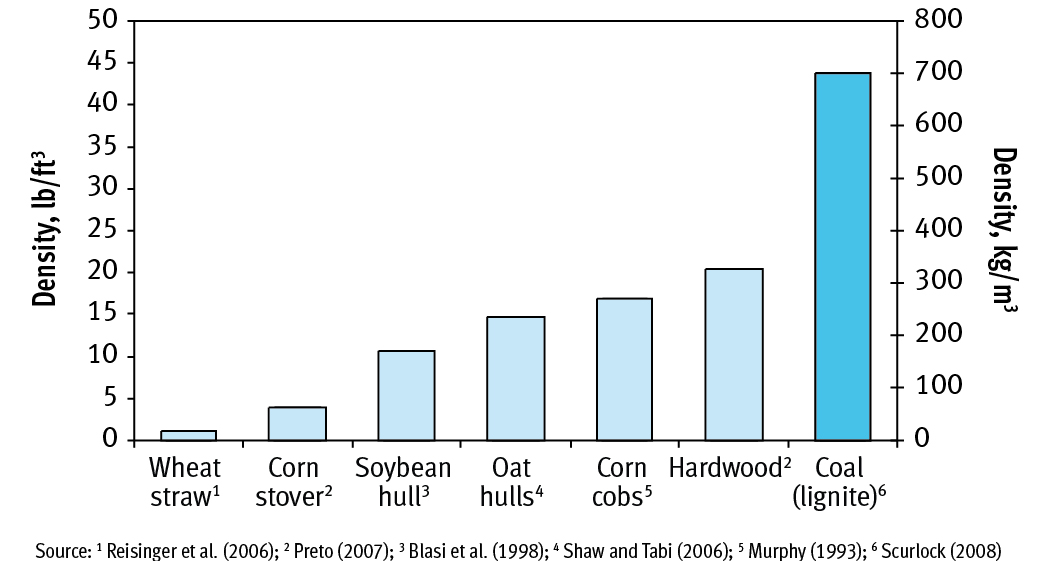
Bulk density is defined as the weight per unit volume of a material, expressed in kilograms per cubic metre (kg/m3) or pounds per cubic foot (lb/ft3). Most agricultural residues have low bulk densities, as shown in Figure 1.
Accessible description of Figure 1
For example, the bulk density of loose wheat straw is approximately 18 kg/m3 (1.1 lb/ft3), in comparison to coal at 700 kg/m3 (44 lb/ft3). For this reason, it is only economically feasible to transport unprocessed solid biofuels less than approximately 200 km
Energy density
Energy density is a term used to describe the amount of energy stored per unit volume, often expressed in MJ/m3 or BTU/ft3.
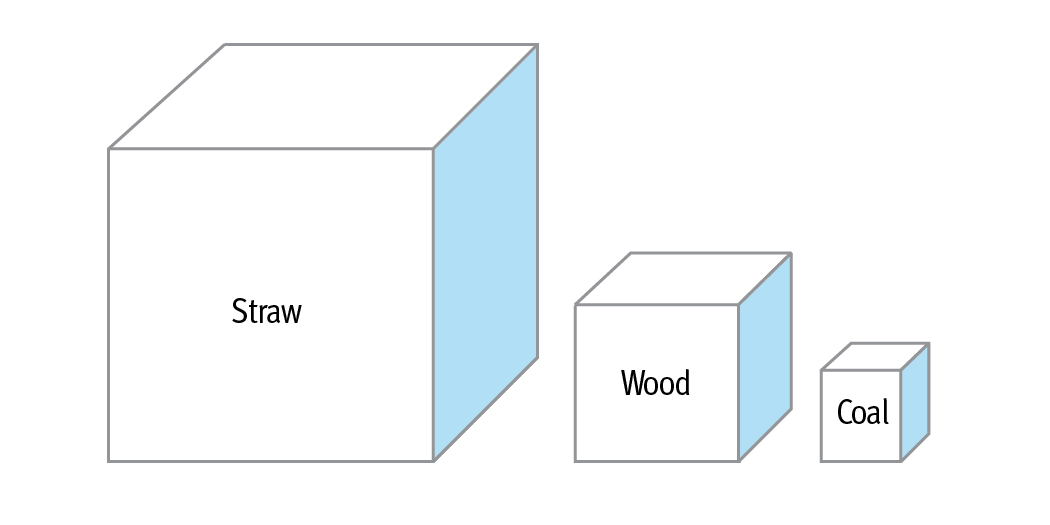
Figure 2 is a graphical representation of common volume ratios for unprocessed material, with the cubes representing the volume of material required for equal energy, 16:4:1 for straw to wood to coal.
Accessible description of Figure 2
Why densify
The low density of solid biofuels poses a challenge for the handling, transportation, storage and combustion processes. These problems may be addressed through densification, a process that produces either liquid or solid biofuel with denser and more uniform properties than the raw biomass.
The main advantages of solid biofuel densification for combustion are:
- simplified mechanical handling and feeding
- uniform combustion in boilers
- reduced dust production
- reduced possibility of spontaneous combustion in storage
- simplified storage and handling infrastructure, lowering capital requirements at the combustion plant
- reduced cost of transportation due to increased energy density
The major disadvantage to solid biofuel densification technologies is the high cost associated with some of the densification processes.
Pre-treatment of solid biofuel
Prior to solid biofuel densification, pre-treatments may be required to optimize the energy content and bulk density of the product.
Pre-treatment can include:
- chop length/grinding
- drying to required moisture content
- application of a binding agent
- steaming
- torrefaction
Chop length/grinding
Each densification process requires specific chop length and/or grinding to achieve:
- lower energy use in the densification process
- denser products
- a decrease in breakage of the outcome product
footnote 2
Drying
Low moisture results in improved density and durability of the biofuel
Addition of a binding agent
The density and durability of densified solid biofuel are influenced by the natural binding agents of the material. The binding capacity increases with a higher protein and starch content
Steaming
The addition of steam prior to densification can aid in the release and activation of natural binders present in the solid biofuel, such as lignin.
Torrefaction
Torrefaction is a version of pyrolysis processes that involve the heating of solid biofuel in the absence of oxygen and air. Torrefaction is a pre-treatment process used to improve the properties of pellets. It can also be used as a stand-alone technique to improve the properties of solid biofuel. Torrefaction is a mild version of slow pyrolysis where the goal is to dry, embrittle and waterproof the solid biofuel. This is accomplished by heating the solid biofuel in an inert environment at temperatures of 280–320°C.
Techniques for solid biofuel densification
Solid biofuel is densified via 2 main processes: mechanical densification and pyrolysis. Mechanical densification involves applying pressure to mechanically densify the material. Pyrolysis involves heating the solid biofuel in the absence of oxygen. In general, lower temperatures at longer processing times (such as slow pyrolysis) favour solid (charcoal) production. Medium temperatures (400–500°C) at very short times (1–2 seconds), known as fast pyrolysis, favour liquid biofuel or bio-oil production.
The method of densification depends on the type of residues and the local situation. The various technologies are used to increase the solid biofuel energy density and/or mould the fuel into a homogeneous size and shape.
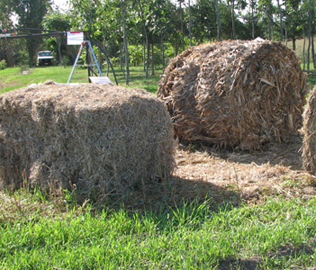
Mechanical densification — bales are a traditional method of densification commonly used to harvest crops. A bale is formed using farm machinery (called a baler) that compresses the chop. Bales can be square, rectangular or round, depending on the type of baler used. The dimensions of round bales range from 1.2 m × 1.5 m (4 ft × 5 ft) to 1.5 m × 1.5 m (5 ft × 5 ft). Large rectangular bales typically measure 0.9 m × 0.9 m × 1.8 m (3 ft × 3 ft × 6 ft) in length. Round bales are less expensive to produce, however, large square bales are usually denser and easier to handle and transport.
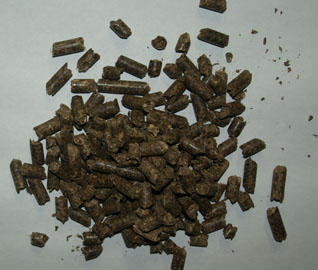
Mechanical densification — pellets are very high in density. They are easier to handle than other densified solid biofuel products, since infrastructure for grain handling is used for pellets. Pellets are formed by an extrusion process, using a piston press, where finely ground solid biofuel material is forced through round or square cross-sectional dies and cut to a desired length. The standard shape of a solid biofuel pellet is a cylinder, having a length smaller than 38 mm (1.5 in.) and a diameter around 7 mm (0.3 in.). Although uniform in shape, pellets are easily broken during handling. Different grades of pellets vary in energy and ash content.
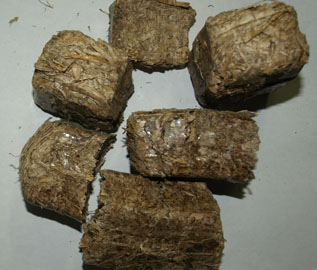
Mechanical densification — cubes are larger pellets, usually square in shape. Cubes are less dense than pellets. Cube sizes range from 13–38 mm (0.5–1.5 in.) in cross section, with a length ranging 25–102 mm (1–4 in.). The process involves compressing chopped solid biofuel with a heavy press wheel, followed by forcing the solid biofuel through dies to produce cubes.
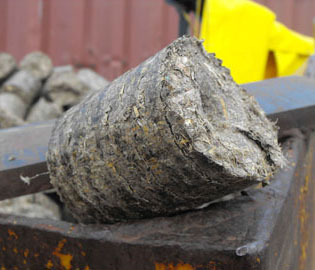
Mechanical densification — briquettes are similar to pellets but differ in size. Briquettes have a diameter of 25 mm (1 in.) or greater and are formed when solid biofuel is punched, using a piston press, into a die under high pressure. Alternatively, a process referred to as screw extrusion can be used. In screw extrusion, the solid biofuel is extruded by a screw through a heated die. Solid biofuel densified through screw extrusion has higher storability and energy density properties compared to solid biofuel produced by piston press.
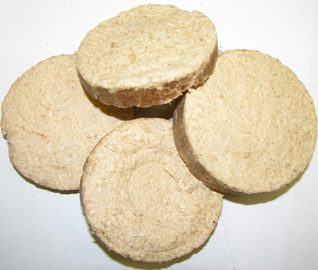
Mechanical densification — pucks are similar in appearance to a hockey puck, with a 75 mm (3 in.) diameter. They are produced using a briquetter and are resilient to moisture. Pucks have a similar density as pellets, with the advantage that they require lower production costs compared to pelletization.
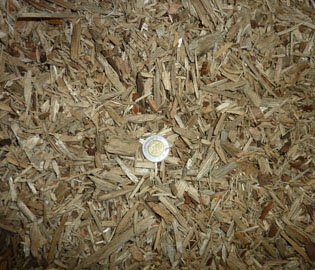
Mechanical densification — wood chips are used in many operations, from household appliances to large-scale power plants. Woodchips for boilers range in size, 5–50 mm (0.2–2 in.) in length. Woodchips are made with a woodchipper. In terms of fuel, woodchips are comparable in cost to coal.
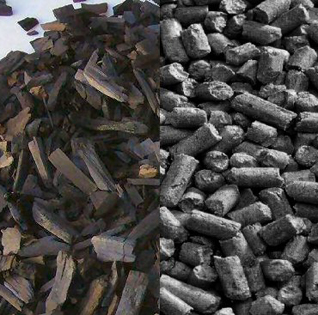
Pyrolysis — torrefaction is carried out by heating solid biofuel in an inert atmosphere at temperatures of 280–320°C for a few minutes. The torrefied fuel shows improved grindability properties. Torrefied solid biofuel has hydrophobic properties (repels water), making it resistant to biological attack and moisture, thereby facilitating its storage. The process requires little energy input since some of the volatile gases liberated during heating are combusted, generating 80% of the heat required for torrefaction. Torrefied solid biofuel is densified into pellets or briquettes, further increasing the density of the material and improving its hydrophobic properties.
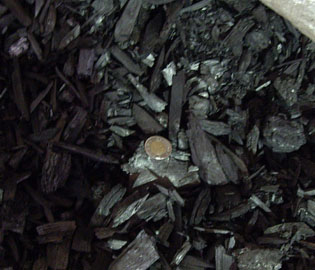
Pyrolysis — slow pyrolysis involves heating biomass to 350–500°C in the absence of oxygen and air for extended periods of time (typically 0.5–2 hours). The principal product is a solid (charcoal) that retains 30–40% of the original energy from the raw solid biofuel. The energy density can be increased, and thus charcoal is a suitable fuel for commercial uses similar to torrified solid biofuel, residential use, such as barbecues, and as a potential soil improvement additive known as bio-char.
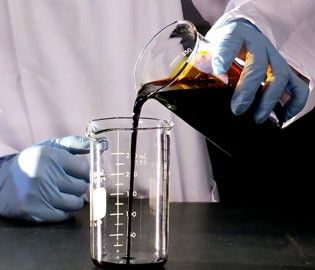
Pyrolysis — fast pyrolysis involves processing solid biofuel at temperatures of up to 450–500°C for 1–2 seconds. The process yields up to 75% bio-oil and 10–15% charcoal. Bio-oil is a higher-energy density fuel, and its handling properties are simplified, as the fuel is a liquid that is pumped and stored in tanks. Precautions are necessary, as bio-oils are very acidic, have a pungent odour and are prone to separation/settling. Substitute bio-oil for fossil fuel, heavy and middle oils. Research is under way to explore conversion to lighter oils such as diesel and gasoline.
Conversion
| From | To | Multiply by |
|---|---|---|
| mm | inch | 0.0394 |
| inch | ft | 0.0833 |
| kg/m3 | lb/ft3 | 0.0624 |
| MJ/kg | BTU/lb | 430 |
Through various densification technologies, raw solid biofuel is compressed to densities in the order of 7–10 times its original bulk density
| Form of solid biofuel | Shape and size characteristics | Density (lb/ft3) | Density (kg/m3) | Energy density (GJ/m3) |
|---|---|---|---|---|
| Traditional method Baled agricultural residues | Large round, Soft core 1.2 × 1.2, 1.2 × 1.5, 1.5 × 1.2, 1.8 × 1.5 m (4 × 4, 4 × 5, 5 × 4, 6 × 5 ft) diameter × width | 10–12 | 160–190 | 2.8–3.4 |
| Traditional method Baled agricultural residues | Large round, Hard core 1.2 × 1.2, 1.2 × 1.5, 1.5 × 1.2, 1.8 × 1.5 m (4 × 4, 4 × 5, 5 × 4, 6 × 5 ft) diameter × width | 12–15 | 190–240 | 3.4–4.5 |
| Traditional method Baled agricultural residues | Large/Mid-size square 0.6 × 0.9 × 2.4 m (2 × 3 × 8 ft) 0.9 × 1.2 × 2.4 m (3 × 4 × 8 ft) | 13–16 | 210–255 | 3.7–4.7 |
| Non-traditional method Ground forestry residues | 1.5 mm (0.06 in.) pack fill with tapping | 13 | 200 | 3.6 |
| Non-traditional method Briquettes | 32 mm (1.3 in.) diameter × 25 mm (1 in.) thick | 22 | 350 | 6.4 |
| Non-traditional method Cubes | 33 mm (1.3 in.) × 33 mm (1.3 in.) cross section | 25 | 400 | 7.3 |
| Non-traditional method Pucks | 75 mm (3 in.) diameter × 12 mm (0.5 in.) thick | 30–40 | 480–640 | 8.6–12.0 |
| Non-traditional method Pellets | 6.24 mm (0.2 in.) diameter | 35–45 | 550–700 | 9.8–14.0 |
| Non-traditional method orrefied pellets | 6.24 mm (0.2 in.) diameter | 50 | 800 | 15.0 |
| Non-traditional method Bio-oil | liquid | 75 | 1,200 | 20 |
Note: Loose solid biofuel has a density of 3.5–5 lb/ft3 or 60–80 kg/m3.
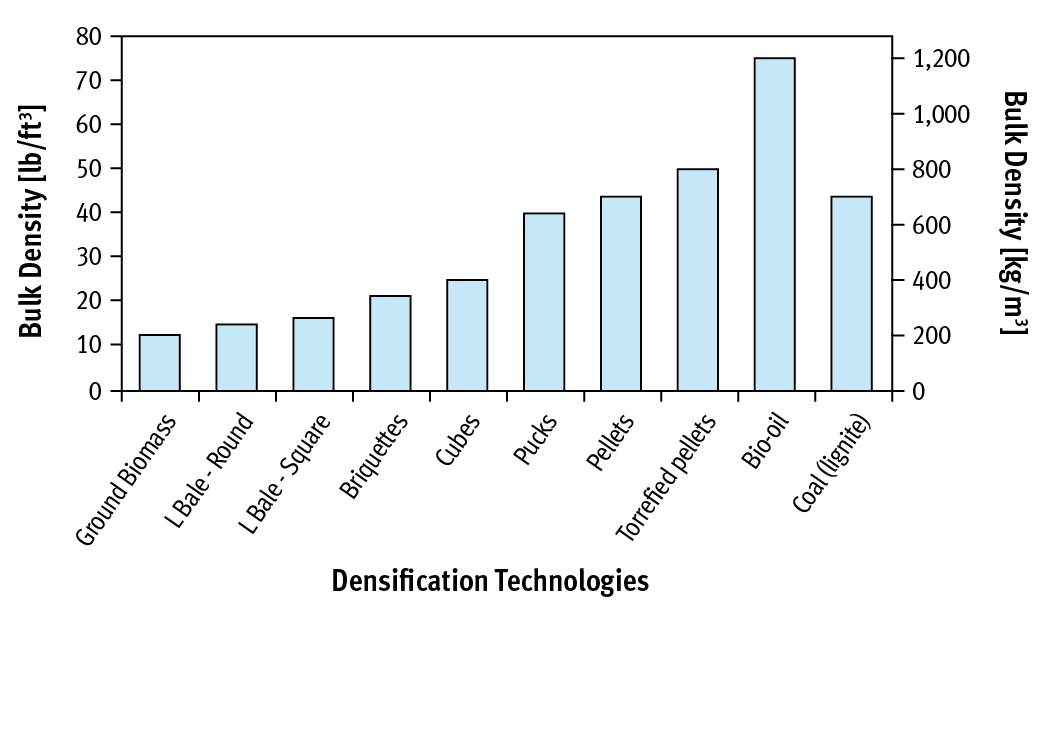
Accessible description of Figure 3
Solid biofuel densification cost
Pyrolyzed materials are the most expensive to densify, with cubes, pucks, briquettes and woodchips being less expensive.
Factors affecting the cost of densification technologies include
- size of densification plant (tonnes/year)
- operating time (hours/day)
- equipment cost
- personnel cost
- raw material costs
Densification technologies result in higher energy inputs and increased costs. A portion of the cost is recuperated by the lower handling, storage and transportation costs, and better operability of the boiler and combustion process. Some densification technologies mentioned are commercially available, while others are emerging.
Conclusion
The low-energy density of solid biofuel by volume, in comparison with fossil fuels, results in higher handling, storage and transportation costs. Consequently, solid biofuel is most economically feasible when used close to the source. The cost of transportation is reduced through densification technologies. Densification technologies produce a homogeneous product with a higher energy density than that of the original raw material, at the expense of new capital and operating costs.
Author credits
This fact sheet was updated by Terrence Sauvé, P. Eng., farmstead optimization and safety engineer, Ministry of Agriculture, Food and Agribusiness (OMAFA). It was originally written by Steve Clarke, P. Eng., engineer, energy and crop engineering specialist, OMAFA, Kemptville, and Fernando Preto, Bioenergy Systems, CanmetENERGY.
Accessible image descriptions
Figure 1. Typical bulk densities of unprocessed solid biofuels and fossil fuels.
Figure 1 is a bar chart comparing the bulk density of several biomass materials in pounds per cubic foot and kilograms per cubic metre. Materials shown from left to right are: wheat straw, corn stover, soybean hulls, oat hulls, corn cobs, hardwood, and lignite coal. The bars increase in height across the chart, with lignite coal having the highest density (around 700 kilograms per cubic metre) and wheat straw the lowest. Source citations are listed below the chart.
Figure 2. Typical bulk densities of unprocessed solid biofuels and fossil fuels.
Figure 2 is a drawing of three boxes side by side. The largest box has the word straw written across the centre, followed by a smaller middle box with the word wood written across the centre and a small box with the word coal written across the centre. The diagram shows the equivalent energy content by volume of unprocessed materials.
Figure 3. Resulting bulk densities of solid biofuel for selected densification technologies.
Figure 3 is a bar chart comparing the bulk density of various biomass densification technologies in pounds per cubic foot and kilograms per cubic metre. Categories shown from left to right are: ground biomass, large round bale, large square bale, briquettes, cubes, wafers, pellets, torrefied pellets, bio‑oil, and lignite coal. Bulk density increases across the chart, with lignite coal having the highest density (over 1,000 kilograms per cubic metre).
Footnotes
- footnote[1] Back to paragraph Preto, F. (2007). Strategies and techniques for combustion of agricultural biomass fuels. Growing the Margins Energy Conference.
- footnote[2] Back to paragraph Dobie, J.B. (1959). Engineering appraisal of hay pelleting. Agricultural Engineering, 40(2), 72–76.
- footnote[3] Back to paragraph Shaw, M., and Tabil, L. (2007). Compression and relaxation characteristics of selected biomass grinds. ASABE Paper No. 076183. St. Joseph, Mich.: ASABE.
- footnote[4] Back to paragraph Kaliyan, N., Morey, R.V. (2009). Factors affecting strength and durability of densified biomass products. Biomass Bioenergy 33 (3), 337–359.
- footnote[5] Back to paragraph Tabil, L.G., Sokhansani, S., and Tyler, R.T. (1997). Performance of different binders during alfalfa pelleting. Canadian Agricultural Engineering, 39(1), 17–23.
- footnote[6] Back to paragraph 4. Kaliyan, N., Morey, V. (2006). Densification characteristics of corn stover and switchgrass. ASABE Paper No. 066174. St. Joseph, Mich.: ASABE.
- footnote[7] Back to paragraph Demirbas, K., Sahin-Demirba, K.A. (2009). Compacting of biomass for energy densification. Energy Sources, Part A: Recovery, Utilization and Environmental Effects. 1556–7230, 31(12), 1063–1068.
- footnote[8] Back to paragraph Sokhansanj, S., and Fenton, J. (2006). Cost benefit of biomass supply and pre-prossessing. Biocap Research Integration Program Synthesis Paper.
- footnote[9] Back to paragraph Winkler, W. (2010). Briquetting Systems. New York.
- footnote[10] Back to paragraph Kiel, J. (2007). Torrefaction for biomass upgrading into commodity fuels. Presentation to IEA Bioenergy Task 32 Workshop “Fuel storage, handling and preparation and system analysis for biomass combustion technologies.” Berlin Germany, May 7, 2007.
- footnote[11] Back to paragraph Mani, S., Sokhansanj, S., Bi, X., and Turhollow, A. (2006). Economics of producing fuel pellets from biomass. Applied Engineering in Agriculture, 22(3), 421–26.