

Managing noise nuisance during on-farm grain handling
Learn about common sources of noise during grain handling and drying operations, and strategies to reduce noise nuisances. This technical information is for Ontario producers.
Introduction
While rural areas are generally quieter than urban regions, farming activities can generate significant noise from farm equipment. Specifically, grain dryers that are operating for extended periods of time produce high sound levels. During the peak operating season after grain harvest (September to December), these dryers may run nonstop 24 hours a day for several weeks. The prolonged use of grain dryers can increase sound levels in the local vicinity and impact neighbours. Therefore, it is crucial to minimize overall sound emissions to foster positive relationships within the community.
This fact sheet describes common sources of sound emissions during grain handling and drying operations, and strategies to reduce noise nuisances.
Difference between sound and noise
Sound is a mechanical vibration that travels through a medium (such as air or water) and is recognized by a person or a sound meter. Think of sound as changes in air pressure moving around us that we hear. These changes are measured using decibels (dB). The softest sound the human ear can detect is 0 dB, essentially the starting point for sound perception. In contrast, a loud sound that causes discomfort or damage to someone’s hearing is approximately 120 dB. Table 1 shows approximate sound levels of common activities. When we talk about how loud or soft a sound is, we use decibels to express its intensity. A-weighted decibels (dBA) are used for measuring environmental sound levels to match human hearing.
Noise is defined as any unwanted and unpleasant sound, or a mixture of sounds with varying properties, which may be continuous, intermittent or impact-like, with fluctuating levels, durations and temporal distributions
| Noise level (dBA) | Source | Level of hearing damage |
|---|---|---|
| 130 | Jet engine 25 m away | Exposure can lead to permanent hearing loss |
| 120 | Rock concert | Exposure can lead to permanent hearing loss |
| 110 | Grain dryer fan and burner under full load | Exposure can lead to permanent hearing loss |
| 100 | Chain saw, circular saw, irrigation pump | Repeated exposure can lead to hearing loss over time |
| 90 | Barn full of finisher pigs, gas lawn mower | Repeated exposure can lead to hearing loss over time |
| 80 | Curb side of a busy road | Repeated exposure can lead to hearing loss over time |
| 70 | Busy office | Repeated exposure can lead to hearing loss over time |
| 65 | Snoring | Safe zone, no significant hearing damage |
| 60 | Normal conversation | Safe zone, no significant hearing damage |
| 55 | TV or radio at low volume | Safe zone |
| 50 | Refrigerator hum | Safe zone |
| 45 | Rural ambient background sounds | Safe zone |
| 30 | Library, empty church | Safe zone |
| 20 | A person breathing, a very soft whisper | Safe zone |
| 15 | Normal threshold of hearing for people | Safe zone |
| 0 | Threshold of hearing for humans | Safe zone |
Source: Adapted from What Did You Say? How to Prevent Noise Induced Hearing Loss in Agriculture, Canadian Centre for Health and Safety in Agriculture.
Characteristics of sound
Understanding the characteristics of sound is essential for assessing its potential impact on people. Sound is not defined by a single property but by several measurable and perceptual factors that influence how it is experienced. These include its amplitude, how loud it is perceived, how it persists over distance and the distinct qualities that give it a particular character. Table 2 summarizes these characteristics.
| Characteristic | Description |
|---|---|
| Amplitude | Sound level measured in dB. A-weighting (dBA) reflects human hearing.
Ontario Occupational Health and Safety Act, 1990 limits: 85 dBA for 8 hours, 100 dBA for 15 minutes. |
| Loudness | Human perception of change in sound level
|
| Persistence | How quickly a sound decreases with distance. Some sounds remain detectable far away, but detectability alone does not mean nuisance. |
| Character | Qualitative qualities of sound:
|
Factors influencing noise levels
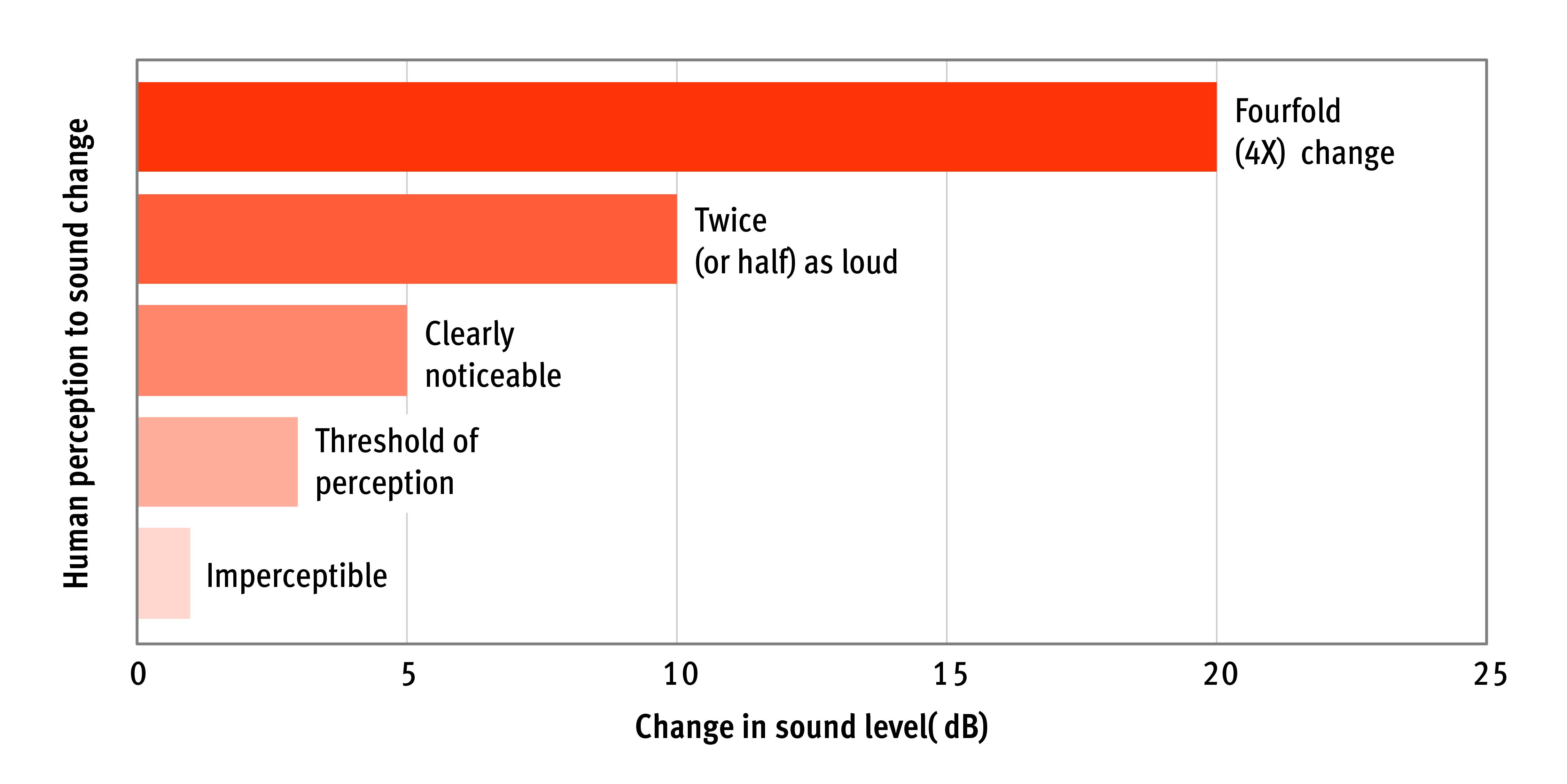
Noise perception varies from person to person and is influenced by how the human ear responds to changes in sound levels (Figure 1). Sound intensity (dBA) also depends on how close the observer is to the sound source.
Accessible description of Figure 1
Noise levels can fluctuate based on operational and environmental factors, including:
- duration and timing of operation (day versus night)
- seasonal variations (summer versus winter)
- nature of noise (impulsive, continuous, intermittent)
- sound attenuation characteristics (reduction of intensity)
- proximity to the sound source
- weather conditions (temperature, humidity, air pressure, wind speed, direction)
- topography (hills, valleys)
- presence of structures or barriers (buildings, water bodies, trees) that may block, absorb or reflect sound
Noise sources from on-farm grain handling operations
Grain drying is an important step after harvest. It helps preserve grain quality by lowering its moisture content to a safe level (14–17%). Grain dryers are used to remove extra moisture and protect the grain during storage. These dryers may run 24 hours a day for several weeks, depending on grain quantity, initial moisture content and type of grain dryer.
There are multiple sources of sound generation during grain handling and drying operations. These include:
- trucking grain on and off-site
- grain elevating and conveying systems
- grain bin aeration fans
- dryer
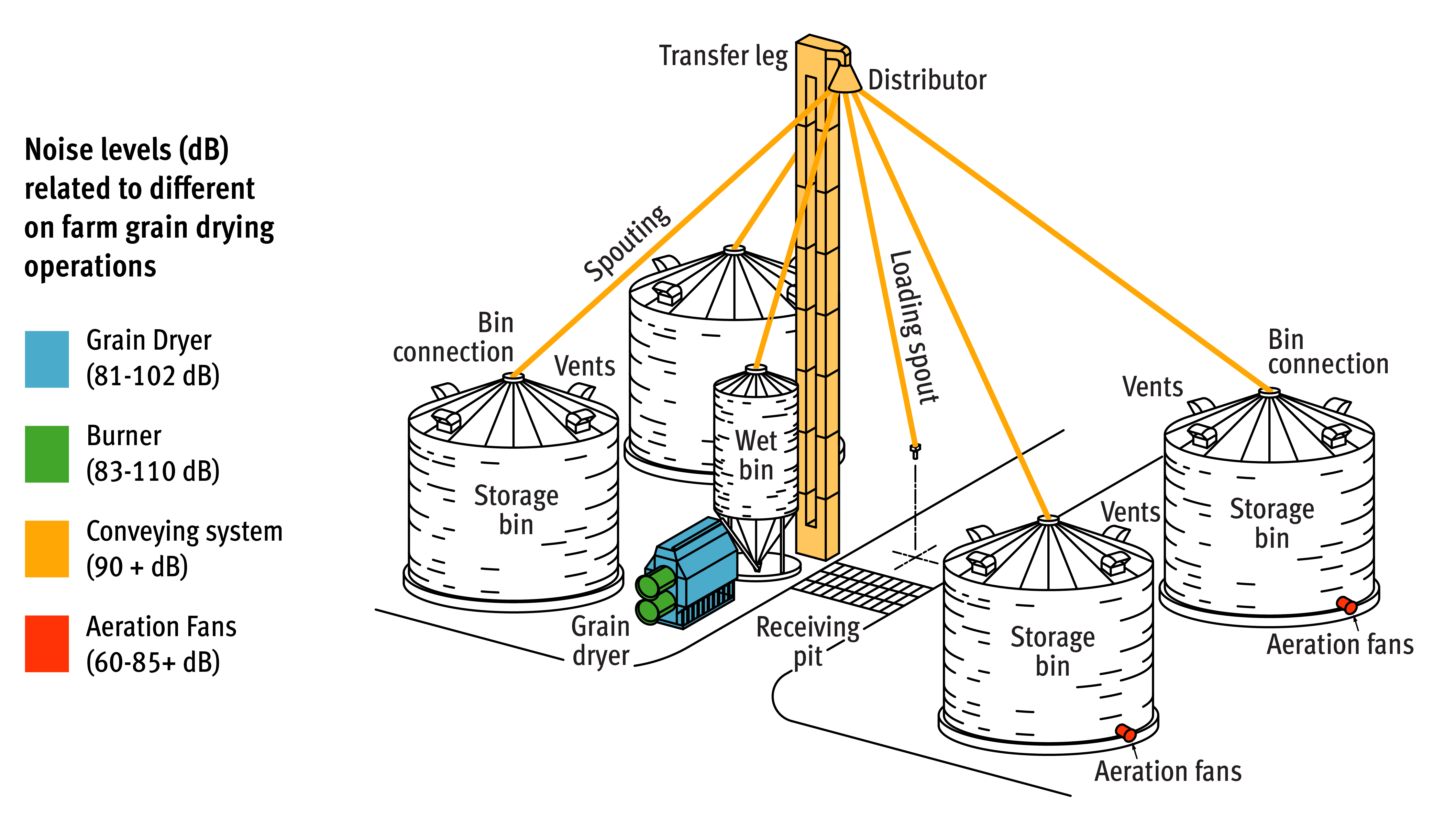
Figure 2 shows the different sources of noise production with noise levels during grain handling and drying operations.
Accessible description of Figure 2
Grain dryers
Grain dryers generate noise primarily from 2 sources: the dryer fans and the movement of grain through the drying chambers. Mechanical vibration and turbulent airflow within the system contribute to noise levels, which typically range from 81 to 102 dB depending on the dryer type. As a key component of the dryer, the burner unit supplies the heat needed for grain drying. Burner noise can range from 83 to 110 dB, often characterized by higher-frequency sounds due to the pressurized fuel delivery system used for ignition and to maintain a steady flame.
Transfer and conveyor system
The grain transfer system includes augers, pneumatic conveyors and bucket elevators. Sound levels typically exceed 90 dB during operation. The noise is generated from the auger motors, grain movement and impact and friction between moving parts.
Aeration fans
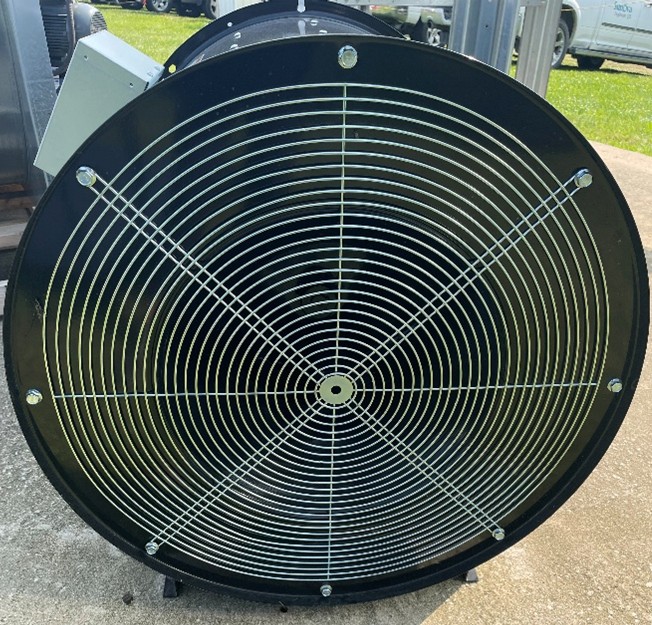
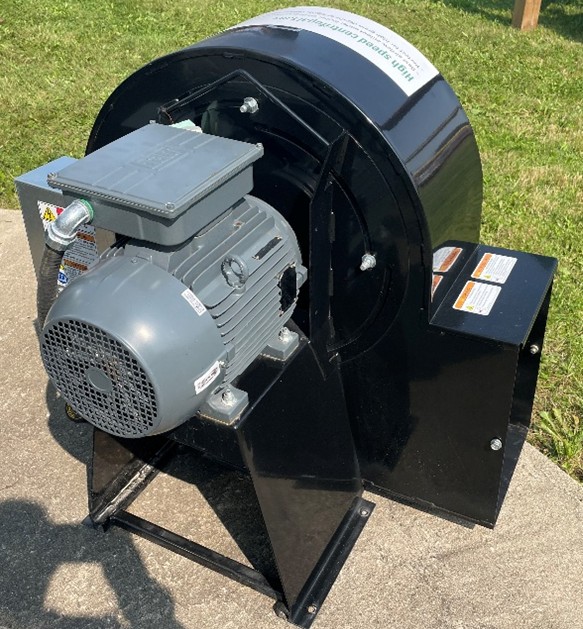
Aeration fans can produce noise levels exceeding 85 dB. The fan motor hum, blade turbulence and duct resonsance contribute to the production of the noise. Aeration fans installed on the storage bins cause noise that can travel over long distance. These are often operated intermittently but they can run for extended periods of time during warm or humid conditions to maintain grain quality during storage. There are 2 types of aeration fans: axial flow and centrifugal flow (Figures 3 and 4). Axial flow fans are usually louder than centrifugal flow fans due to higher operating speed, open construction, increased turbulence and lack of sound reducing housing
Reducing noise emissions
Siting
The positioning of the grain handling system on a farm plays a critical role in controlling how sound travels and affects surrounding areas. Sound energy decreases as it moves away from its source, so increasing the distance between the grain handling system and sensitive receptors (such as nearby homes) is one of the most effective, passive mitigation strategies.
Sound intensity experienced by an observer near stationary farm equipment is reduced by the square of the distance from the equipment. When distance from a sound source is doubled, sound level decreases by about 6 dB — 90 dB at 5 m (16 ft) is 84 dB at 10 m (32 ft), 78 dB at 20 m (66 ft).
Note that atmospheric and surrounding conditions also contribute to the decrease in the sound levels
Sound levels around equipment like fans are often not uniform. Place fans away from sensitive receptors to minimize the noise transmission.
Natural and man-made features in the landscape can act as acoustic barriers. Hills, tree lines and buildings can block or absorb sound waves, reducing the sound that reaches sensitive areas. It interrupts the line of sight between the source and the receptor, which is essential for reducing high-frequency noise that travels in a straight path.
Buffer zones
Surrounding noisy equipment with quieter machinery or storage structures (grain bins) creates a buffer zone. This layout helps contain noise within a designated area and reduces the chance of it spreading across the farm. It also simplifies other mitigation measures like enclosures or barriers.
The closer the storage structures are to the dryer, the more sound absorption and reduction occurs. Placing the grain bins near fan inlets forces the sound to travel farther to move around the grain bin, resulting in an increased attenuation. The taller or wider the grain bin, the farther the sound is forced to travel to reach the receiver.
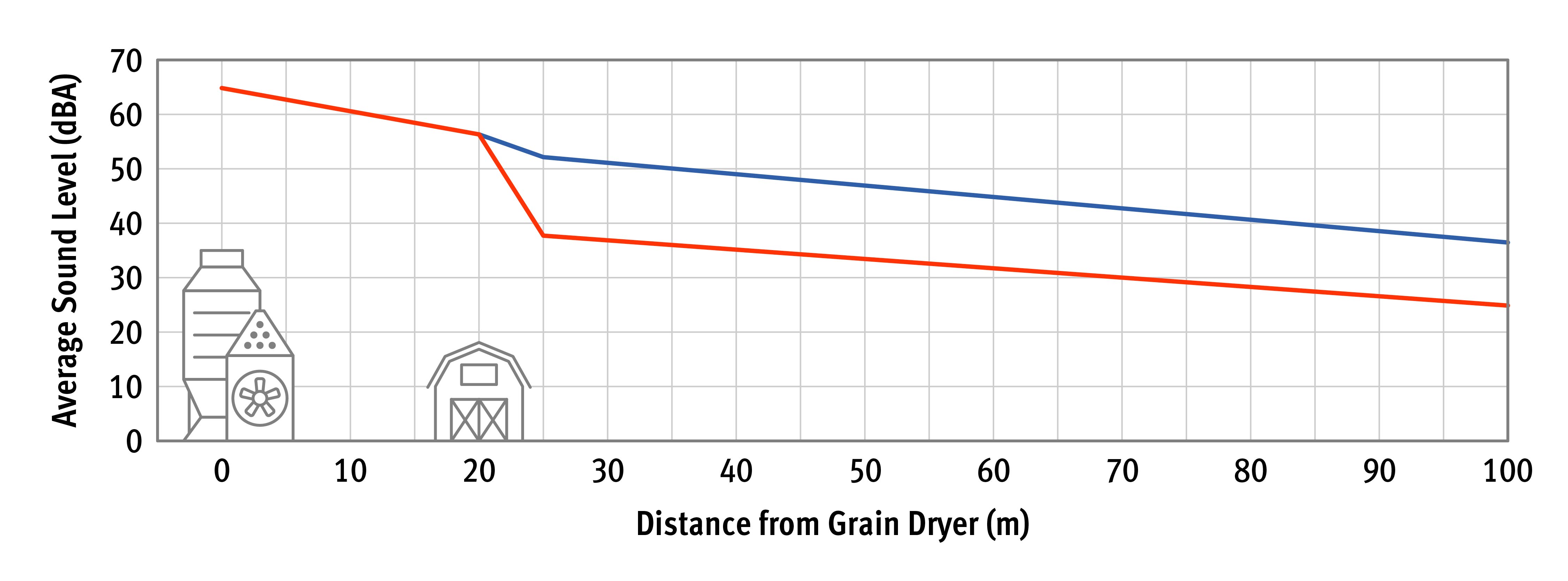
Researchers at the University of Guelph conducted a field study to measure the effect of farm buildings on grain dryer noise. The recorded measurements showed a reduction of 8 to 12 dB in locations immediately behind barns and silos, demonstrating that nearby structures play an important role in decreasing noise exposure
Accessible description of Figure 5
In Figure 5, the orange line shows the noise reduction provided by a 30 m × 10 m (98 ft × 32 ft) barn with a height of 6 m (20 ft) placed 20 m (65 ft) away from a point source that emits the sound emissions recorded from a grain dryer. The blue line represents the predicted average sound level from the grain dryer without any shielding or noise reducing structure present. This figure demonstrates a notable sound reduction occurring directly behind the barn
Noise barriers (Sound walls)
Noise barriers, commonly referred to as sound walls, are an effective method for reducing noise from grain dryers. They work by interrupting the direct line-of-sight path between the noise source and the receiver, resulting in sound reduction
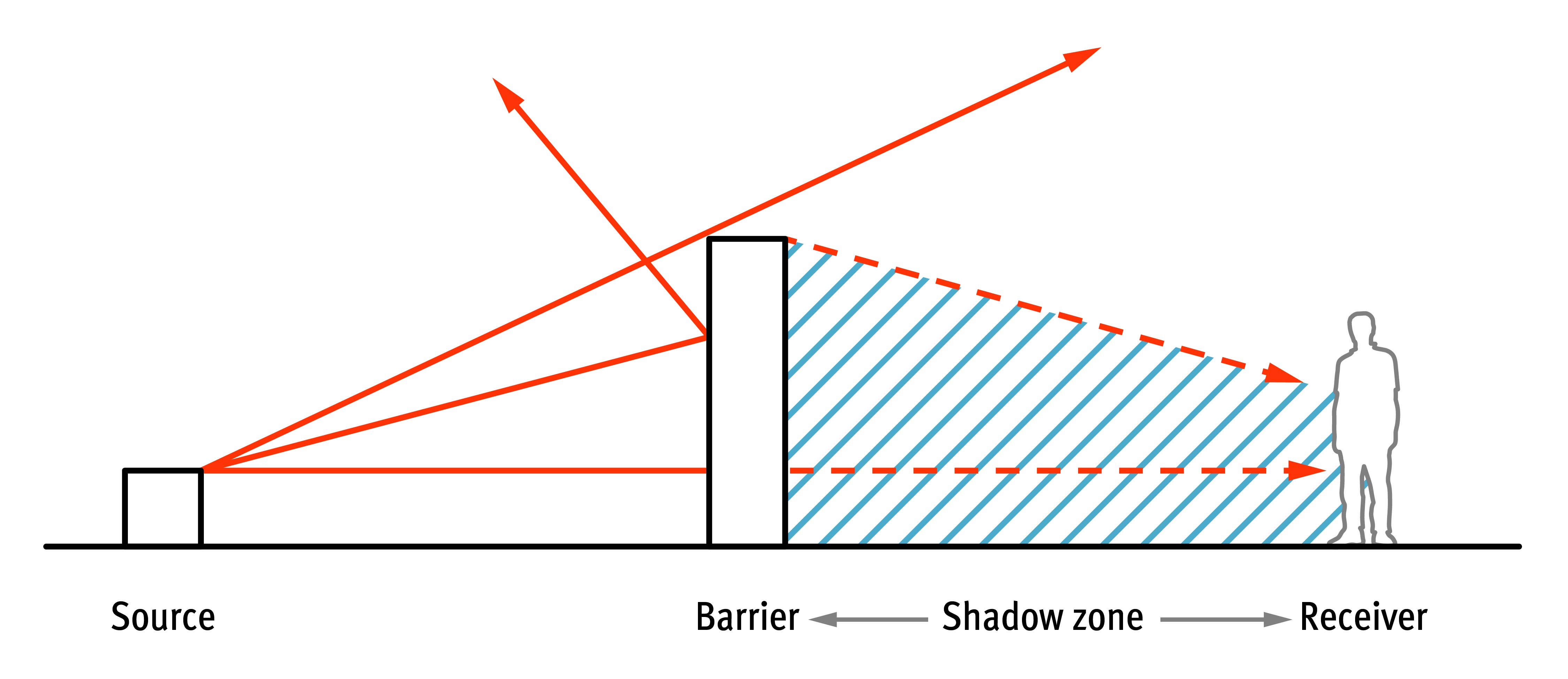
Sound walls block and diffract sound waves traveling from the source to nearby receptors. As sound travels over the top of the barrier, it creates a shadow zone immediately behind the wall (Figure 6). The shadow zone is characterized by significantly reduced sound levels due to increased sound path length and diffraction effects.
Accessible description of Figure 6
When constructing sound walls, there are two key components: wall height and surface density. A sound wall should be tall enough to disrupt the line of sight. A taller sound wall increases sound travel distance and reduces sound levels behind the wall.
Sound wall surface density influences the absorption and attenuation of sound thereby reducing the sound and increasing its effectiveness. Sound walls should have a minimum surface density of 20 kg/m2. Surface density (S)
S = Mass of the barrier (kg) ÷ Area perpendicular to sound waves (m2)
Sound walls do not need to be expensive or permanent to be effective. Build temporary or short-term barriers using materials commonly available on farms (such as straw bales).
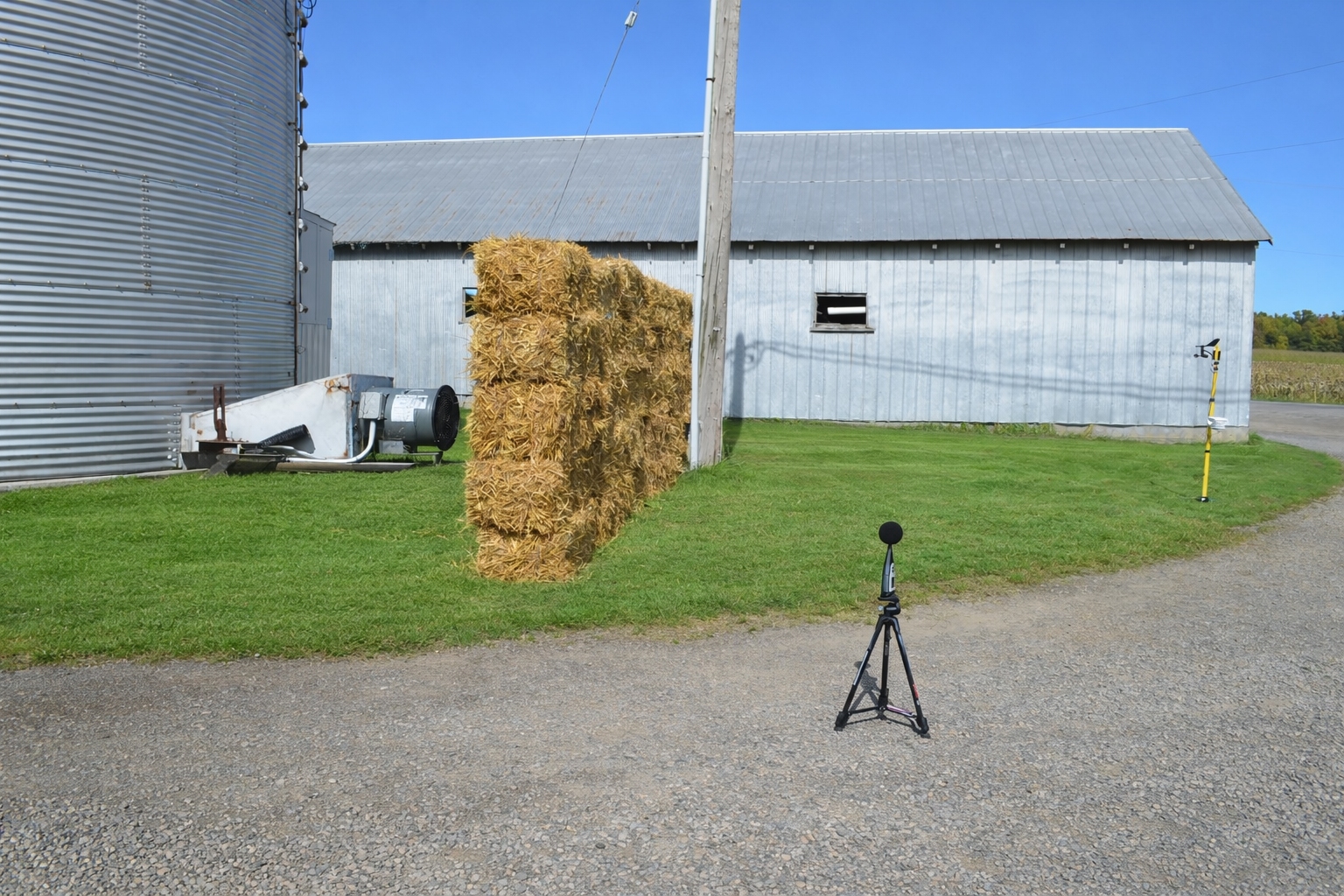
Straw bales are particularly effective because of their fibrous structure. This allows them to absorb sound effectively. University of Guelph researchers reported that a sound wall constructed from straw bales (1 m × 1 m × 1.8 m) (3 ft × 3 ft × 6 ft) stacked 3 bales high and 2 bales thick, achieved a surface density of about 325 kg/m2. This noise barrier or sound wall resulted in a sound level reduction of 10 to 12 dB
Straw bale barriers are especially well-suited for seasonal use, such as during harvest and drying periods. However, they are best used as temporary solutions, as moisture and long-term weather exposure can reduce their effectiveness and structural stability (Figure 7).
A wide range of materials can be used for building sound walls. Their sound reduction performance increases with the material density (Table 3).
| Sound wall material | Density (kg/m2) | Performance |
|---|---|---|
| Concrete (0.6 × 0.6 × 1.2 m) | 1,440 | Excellent |
| Plywood (2.4 × 1.2 × 0.02 m) | 500 | Very good |
| Straw bales (1 × 1 × 1.8 m) | 325 | Good |
Mufflers
Mufflers (also referred to as silencers) are widely used for reducing noise generated by grain dryer and aeration fans. Mufflers are usually installed on the fan intake or exhaust ducts, where sound levels are highest (Figure 8).
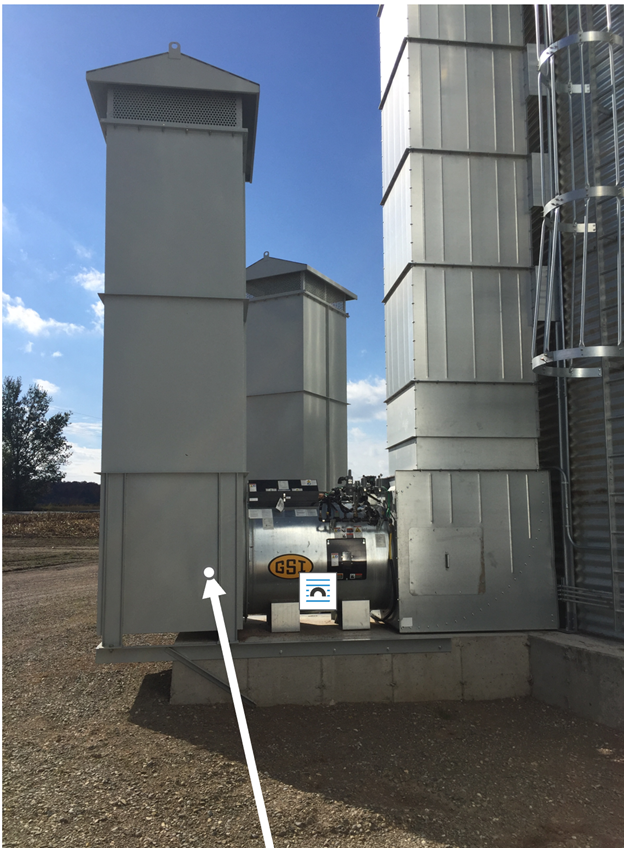
Mufflers reduce noise by absorbing sound energy and redirecting sound waves so they lose energy before exiting the duct. Absorptive components, often made of fiberglass or similar materials, reduce internal sound reflections. Reactive components (elbows or internal baffles) force sound waves to change direction which further reduces sound levels. Mufflers that combine absorbent linings with solid outer shells generally provide the most consistent performance across a range of noise frequencies.
A properly designed muffler can achieve measurable noise reductions. For example, a 90-degree elbow muffler installed on a fan has shown to reduce noise levels by approximately 6 to 8 dB
Sound blankets
Sound blankets are a flexible noise-control option that is useful where rigid barriers are impractical or specific components of a grain dryer are contributing disproportionately to noise emissions. Sound blankets are multilayered panels designed to both absorb sound and increase noise reduction. They consist of a porous, sound absorbing outer layer combined with a nonporous inner barrier layer. The interior is made up of fibrous material and plastic foam supported by a reinforcing screen.
Install sound blankets directly on grain dryer structures (plenum walls) or around fan housings, provided airflow and access for maintenance (Figure 9). Installing sound blanket panels on selected sides of a grain dryer, particularly those facing nearby residences, can reduce noise levels by approximately 8 to 9 dB at distances of around 115 m (338 ft).
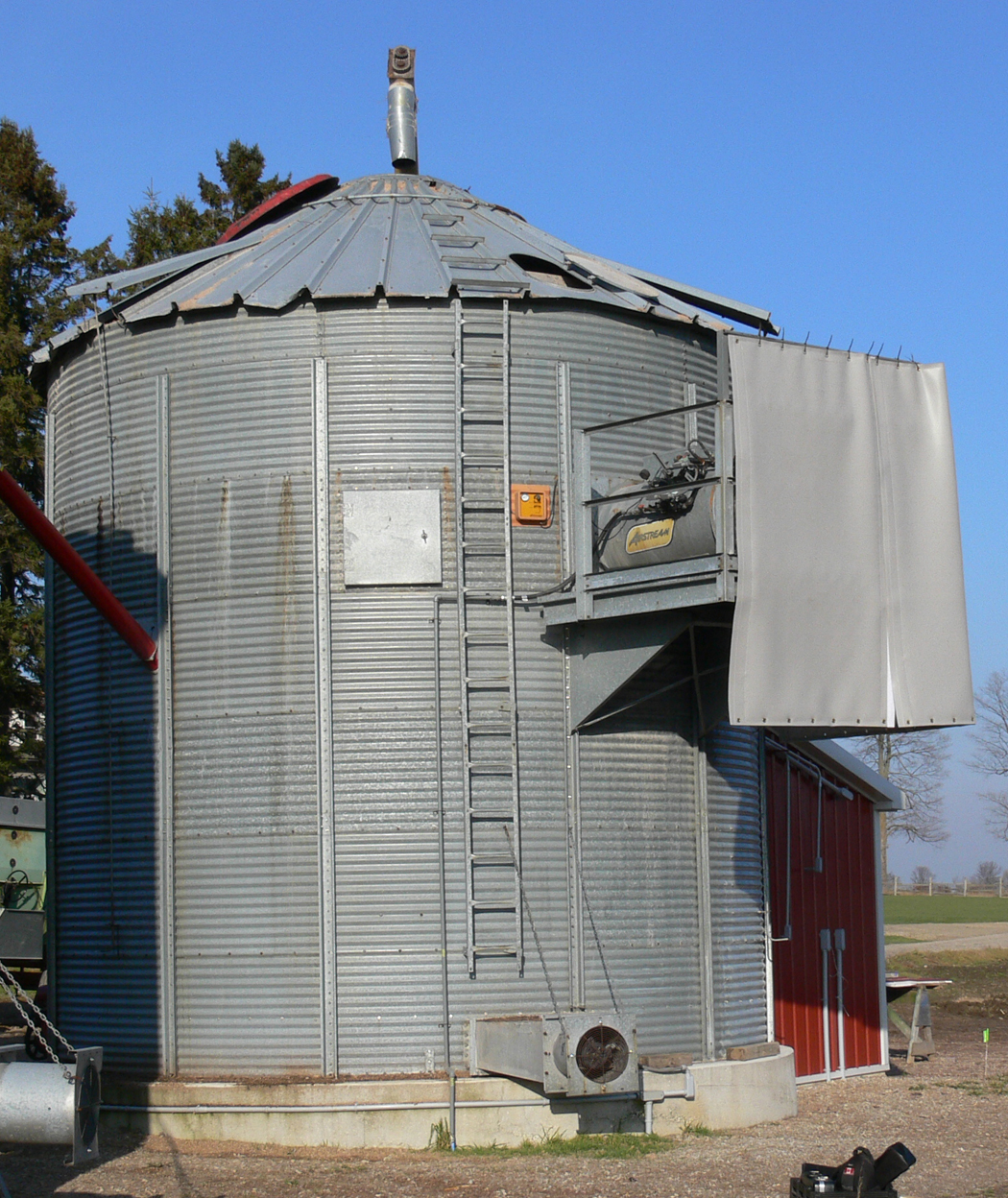
Using sound blankets or barriers around grain dryers creates a significant fire hazard by trapping heat, accumulating highly flammable grain dust and restricting airflow, which can cause internal smoldering and ignition of the grain. The blankets themselves may also act as combustible material if not rated for extreme temperatures, while moisture trapped in them can promote damage or fire, particularly if they are not waterproof.
Only use approved materials
Only install sound-dampening materials approved by the dryer manufacturer and that meet local safety codes.
Provide proper ventilation
Ensure that any barrier or insulation does not block or reduce the required airflow for the burner or cooling system.
Regular maintenance
Daily cleaning of screens and removal of dust accumulation around the dryer and barriers is essential.
Monitor constantly
Do not allow soundproofing to restrict visual inspection of the dryer›s burners and column areas during operation.
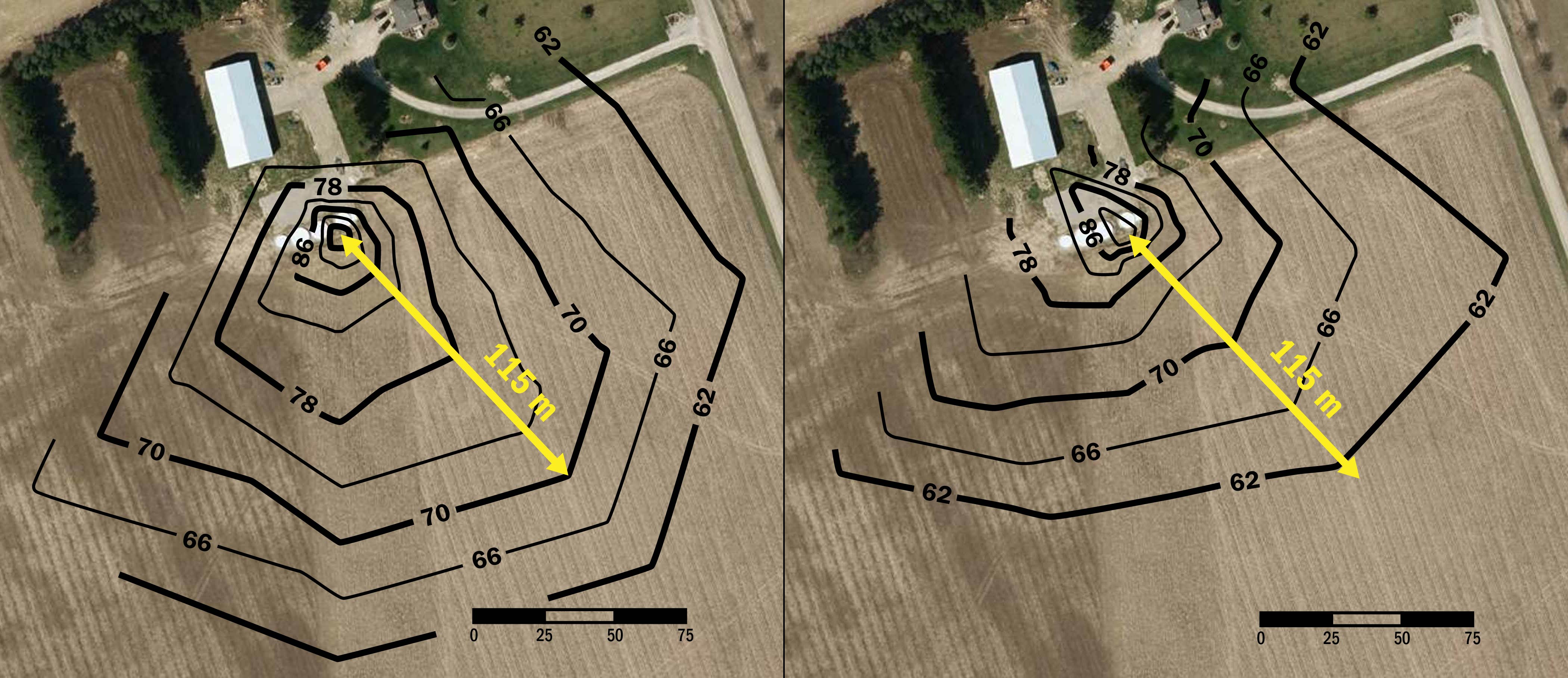
Sound contour mapping demonstrates reductions are greatest in the directions where blankets are installed (Figure 10).
Figure 10 (left) shows sound level contours prior to sound blanket installation on the south and east sides of the grain dryer.
Figure 10 (right) shows the sound level contours post sound blanket installation. The yellow line represents the 112 m (367 ft) distance.
Accessible description of Figure 10
Dealing with potential nuisances and normal farm practices
Respect and tolerance between farmers and their neighbours are essential for maintaining good community relations. Explaining to neighbours the importance of certain activities or equipment required for farming operations that are prone to creating a nuisance can help build a better rapport with neighbours.
To help prevent nuisance complaints, farmers are encouraged to be proactive in communicating any activities or devices they are using as part of their agricultural operation that could result in a nuisance caused by a disturbance that is covered under the Farming and Food Production Protection Act, 1998 (FFPPA). Explaining the necessity of these activities for successful farming operations can help foster goodwill and reduce the likelihood of complaints. Similarly, neighbours of farming operations (including greenhouses) are encouraged to communicate with the farmers if they experience disturbances. Addressing concerns collaboratively before involving local authorities or the Ministry of Agriculture, Food and Agribusiness (OMAFA) can lead to more effective and amicable resolutions.
Refer to the Related section for more information on dealing with nuisance complaints.
Summary
Research studies show noise levels can be reduced through effective planning, proper equipment installation and the application of practical, cost-effective best management practices.
Practices such as sound barriers, mufflers and sound blankets have demonstrated meaningful noise reductions when appropriately designed and installed. Applying these solutions in a targeted, site-specific manner can help farms operate efficiently while maintaining good community relations and compatibility with neighbouring land uses and municipal expectations.
Author credits
This fact sheet was written by Amadou Thiam, P. Eng., senior engineer, air quality, OMAFA and Gagan Madanpotra, P. Eng., senior engineer, crop systems and environment, OMAFA. It was reviewed by Dan Ward, P. Eng., senior engineer, poultry and other livestock housing and equipment, OMAFA. and William David Lubitz, PhD, P. Eng., associate professor, School of Engineering, University of Guelph.
Accessible image descriptions
Figure 1. The relationship between the change in sound level and human perception of the change.
Figure 1 bar graph shows how humans perceive changes in sound level measured in decibels (dB). It visually demonstrates that human hearing does not respond to sound in a linear way—small increases in dB may be imperceptible, while larger increases create more noticeable differences.
The horizontal axis represents the change in sound level (dB), ranging from 0 to 25 dB. The vertical axis represents human perception of that change.
Figure 2. Different sources of noise and noise levels during grain handling and drying operations.
Figure 2 is a labeled illustration of a grain‑handling facility. It features 5 cylindrical grain bins arranged around a central tall grain elevator or tower structure. Several lines extend from the top of the tower to the tops of the surrounding bins, indicating grain distribution spouts or conveyors. It identifies the major noise‑producing components. The right side of the drawing contains a list showing noise levels (in decibels) associated with the different pieces of equipment used in on‑farm grain‑drying operations.
Figure 5. The effect of surrounding buildings on grain dryer noise levels.
Figure 5 is a graph that compares the predicted average sound levels from a grain dryer with and without a barrier structure. The blue line represents the modeled sound level from the grain dryer assuming no barrier, showing how noise gradually decreases with distance due to natural sound dissipation.
The red line represents the predicted sound level when a 30‑metre‑long, 10‑metre‑wide barn with a height of 6 metres is placed 20 metres away from the point‑source dryer. This structure acts as a noise barrier, blocking and diffracting sound. Directly behind the barn, the sound level drops noticeably compared with the unshielded condition. This creates a shadow zone, where the barn significantly reduces the noise reaching the receiver. The modeled reduction is visible in the widening gap between the red and blue curves as distance increases behind the barn.
Figure 6. Sound attenuation, diffraction and shadow zone behind the barrier.
Figure 6. illustrates how sound waves diffract around a barrier and how this affects the sound reaching a receiver located behind the barrier. The sound source is positioned on the left, emitting waves that travel outward. Some of the sound waves strike the barrier directly and are blocked, while others bend over or around the barrier’s top edge—a phenomenon known as diffraction.
The region immediately behind the barrier, shown with angled lines and referred to as the shadow zone, receives significantly reduced sound because the direct path between source and receiver is obstructed. However, some diffracted sound still enters this zone, resulting in partial—not complete—sound reduction.
A receiver (represented by a person) is placed within the shadow zone on the right, demonstrating how barriers lessen but do not fully eliminate sound transmission.
Figure 10. Aerial photography of sound level contours.
Figure 10 presents 2 aerial images displaying modeled sound‑level contours (dBA) around a grain‑drying system, comparing noise conditions before and after the installation of sound‑blanket barriers on the south and east sides of the dryer.
Left image: Pre‑installation
The contour lines illustrate the spread of sound levels prior to adding any acoustic treatment. Higher sound levels are concentrated near the dryer, with contours extending outward into the surrounding field.
Right image: Post‑installation:
After the sound blankets were installed, the contours visibly contract, indicating a reduction in noise propagation, particularly in the directions where the barriers were placed.
A yellow line on both images marks a 112‑metre measurement distance used as a reference point for evaluating and comparing sound levels. The comparison between the two panels highlights the effectiveness of the sound blankets in reducing noise transmission at this distance and beyond.
Footnotes
- footnote[1] Back to paragraph Van Kamp, I., & Woudenberg, F. (2025). Introduction (pp 1-20) In I.van Kamp & F. Woundenberg (Eds) A Sound Approach to Noise and Health. Springer Nature-AAS Acoustic Series.
- footnote[2] Back to paragraph Timerson, B. (1999). NPC Library: A Guide to Noise Control in Minnesota. Minnesota Pollution Control Agency.
- footnote[3] Back to paragraph Brook, R.C. (1992). Drying cereal grain.IN: Storage of cereal grains and their products. D.B. Sauer (ed.). American Association of Cereal Chemists, St. Paul, Minnesota:pp.183-218.
- footnote[4] Back to paragraph Lubitz, W., Teeter, K., Parker, E., Dalton, R., & Dyck, J. (2023). Experimental Study of Grain Dryer Noise Emissions. Environments, 10(6), 100.
- footnote[5] Back to paragraph Younghans, E., Lubits, W.D., Teeter, K., Parker, E., Dalton, R., & Dyck, J. (2024). Application of SoundPLAN Essentials 5.1 in the modelling of Ontario grain dryers. Paper presented at the CSBE/SCGAB 2024 Annual Conference, Winnipeg, Manitoba. Canadian Society for Bioengineering.