

Bird control in horticultural crops
Learn about common bird-control methods and how to reduce bird damage in horticultural crops. This technical information is for commercial crop producers in Ontario.
ISSN 1198-712X, December 2025
Introduction
Bird damage in horticultural crops is a serious problem for many growers. Unchecked, birds can completely destroy an entire crop. If each bird eats just 4 grapes per day, a flock of 5,000 starlings will consume 1,000 kg (1 tonne) of food over a 10-day period. This fact sheet outlines best management practices (BMPs) for bird control in horticultural crops. They are practical, researched actions to protect the environment, improve efficiency and support long-term sustainability of farm operations, while minimizing the risk of causing disturbance to neighbours. Topics discussed include problem birds on Ontario farms, common bird-control methods and steps to develop an effective bird-control strategy for horticultural crops.
Developing an effective bird-control strategy
Growers want a simple, cost-effective way to keep birds away from their crops. Neighbours want a solution that does not involve noise-producing devices. Finding a balance is difficult. Even modern equipment and the best effort will not prevent all bird damage, and some devices can create a nuisance if they are not managed properly. However, the right tools and good management can reduce bird pressure and preserve more crops, while minimizing the impact on neighbours. For more information on nuisances, refer to the section Dealing with potential nuisances and normal farm practices.
Follow these 5 steps to develop an effective bird-control strategy that balances the needs of the crop with those of the surrounding neighbourhood:
- Evaluate the bird problem.
- Use an integrated approach.
- Start a control program early.
- Avoid predictable control patterns.
- Respect your neighbours.
Appendix B provides a sample control strategy for a hypothetical 4-ha (10-acre) vineyard, based on the bird‑pressure level. This is an example only, as every farm is different, and there are many possible options. Create a strategy to suit your particular farm, crop and surrounding area.
Step 1: Evaluate the bird problem
To solve the bird-control problem, start by understanding which birds are causing damage, where they are coming from, how they behave and where the highest-risk areas are located.
Identify problem bird species
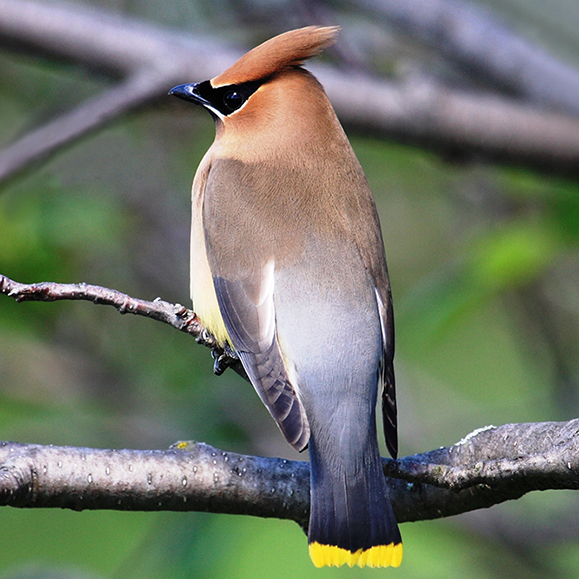
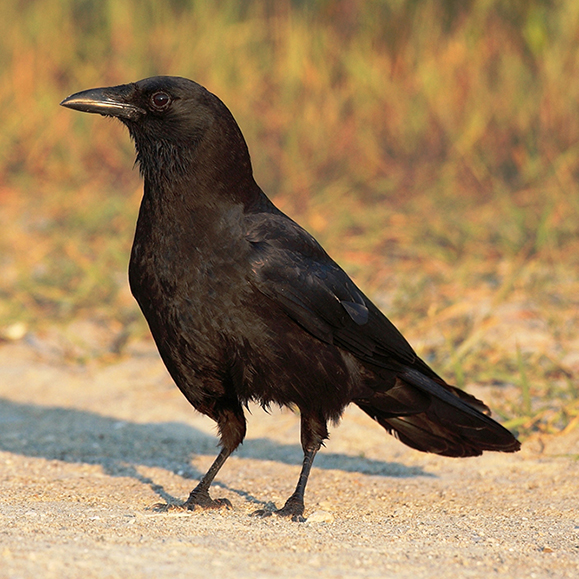
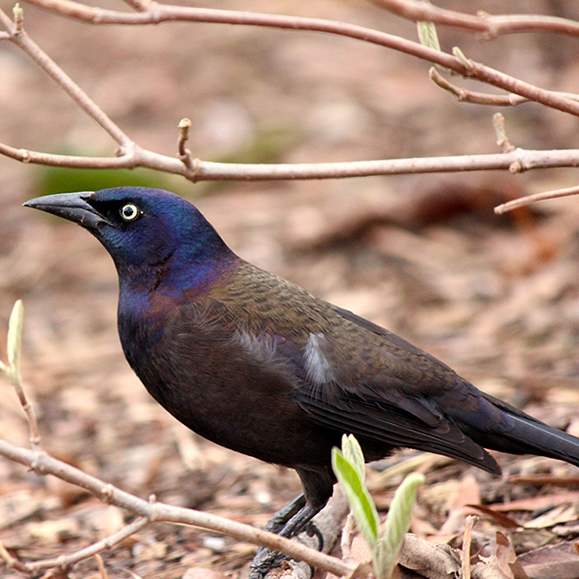
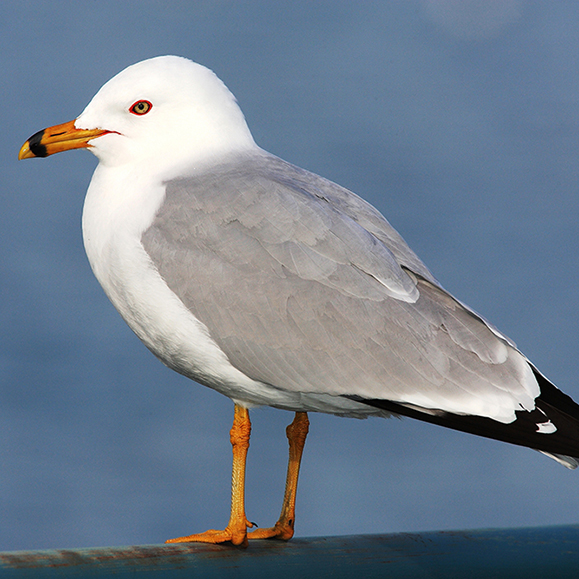
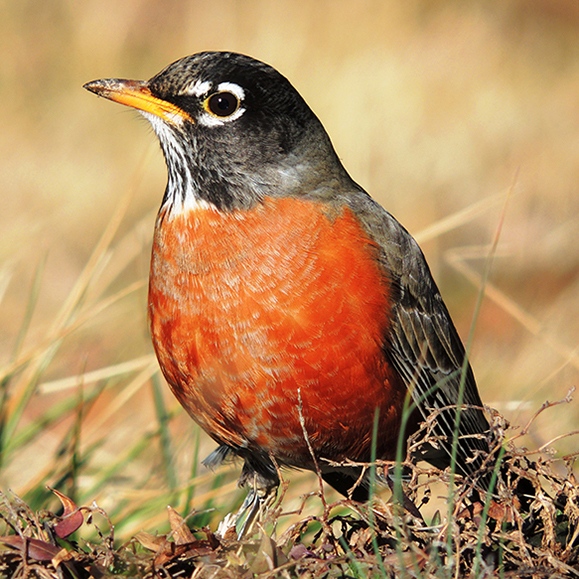
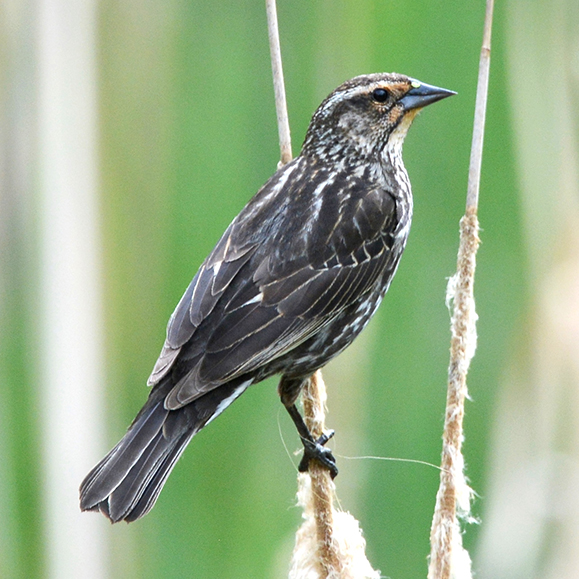
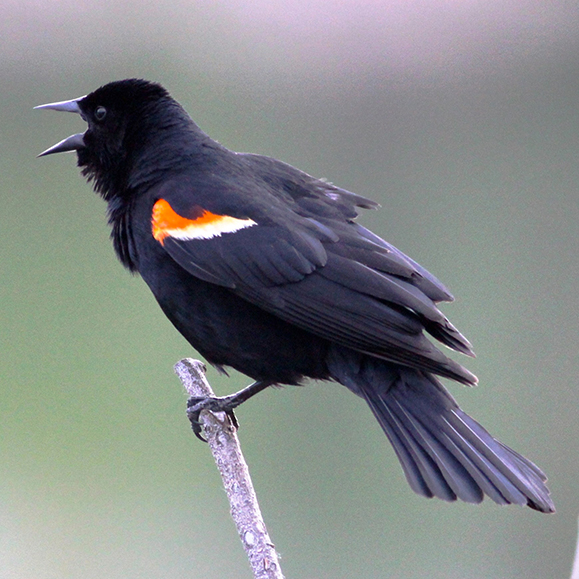
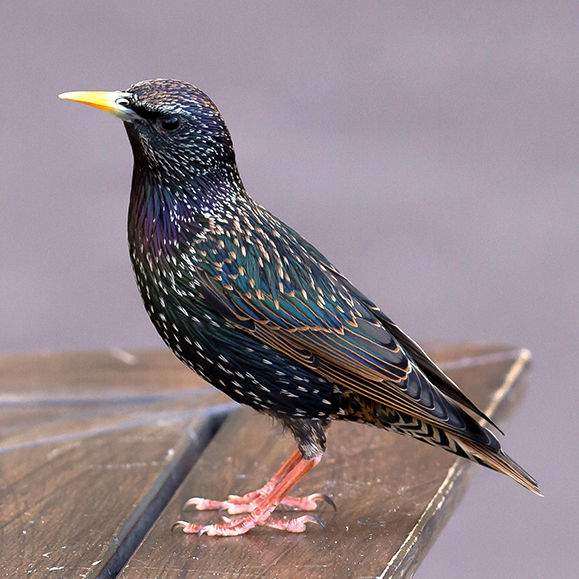
Figure 1 shows pictures of these birds for easier identification. Table 1 lists birds that cause damage to horticultural crops in Ontario.
Figure 1. Common bird pests in Ontario’s horticultural crops. Source: Wikimedia Creative Commons.
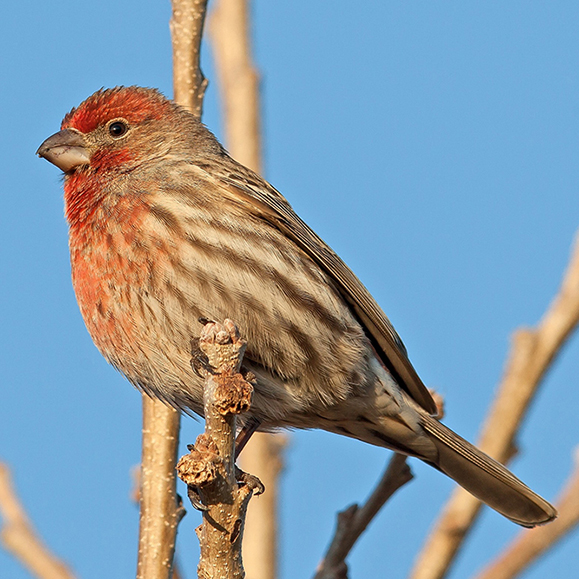
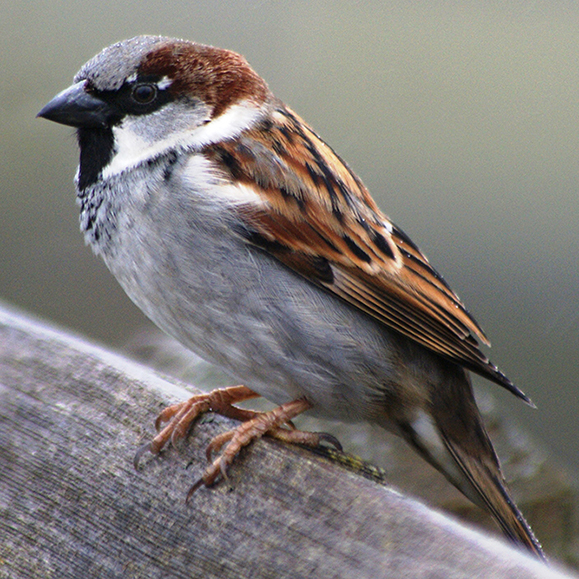
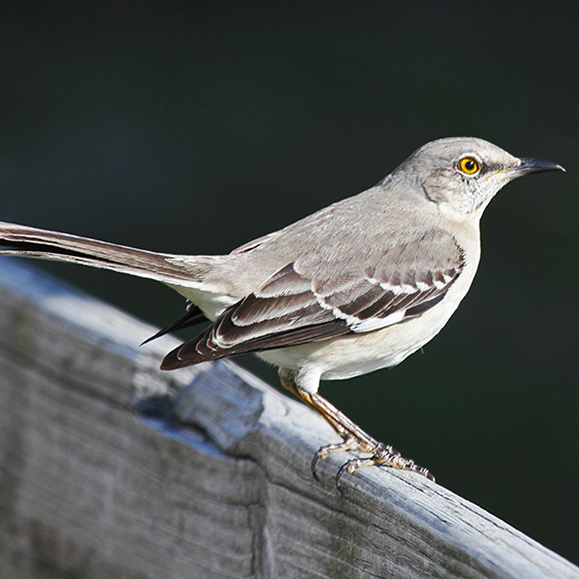
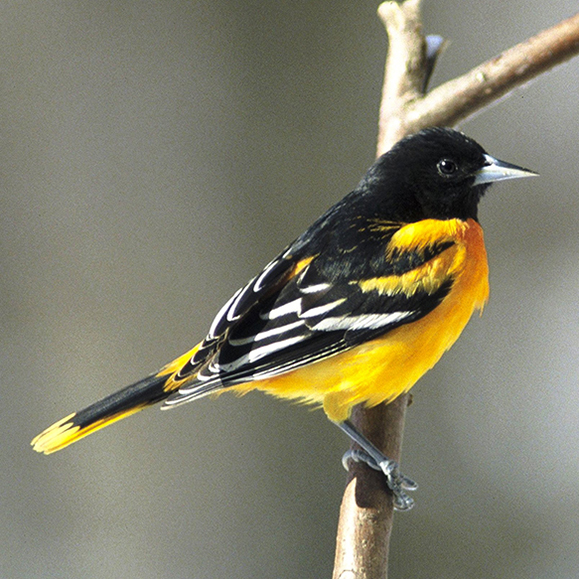
| Crop | Problem birds |
|---|---|
| Sweet cherries | Red-winged blackbird, grackle, starling, robin, house finch, oriole, gull |
| Blueberries | Robin, starling, house finch, oriole, cedar waxwing, gull, crow |
| Grapes | Robin, starling, oriole, mockingbird, finch |
| Honeycrisp apples | Crow, starling |
| Sweet corn | Red-winged blackbird, starling, sparrow, house finch |
Understand bird behaviour
Birds act based on instincts and environment. Observe birds in the crops and identify key behaviours. Look for ways to disrupt these behaviours to make feeding more difficult.
Flying
- Some birds travel in migratory flocks (such as starlings), while others fly in from local woods (such as robins, blue jays).
- Birds often follow the same flight patterns to feed.
- Starlings will fly up to 25 km from a roosting site to feed.
- Starlings fly in from the ends and sides of fields and will perch on overhead wires.
Nesting
- Birds establish their home territory in April and May and often remain in the area until the crop ripens.
- It is difficult to repel birds once they find a food source.
Feeding
- Birds usually feed early in the morning around sunrise and late afternoon or evening around sunset.
- Birds like to drink water when they feed.
- Birds will endure significant hardship to feed.
- Robins hop along the ground to forage.
- Cedar waxwings eat while perching or hanging.
- Birds feeding will attract other birds, compounding the problem.
- Divert birds to nearby feeding areas.
Diet
- Birds are opportunists, feeding on whatever is available.
- Earlier-ripening crops are more attractive to birds since there are fewer ripe food sources available.
- Sweeter crops (higher Brix content) are typically more attractive to birds.
Scaring
- Large flocks of birds are easier to scare than small ones.
- Birds acclimate quickly to uniform, regular movements or noise patterns.
- Different species of birds respond differently to various repellent methods.
- Even if crops are protected with netting, birds may perch on the nets and feed through them or find small holes.
Estimate bird pressure
To understand the risk of bird damage and opportunities for control on a specific farm, create a property map for each crop area. On the map, identify relevant features within a few hundred metres of the crop.
Crop features
- different crops or varieties
- history of bird damage in individual blocks
Bird features
- bird flight paths
- areas of high bird activity
Property features relevant to bird damage
- surrounding vegetation
- power lines
- ponds, creeks, swampy areas or other watering points
- sheds and farm buildings, especially if used for grain or feed storage
- nearby alternative food sources for birds
Nearby sensitive areas
- neighbours’ dwellings
- nearby towns or developed areas
- livestock facilities where noise may impact the animals
- recreational areas (golf courses, walking trails, sports parks)
Using the property map and the Bird-Pressure Level Assessment, evaluate bird pressure in each area of the farm. Place a checkmark beside each situation that applies. The number of checkmarks indicates the potential bird pressure level:
- 0 or 1: Low bird pressure
- 2 or 3: Medium bird pressure
- 4 or more: High bird pressure
Bird-Pressure Level Assessment
Situations present in and around the crop:
- adjacent tree lines, bush, woodlots
- source of water nearby
- field in flight path of migrating birds
- best source of food in vicinity
- no nearby growers using bird-control devices
- early-ripening and sweeter crops
- no regular human activity nearby to scare birds
Identify how much crop is lost to birds
Bird damage is not always obvious. Crops with physical damage (bird pecks) are easy to spot, but crops eaten completely by birds can only be estimated. At harvest time, it Is difficult to know the impact of bird damage on the crop. Use the property map and the bird-pressure assessment to identify areas with a higher risk of bird damage. Estimate potential bird losses in these areas with field tests, depending on the type of crop (Appendix A). Calculate the value of the lost crop to determine a budget for bird-control equipment.
Keep records of all assessments. Use these assessments to identify locations where control equipment is needed. Look for other opportunities to limit bird damage, such as making habitats less attractive or eliminating water sources.
Step 2: Use an integrated approach
The most effective bird control uses a combination of deterrent methods at the same time. Even netting does not provide 100% protection and is improved with other devices. There are 4 categories of bird deterrents currently available:
- acoustic
- visual
- physical
- chemical
Acoustic deterrents
Acoustic deterrents use sound to scare birds away. Birds have a hearing range similar to humans. If people can hear it, so can birds. Birds cannot hear ultrasonic sounds.
Propane-fired cannons (bird bangers)
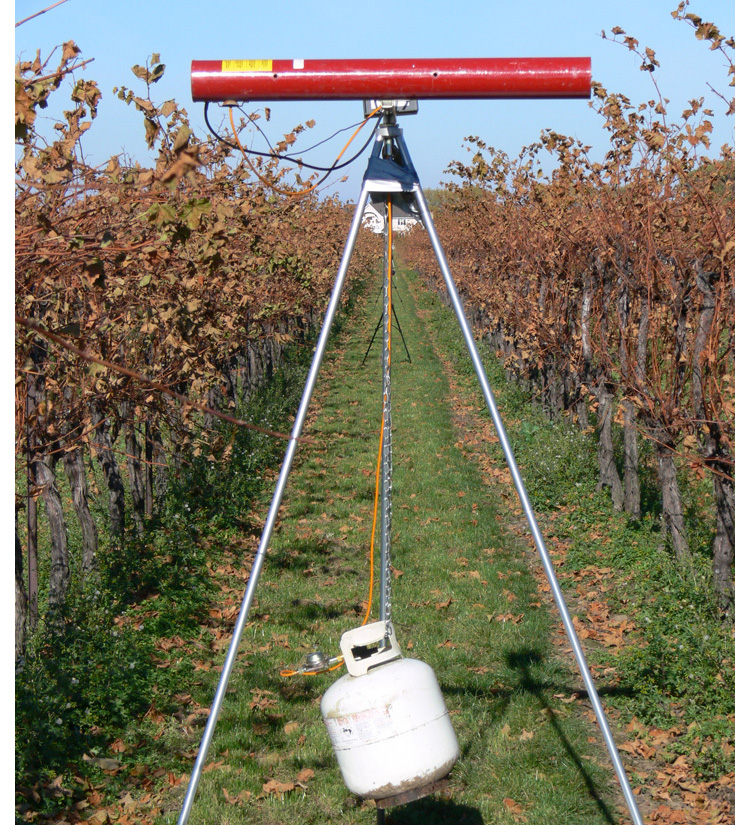
Bird bangers ignite propane to produce loud, random, unexpected sound blasts (Figure 2). Most devices fire sets of 3 blasts while rotating to cover a larger area. They must be used in compliance with best management practices (refer to the fact sheet Using propane-fired cannons for bird control in vineyards).
Electronic sound devices (squawkers)
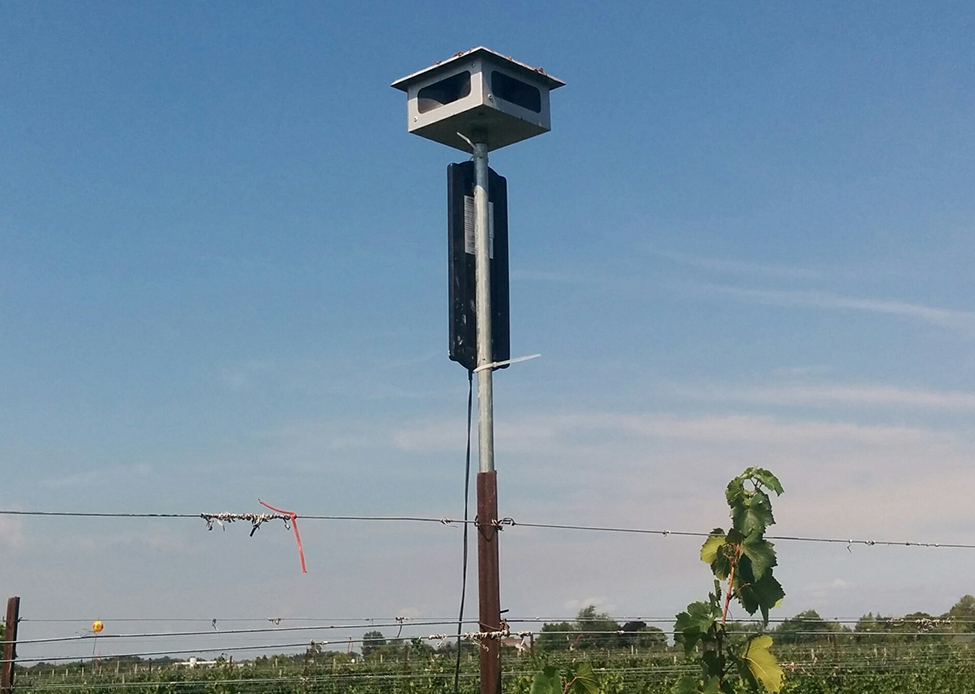
Electronic sound devices broadcast either electronic noises to irritate birds and disrupt their sensory system or distress calls of specific bird species and predatory attack calls (Figure 3). These calls sound like real birds and are usually more acceptable to neighbours than propane-fired cannons. Some farmers report the distress calls may attract birds of prey, which can help scare problem birds away.
Electronic sound devices and propane-fired cannons are often used together. The electronic devices keep birds irritated and edgy, while the propane-fired cannons provide stimulus to drive them away.
Pyrotechnic pistol cartridges
Pyrotechnic cartridges are launched from a handheld pistol and fly directly into a flock of birds, where they explode and produce a loud sound and/or visual effects. They can quickly scare away an entire flock. However, they must be manually operated. Take care when using cartridges near neighbours and observe the same setbacks (from where the cartridges explode) and guidelines for propane-fired cannons.
Shotguns
Shotguns pose a serious safety risk and must never be used without a licence and proper training. A shotgun is not as effective at scaring birds as a pyrotechnic cartridge. Lethal control is usually ineffective because of the large bird numbers. Obtain permission from governing authorities before using shotguns.
Other sound-producing devices
Devices such as air horns, clanging metal or Mylar humming lines generally work for a few days before birds start to ignore them. They can also be disruptive to neighbours. These devices may provide the most benefit when used only in the days just before harvest, when bird pressure is highest.
Best management practices for using acoustic bird deterrents
Inform neighbours
- Explain which devices are being used, how they work and when they will operate.
- Explain how to reach you if there is a problem.
Use sparingly during nesting
- Use electronic bird scarers (squawkers) and visual deterrents in nesting areas (do not use bird bangers).
- Stop after nesting season.
Wait for ripening fruit
- Do not use deterrents until 3–4 weeks before the crop starts to ripen (dates depend on crop).
Dawn to dusk only
- Use only 30 minutes before sunrise to 30 minutes after sunset when birds feed.
- Use electronic timers and light sensor overrides.
Observe minimum setbacks
- at least 125 m
footnote 1 from neighbours’ houses. - at least 125 m
footnote 1 from other acoustic devices.
Use proper frequency
- Use the 4–8-minute setting
footnote 1 on propane-fired cannons.
Move devices regularly
- Move devices at least once a week.
- Move devices immediately if there is no effect.
Stop as soon as possible
- Stop as soon as crops are harvested.
- Stop or move devices immediately if there is no effect.
Visual deterrents
Birds react both to movement and things resembling their enemies. However, visual deterrents rarely provide enough protection by themselves and are usually combined with acoustic systems for better results.
Flying visual deterrents
Scare-eye balloons
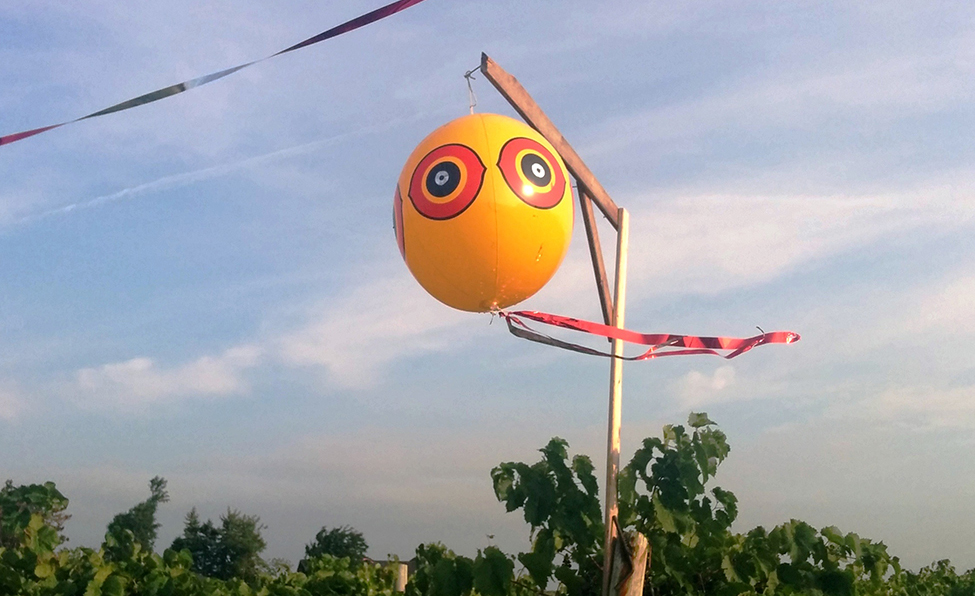
Coloured balloons the size of beach balls moves freely with the wind and appear like the gaping mouth of a hawk (Figure 4). Yellow balloons have shown the best results in Ontario, especially with blackbirds.
Tapes and streamers
Strips of shiny plastic tape reflect sunlight and move with the slightest wind. Viewed from above, the entire field appears to be in motion. Use along perimeter rows or in other areas where the most severe damage occurs. Two-colour red and silver tapes deter a broad range of species.
Kites shaped like birds of prey
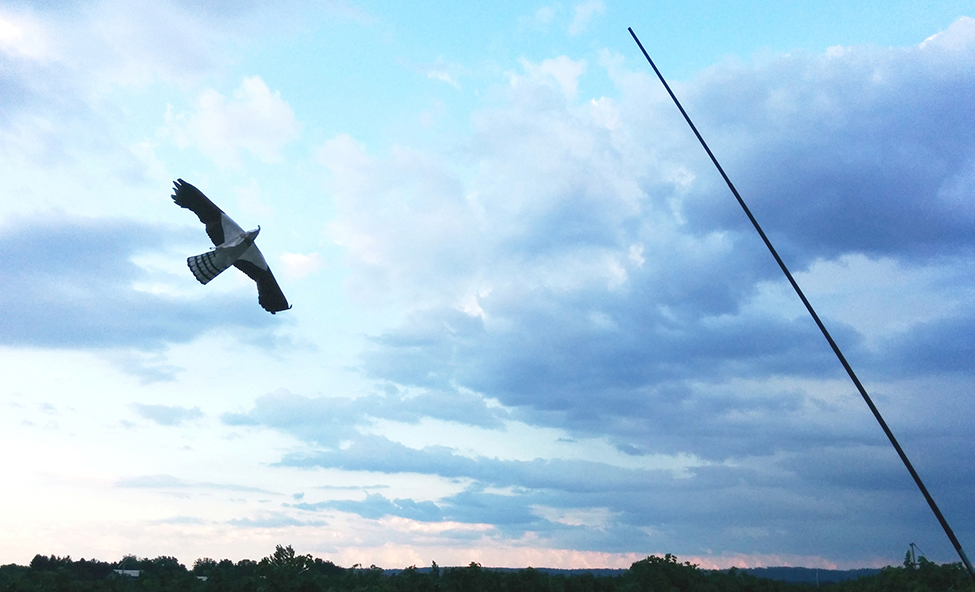
Kites wave in the wind and appear like predators hunting in the field (Figure 5). The flying presence is threatening and can keep birds away. Tether kites to poles high above the crop so they wave freely in the wind.
Falconry
Trained falcons and hawks can be very effective, but these services are expensive. The predators must be airborne to create the scaring effect. Trials using birds of prey tethered to a post have failed because other birds quickly realize the predator is unable to attack.
American kestrel nest boxes
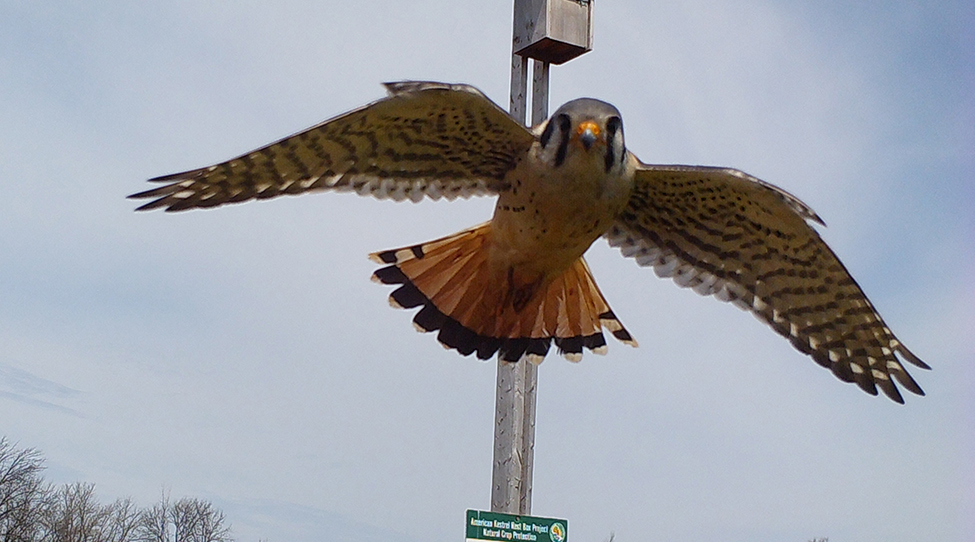
Small birds of prey native to Ontario, American kestrels, feed on insects, voles, mice and some smaller birds. Bird‑feeding pressure can be reduced while the kestrels are airborne. Kestrels leave the area by early August, limiting their effectiveness in later-ripening crops (such as grapes).
Attract kestrels to an area by building nest boxes (Figure 6). Mount boxes 5–6 m high on poles, away from wooded areas, with the box entrance facing southeast. Check boxes regularly to prevent unwanted birds from taking up residence.
Model aircraft and Unmanned Aerial Vehicles (UAVs)
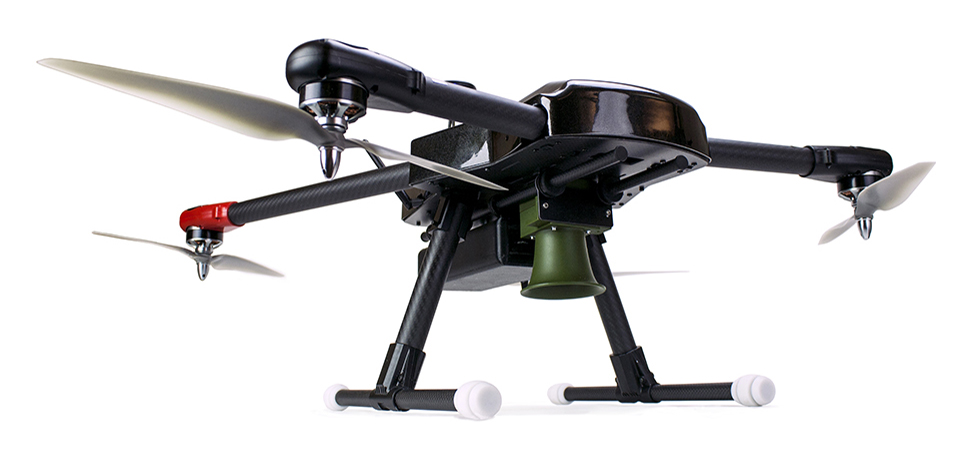
Radio-controlled model aircraft and UAVs can be used to scare birds (Figure 7). Flying devices must be airborne to have a scaring effect. They are costly, labour intensive and require skilled operators. Weather conditions and battery life may limit their use. Operators must follow all aviation regulations and may require a Special Flight Operations Certificate (SFOC) from Transport Canada.
Ground-based visual deterrents
Mirrors, reflectors and lights
Visual effects and reflected sunlight can disrupt birds, particularly starlings. Reflectors only work when the sun is shining. Lights work best when natural light is dim, they need power close by and may bother nearby neighbours.
Laser repellent devices
At this time, no bird laser repellent devices have been approved by the Pest Management Regulatory Agency (PMRA) for use in Canada. Direct questions about the use of lasers to PMRA.
Artificial predators and scarecrows
Scarecrows and artificial predators present a threatening presence. However, birds quickly realize the threat is not real. Some birds will nest right on these devices. To improve effectiveness, they must be moved constantly.
Air dancers
Large inflatable “dancing men” waving randomly will keep birds on edge. Power is needed close by. For the best effect, move them regularly.
Dogs
Trained working dogs (such as border collies) can be excellent deterrents, especially for ground-foraging birds (such as robins and geese). Dogs are most efficient when working with a trained handler.
Human activity
Human activity disrupts birds both directly (chasing birds) and indirectly (movement and presence). Many deterrents (such as pyrotechnics) rely on direct human use. It is difficult to separate the effects of these devices from the human presence.
Physical exclusion
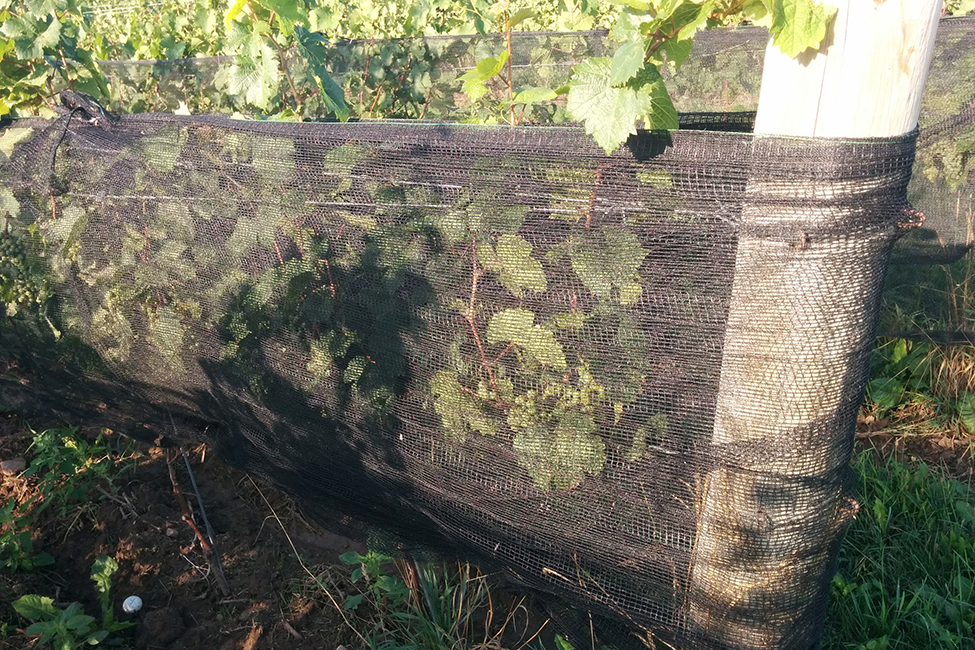
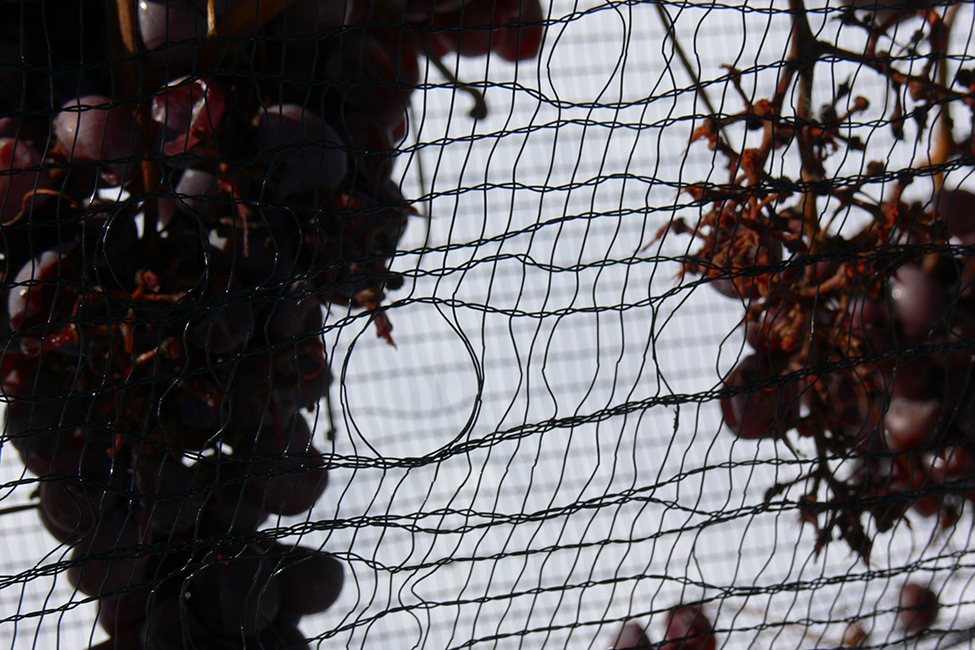
Physically excluding birds from the crop using netting is the best way to ensure crop protection. Unfortunately, it is usually the most expensive option and will not guarantee 100% protection. Desperate birds can still find a way into the crop (Figures 8 and 9). Nets are available in many sizes, colours and materials. The choice depends on the crop, field layout, expected life and installation equipment. The high value of some horticultural crops can make netting a worthwhile investment.
Netting installed directly on the crop
Direct installation is best suited for crops that do not require multiple pickings (such as grapes). Coloured nets may also act as camouflage, making it harder for birds to see ripening fruit.
For ice wine grapes, netting is a necessity. Ice wine netting is draped completely around the vines and fastened tightly under the lowest bunches of grapes. This protects the crop from birds and keeps grapes from dropping on the ground during the long period until harvest in mid-winter.
Netting fastened to overhead structure
Overhead netting is best suited for crops picked more than once (such as blueberries). Overhead systems allow work to occur beneath the nets, while still protecting the crop from birds. Overhead nets must be removed or retracted at the end of the season to prevent ultraviolet degradation and snow load damage.
Chemical deterrents
Chemicals, such as methyl anthranilate, are also available. These products must be approved for use on the specific crop by PMRA and used according to the label instructions. Note they can leave unwanted flavours on fresh food and as a result, their use in agricultural applications is very limited.
Costs and effectiveness
Table 2 ranks each deterrent on effectiveness, annual costs (including labour) and potential to create nuisance. Rankings are high (H), medium (M), low (L). High effectiveness, low cost and low nuisance are the most desirable characteristics.
The rankings are based on published studies and available research. Characteristics can change considerably depending on fields, crops, bird species, weather conditions and management.
| Deterrent method | Effectiveness | Annual costs | Nuisance potential |
|---|---|---|---|
| Auditory deterrents — Propane-fired cannons (bird bangers) | Medium | Medium | High |
| Auditory deterrents — Electronic bird scarers | Medium | Medium | Medium |
| Auditory deterrents — Pyrotechnic pistols | High | Medium | Medium |
| Auditory deterrents — Shotguns | Low | Medium | Medium |
| Visual deterrents — Scare-eye balloons, tapes, streamers | Medium | Low | Low |
| Visual deterrents — Predator kites | Medium | Medium | Low |
| Visual deterrents — Falconry, when bird is airborne | High | High | Low |
| Visual deterrents — Kestrel nest boxes | Medium | Low | Low |
| Visual deterrents — Model aircraft, UAVs, when device is airborne | Medium | High | Medium |
| Visual deterrents — Mirrors, reflectors, artificial predators | Medium | Low | Low |
| Visual deterrents — Lights, lasers | Medium | Medium | Medium |
| Visual deterrents — Air dancers | Medium | Medium | Medium |
| Visual deterrents — Dogs | Medium | Medium | Medium |
| Exclusion methods — Netting | High | High | Low |
Step 3: Start a control program early
Start bird control early, before birds get a foothold in the area. Growers often start their bird-control program too late, after the birds have already tasted the crop.
During the nesting season
- Use electronic bird scarers (squawkers) and visual deterrents in nesting areas to convince birds to settle elsewhere.
- Once nesting season is over, remove the deterrents.
During the growing season
- Set up bird-control equipment at least 10 days before the crop is attractive to the birds (the onset of ripening marked by changes such as colouring, softening and sweetening of the fruit).
- For early control, set acoustical equipment to run infrequently. For propane-fired cannons, start on the 8–16-minute setting.
- As the crop ripens and bird pressure increases, set equipment to run more often. For propane-fired cannons, use the 4–8-minute setting.
- Do not operate equipment too frequently, or the effectiveness will be reduced.
Step 4: Avoid predictable control patterns
Birds are intelligent and will quickly get used to regular, repeated, consistent control methods. Use a variety of strategies and change both the timing and locations of these devices regularly to get the best control:
- Start using controls infrequently, early in the season, ramping up use as the season progresses.
- Observe bird behaviour when controls are being used. If something is not working, change it immediately.
- Combine scaring methods to disrupt the birds’ senses and to instill or reinforce fear all at once.
- Position more scaring devices along the perimeter of crops, near trees and ponds and at flight-pattern entry areas.
- Use random, unexpected methods instead of predictable, patterned controls.
- Move or change control methods often to prevent birds becoming accustomed to them.
- Use prevailing winds and echoing effects to maximize sound dispersal from acoustic devices.
- Be conscious of surrounding neighbours, especially when using acoustic devices.
Appendix B provides an example strategy for bird control in a 4-ha (10-acre) vineyard. The strategy uses more aggressive methods for higher levels of bird pressure.
Step 5: Respect your neighbours
Unfortunately, any device that annoys birds can also irritate nearby neighbours. Most nuisance complaints about bird-scaring devices involve propane-fired cannons (bird bangers). Nuisance complaints can increase over time if nothing is done.
Be proactive and avoid problems before they develop. Manage bird bangers properly to reduce the impact on neighbours. Refer to the fact sheets, Using propane-fired cannons for bird control in vineyards, for best management practices, minimum setback distances and operating tips, and Noise nuisance from stationary farm equipment, for noise measurement and abatement information.
Before setting up bird bangers, explain to your neighbours why they are needed and answer their questions. Share your contact information so they know who to call if there is a problem. Modify the sample letter in Appendix C and send it to neighbours each year. Giving neighbours a chance to have input may not eliminate complaints entirely, but it can reduce their feelings of helplessness.
Dealing with potential nuisances and normal farm practices
Respect and tolerance between farmers (including greenhouse operators) and their neighbours are essential for maintaining good community relations. Explaining to neighbours the importance of certain activities or devices required for farming operations that are prone to creating a nuisance can help build a better rapport with neighbours.
To help prevent nuisance complaints, farmers are encouraged to be proactive in communicating any activities or devices they are using as part of their agricultural operation that could result in a nuisance caused by a disturbance that is covered under the Farming and Food Production Protection Act, 1998 (FFPPA). Explaining the necessity of these activities for successful farming operations can help foster goodwill and reduce the likelihood of complaints. Similarly, neighbours of farming operations (including greenhouses) are encouraged to communicate with the farmers if they experience disturbances. Addressing concerns collaboratively before involving local authorities or the Ministry of Agriculture, Food and Agribusiness (OMAFA) can lead to more effective and amicable resolutions.
Refer to the section Resources for more information on dealing with nuisance complaints.
Summary
The most effective approach to bird control balances the needs of the crop, the effectiveness and costs of various control methods and the best interests of the environment and the neighbourhood.
- Evaluate the risk of bird damage by identifying problem birds, observing bird behaviours, identifying high-risk areas and estimating potential bird pressure.
- Use an integrated approach with multiple devices and strategies that complement each other to disrupt bird behaviours.
- Start early with a control program to deter birds before they become established in the area.
- Avoid predictable patterns by changing control methods, moving equipment regularly and monitoring effectiveness.
- Respect nearby neighbours by keeping them informed about the bird-control systems being used and managing equipment properly to reduce social impact.
Appendix A: Suggested methods for estimating bird loss
Perform these field tests to estimate the percentage of crop lost to birds.
Bush or vine crops (like blueberries and grapes)
Just prior to ripening:
- Select 10 or more bushes/vines in random areas of the field with evenly distributed, uniformly mature fruit. Avoid outside rows.
- Install netting to completely cover these bushes/vines.
- Select an equal number of fruit-laden bushes/vines in the same areas of the field, at least 10 m (32 ft) away from netted ones.
- Leave these bushes/vines un-netted. Mark them with flags or other easily identified markings.
At harvest:
- Hand-harvest all netted and marked un-netted bushes/vines on the same day, keeping the fruit from netted and un-netted bushes/vines separate.
- Harvest every fruit, regardless of damage.
- Measure netted and un-netted yields by weight. Assume netted fruit is 100% protected (0% loss).
- Divide the difference in yield by the netted yield to estimate the percentage of bird loss.
Example:
- 50 kg of fruit from netted bushes/vines
- 40 kg of fruit from marked, un-netted bushes/vines
- (50–40) = 10 kg difference between netted and un-netted fruit
Estimated bird loss: (10/50) x 100 = 20% loss
Tree crops (like cherries and apples)
Three weeks before harvest:
- Select 3 or more trees with evenly distributed, uniformly mature fruit in random areas of the orchard. Avoid outside rows.
- Mark these trees with flags, paint or other easily identified markings.
- Select four branches on each tree at eye level, one on each side. Each branch should have a crop-load easily harvested in 15 minutes.
- Mark these branches using ribbons, paint or other easily identified markings.
At harvest:
- Hand-harvest all marked branches on the same day.
- Harvest each branch into a separate basket.
- Harvest every fruit, regardless of damage.
- Count the total number of fruit harvested and the number of fruit with bird damage.
- Divide the number of bird-damaged fruit by the total number of fruit harvested to estimate the percentage of bird loss.
Example:
- 180 fruit picked
- 36 fruit have bird damage
Estimated bird loss: (36/180) x 100 = 20% loss
Field crops (like sweet corn)
At harvest:
- Walk back and forth across the plot/field at a slight diagonal, continuing from one end of the plot/field to the other.
- At regular intervals along the walking path (e.g., every 10th row), inspect one mature cob on the nearest corn plant.
- If there is no mature cob on that plant, go to the next closest plant.
- Look for any evidence of bird damage. Even small bird pecks could make cobs unfit for sale.
- Continue walking back and forth diagonally down the field, inspecting cobs at regular intervals.
- Inspect at least 20 cobs total.
- Count the total number of cobs inspected and the number of cobs that are unfit for sale due to bird damage.
- Divide the number of unmarketable cobs by the total number of cobs inspected to estimate the percentage of bird loss.
Example:
- 20 cobs inspected total
- 4 cobs unmarketable due to bird damage
Estimated bird loss: (4/20) x 100 = 20% loss
Appendix B: Sample control strategy for a vineyard
Table 3 shows an example strategy for bird control in a four-hectare (10-acre) vineyard. The vineyard has 50 rows of grapes that are 290 m (950 ft) long, spaced 2.75 m (9 ft) apart. The strategy uses more aggressive methods for higher levels of bird pressure.
| Bird pressure | Suggested equipment |
|---|---|
| Low | 1 electronic scarer or 1 propane cannon 2 predator kites 5 balloons 500 m (1,600 ft) of flash tape |
| Medium | 2 propane-fired cannons 2 electronic scarers 10 scare-eye balloons 3 predator kites 1,500 m (5,000 ft) of flash tape 1 pyrotechnic pistol 1,160 m (3,800 ft) of netting over outer 2 rows (4 rows total) |
| High | 14,500 m (47,600 ft) of netting over all rows |
Appendix C: Sample letter to send to neighbours about a bird-control program
Use this sample letter as a template to inform nearby neighbours about the bird-control devices being used near their homes.
Include a link to the fact sheet, Using propane-fired cannons for bird control in vineyards, with the letter, to give the neighbours more information about bird-control devices.
To our neighbour,
Thank you for your patience with our farming practices. We own the vineyard at [farm address here]. Our grapes are ripening, so we plan to place propane-fired cannons (bird bangers), bird netting and electronic scaring devices (squawkers) in our vineyards to protect against birds eating and destroying our crop. These devices will not harm the birds, only frighten them away from the crops. These measures are necessary to stop the birds from eating all our ripening crops.
This equipment is set to operate no earlier than 30 minutes before sunrise and no later than 30 minutes after sunset. We will place them at least [XX] metres from your home, based on the best management practices described in the Ministry of Agriculture, Food and Agribusiness fact sheet, Using propane-fired cannons for bird control In vineyards.
If you do hear this equipment operating outside the time frames described, it means something is not right. Please call us, no matter the hour, so we can fix this as soon as possible. Please do not try to turn off the devices yourself as you may hurt yourself or damage the device. If you have any questions, concerns or comments about any part of our bird-control program, please call us at: [phone number]
Thank you again for your patience and understanding, because we cannot earn our living if the birds eat all our crops.
Sincerely,
[signature]
Resources
OMAFA videos:
OMAFA fact sheets:
- The Farming and Food Production Protection Act, 1998, and nuisance complaints
- Responding to agricultural nuisance complaints
References
Bishop, J., McKay, H., Parrott, D., Allan, J. (2003). Review of International Research Literature Regarding the Effectiveness of Auditory Bird Scaring Techniques and Potential Alternatives. (PDF). United Kingdom Department for Environment, Food and Rural Affairs.
Comfort, T. (2012). The Spartan: a nestbox for the American Kestrel.
Tracey, J., Bomford, M., Hart, Q., Saunders, G., and Sinclair, R. (2007). Managing Bird Damage to Fruit and Other Horticultural Crops. Bureau of Rural Sciences, Canberra, Australia.
Author credits
This fact sheet was updated by Kevin Baines, P. Eng., horticulture and greenhouse engineer, OMAFA, Craig Fowler, P. Eng., water management engineer, OMAFA and Gaganjyot Madanpotra, P. Eng., crop systems and environment engineer, OMAFA.
Footnotes
- footnote[1] Back to paragraph Refer to the fact sheet Using propane-fired cannons for bird control in vineyards for specific details.