

2026 Local food report
Learn about the people, businesses and organizations strengthening Ontario’s local food economy.
Minister's message
It’s my honour and pleasure, as Minister of Agriculture, Food and Agribusiness, to connect with the people in our communities who feed Ontario and the world. From family farms to food processors and local food vendors, I am constantly inspired by the passion and hard work behind Ontario’s agri-food sector. Food fuels us, it nourishes our families, strengthens our communities and drives our economy, making local food a powerful force in building a resilient and prosperous Ontario.
Now, more than ever, it is crucial to plan strategically for the future of agriculture and food in Ontario to protect our food independence. In light of trade disruption and global uncertainty, I introduced the Protecting Ontario’s Food Independence Act, 2026 as part of our government’s plan to build a more resilient and self-reliant agri-food sector. Every time we buy Ontario food, we are supporting the farmers, processors and workers who put so much care and dedication into feeding our province and helping to ensure Ontario has a strong, independent food supply.
The Grow Ontario Strategy is a long-term plan to strengthen Ontario’s food system and increase the amount of food grown, made and purchased right here at home. At its heart, the strategy is about people and helping farmers and agri-food businesses thrive, making it easier for families to choose Ontario products and ensuring we have a strong, reliable food supply for years to come.
Through the Sustainable Canadian Agricultural Partnership (Sustainable CAP) We are helping farmers, food processors and agribusinesses grow their markets, invest in innovation and stay competitive in the face of tariffs and global uncertainty. We are also working alongside institutions such as hospitals, schools and long-term care homes to increase local food procurement, while continuing to promote Ontario products through trusted programs like Foodland Ontario.
Together, these efforts show that buying local is an investment in jobs, food security and the long-term resilience of our economy.
This year’s Local Food Report celebrates the people, businesses, and organizations who are making a difference every day. This is the International Year of the Woman Farmer to celebrate their roles and achievements. As you’ll see in the report, women are leading many of Ontario’s agri-food sector successes. I am incredibly proud to support the farmers and entrepreneurs who power Ontario’s nearly $52 billion agri-food sector and who work tirelessly to ensure safe, high-quality, locally made food is always on our tables.
Thank you for supporting local and for driving our sector forward.
Trevor Jones
Minister of Agriculture, Food and Agribusiness
Boosting local food awareness in Ontario
Boosting local food awareness helps people understand, value, and choose locally produced food. When people know where their food comes from and why buying local food matters, everyone benefits.
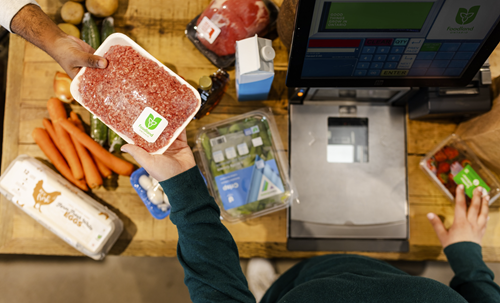
From awareness to action, Foodland Ontario encourages local food purchases
Foodland Ontario plays a vital role in shaping how Ontario consumers discover, trust and purchase local food. As one of Canada’s most recognizable consumer-facing food marketing programs, Foodland Ontario directly influences grocery purchasing decisions by making Ontario-grown and Ontario-made food easy to identify, easy to trust and compelling to buy.
Building preference before shoppers enter the store
Foodland Ontario influences purchasing behaviour well before consumers reach the grocery aisle. Through coordinated digital, radio, social media advertising, and in-store promotions, the program builds awareness of Ontario food, reinforces its freshness and quality, and encourages shoppers to actively seek it. Consistent use of the Foodland Ontario logo establishes trust, helping consumers quickly identify Ontario products among competing options.
By the time shoppers arrive at a store, many already associate Ontario food with freshness, flavour and local pride. Ongoing engagement through social media platforms such as Facebook, Instagram, YouTube and Pinterest reinforces these messages while offering recipes, seasonal inspiration and product availability information that further supports purchase decisions. Follow Foodland Ontario for recipe ideas and product availability.
Converting awareness into purchases through in-store sampling
Since most purchase decisions are made in the store, in-store sampling is one of Foodland Ontario’s most powerful tools for directly influencing purchasing behaviour. Sampling removes uncertainty by allowing shoppers to taste products before buying, increasing confidence in flavour, quality and value, which are key factors in grocery decision-making.
In 2025, Foodland Ontario delivered 1,002 in-store sampling events across major and independent grocery stores, reaching more than 134,800 consumers. These events consistently drive immediate sales. Sampling also creates a sensory and emotional connection to Ontario food, making products more memorable and increasing the likelihood of repeat purchases.
Importantly, Foodland Ontario staff and brand ambassadors use sampling to engage shoppers in conversations about Ontario origin, growing seasons and product benefits. These interactions deepen consumer understanding and trust, reinforcing the value of choosing local beyond a single purchase.
Influencing decisions at the point of sale through merchandising
Foodland Ontario’s in-store merchandising program ensures Ontario food is clearly identified at the exact moment shoppers make purchasing decisions. Consistent visual cues, such as posters, price cards, banners and recipe cards, reduce the effort required to find and choose local products.
Last year, more than 4.5 million Foodland Ontario point-of-sale materials were distributed and 12,000 visits to 1,200 grocery stores across the province were made. These materials support strong product visibility and help establish local food as a preferred, mainstream choice.
Retailers’ demand for Foodland Ontario merchandising support continues to grow. In 2025, increased uptake of seasonal displays and campaign alignment demonstrated retailer confidence in the program’s ability to drive sales and enhance the shopping experience. Additional visual tools, such as Ontario Tender Fruit grower display bins, with more than 7,000 distributed in Ontario last year, further strengthen identification of in-season local fruit, helping shoppers quickly and confidently choose Ontario peaches, pears, plums, nectarines, apricots and grapes.
Foodland Ontario calendars also continue to be a valued promotional tool, helping keep seasonal Ontario produce top of mind for consumers year-round while reinforcing awareness of what is grown and available locally throughout the seasons.
Expanding choice and accessibility through digital tools
Foodland Ontario influences purchasing beyond the grocery store through digital tools that make local food easier to find across the province. In 2025, Foodland Ontario launched the Local Food Map in response to growing consumer interest in buying local and to support Ontario food businesses facing global trade uncertainty.
Between April 2025 and March 2026, the Local Food Map attracted more than 35,000 visits, increasing steadily to nearly 3,200 views per month. Hosted on the Foodland Ontario website’s Find Local page, the map empowers consumers to locate local food options wherever they shop, whether at farmers’ markets, on-farm markets or grocery stores.
The map currently features:
- 409 food businesses
- 155 farmers’ markets
- 1,261 grocery stores
This tool extends the influence of Foodland Ontario beyond individual transactions, supporting habitual local purchasing by making Ontario food more accessible, visible and convenient.
Motivating retailers to champion local food
Foodland Ontario’s influence on purchasing is amplified through its Retailer Awards Program, which encourages and recognizes excellence in promoting Ontario food in-store. The program motivates retailers to create prominent displays, align merchandising with Ontario growing seasons, and consistently use Foodland Ontario identification.
In 2025, 60 stores earned awards, including four prestigious Awards of Excellence recognizing sustained, multi-year commitment. Retailers report that participation leads not only to increased sales of Ontario food, but also to stronger staff engagement, internal recognition and pride in supporting local producers.
A farmers’ market built on community wins top honours
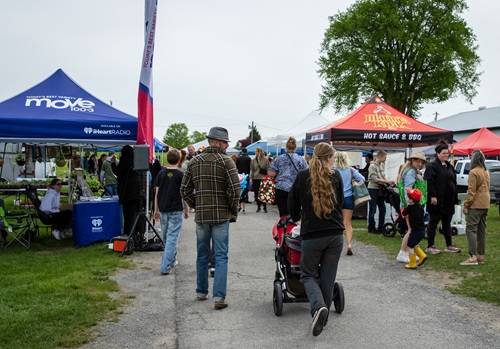
On Saturday mornings, the fairgrounds come alive. The smell of fresh baking mingles with locally roasted coffee, neighbours stop to chat, kids enjoy the play area, and farmers unload the week’s harvest. This lively gathering place, the Metcalfe Farmers’ Market, is more than a place to shop. In 2025, it was named Farmers’ Market of the year by Farmers' Markets Ontario (FMO) in recognition for their excellence, innovation and community impact.
Located in eastern Ontario, the Metcalfe Farmers’ Market is a true producer-based market. All products sold are made, grown or created by the vendors themselves. On any given Saturday, the market hosts 45 weekly vendors offering everything from farm-fresh produce, meats, honey, preserves, and baking, to furniture, wood crafts, clothing, jewelry and home décor.
What truly set Metcalfe apart, however, was its remarkable turnaround story.
Just a few years ago, the market found itself at a crossroads with an uncertain future. Today, Metcalfe operates from May to October and has expanded well beyond the traditional season with popular holiday pop-up markets now complementing the regular calendar. Night markets were introduced during the summer, a winter market debuted successfully in February, and each new event drew fresh energy and new audiences.
Community engagement sits at the heart of this success. The market collaborates closely with local 4-H clubs, welcoming youth volunteers and showcasing agricultural education in action. Fundraisers and community initiatives are regular features, providing space for local initiatives.
In naming Metcalfe the stand-out winner, the FMO awards committee highlighted the market’s innovation, visible community spirit and unwavering commitment to its values. Vendors feel supported, shoppers feel connected, and the market feels like a shared community achievement.
Farmers’ markets like Metcalfe play a vital role in local economies. They provide reliable, direct-to-consumer income for farmers, food producers and artisans, keeping dollars circulating locally rather than leaving the region. They lower barriers for small businesses, create seasonal employment, and help rural communities remain economically resilient. Perhaps most importantly, they strengthen trust between producers and consumers, offering transparency about where food comes from and how it is made.
Among the many excellent farmers’ markets across Ontario, Metcalfe’s story stands out as a testament to what’s possible when innovation, leadership and community support come together.
Improving local food access
Making it easier to get fresh local food is important because it benefits both Ontario’s food system and its communities. When people and businesses can choose food grown or made nearby, it helps many types of food businesses—from family farms to processors and distributors. Buying local keeps money in the community, supports jobs, and helps build stronger local economies. By improving access to local food, communities can enjoy what Ontario grows while supporting a strong and sustainable agri‑food sector.
From northern fields to local tables
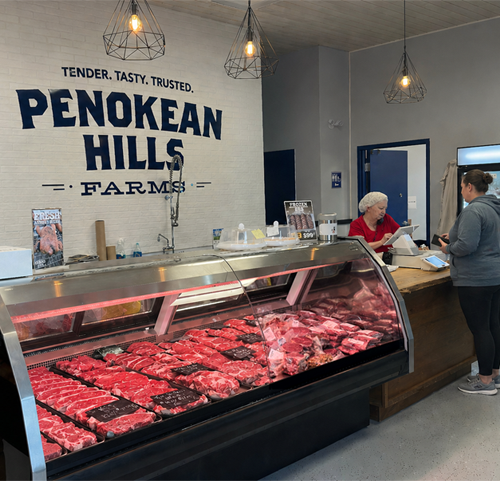
In 2005, five beef farmers in the Algoma District made a bold decision. Located along the rugged North Shore of Lake Huron, they were proud of the cattle they raised and together, they formed Penokean Hills Farms to produce premium, locally raised beef that consumers could trust, while preserving a way of life for Algoma farmers. What started as a small group has grown into a locally crafted Simmental-Angus beef brand that supports area farms, an abattoir, butcher shops, restaurants, and retail customers—creating a true farm-to-table experience in the North.
The name Penokean comes from the ancient geological formation that defines the rolling hills of Algoma, a part of the Canadian Shield that rises above the clear, cold waters of Lake Huron. This landscape provides ideal conditions for raising cattle naturally and responsibly.
Raising cattle the Penokean way
Animal welfare and environmental stewardship are central to everything Penokean Hills Farms does. Their cattle are raised without added hormones or routine antibiotics. Animals spend most of their lives on open pasture, free to roam the hills and fields. A stress-free life, the farmers believe, is the right thing to do because it also results in better-quality beef.
Feeding innovation
One of the most distinctive aspects of Penokean Hills Farms is its uniquely crafted finishing diet. The farm developed a pea-based diet tailored specifically to northern Ontario conditions.
Field peas are naturally high in protein, lower in sugary starches and well suited to local growing conditions. Combined with barley, this diet produces beef that is tender, well-marbled and rich in flavour. This innovative approach improves animal health and meat quality and supports local grain growers.
Strengthening local agriculture: the abattoir
A cornerstone of Penokean Hills Farms’ impact on the community is its investment in local processing. In 2015, the farm purchased a former abattoir and, as the Penokean Hills brand grew, so did the sustainability of local processing. In 2023, the farm completed construction of a state-of-the-art, 14,500-square-foot abattoir, butcher facility, smoker kitchen and retail store, quadrupling the size of the original operation.
The expanded facility enabled both Penokean Hills Farms and other community farmers to create value-added and specialty products locally, keeping jobs, skills and food dollars in the region.
Today, Penokean Hills Farms also operates Penokean Hills Meats, a thriving butcher shop in North Bay. Their butcher shop controls every step of the process, from pasture to plate. This vertical integration ensures consistent quality, fair pricing and traceable local beef customers can feel confident buying.
Expanding access to local food in the broader public sector
Ontario is expanding access to local food across the broader public sector by strengthening public purchasing power and opening new opportunities for Ontario producers. Through initiatives such as the Buy Ontario, Buy Canadian Day Act, 2025 and the Buy Ontario Act, 2025, the province is encouraging public institutions from municipalities to government ministries and their suppliers to prioritize Ontario‑made goods and services, including fresh and processed Ontario foods.
The second annual Buy Ontario, Buy Canadian Day on June 26, 2026 provides another opportunity for people in Ontario to celebrate the best of Ontario and Canada by purchasing from local businesses, choosing products that are made in Ontario or elsewhere in Canada. When Ontario shoppers come together to buy local, our collective purchasing power strengthens local industries, creates jobs and builds a prosperous and resilient economy for generations to come.
Expanding student nutrition across Ontario
This past year marked a milestone for student nutrition programs across Ontario. Provincial and federal government investments supported increased breakfast, lunch and snack programs that reached more students than ever before through the province’s Student Nutrition Program. This growth was reinforced by strong, long-standing partnerships between the Ministry of Children, Community and Social Services, the Ministry of Agriculture, Food and Agribusiness (OMAFA) and industry partners who worked together to survey program partners, identify efficiencies and strengthen collective buying power.
Momentum continued to build with the introduction of the Buy Ontario Act, a true game changer for strengthening local food procurement supporting student nutrition. By prioritizing Ontario-grown and Ontario-made products across the public sector, the legislation supports local farmers and food producers while helping schools serve fresh, high-quality food. When it comes to nourishing students, food grown or made close to home makes a meaningful difference, and this is where Student Nutrition Ontario (SNO) plays a vital role.
SNO promotes healthy habits, provides nutritious food and helps build supportive school communities. Through an extensive provincial network, SNO works with 14 Lead Agencies responsible for administering provincial and federal funding for student nutrition programs. Those funds support the development and delivery of healthy breakfast, snack or lunch programs across Ontario.
In 2025, SNO reviewed food procurement and distribution practices across its network to inform broader planning and collaboration efforts. The information gathered provided helpful context on how agencies approach purchasing, data use and operational delivery. These insights support ongoing dialogue among agencies and partners, particularly around strengthening local food purchasing and identifying opportunities for collaboration at the regional level.
Building on this work, in February 2026 SNO partnered with OMAFA, the Ontario Produce Marketing Association, and the Ontario Fruit and Vegetable Growers’ Association to host an education session at the Ontario Fruit and Vegetable Convention. This session created opportunities for Lead Agency buyers and Ontario growers to connect directly and explore ways to support student nutrition programs with locally grown food.
Every sourcing decision carefully balances proximity, quality, seasonality and availability at the volumes required to reliably serve school food programs. Communication between student nutrition programs and growers allows us to uncover important needs and opportunities such as serving kid-size apples that wouldn’t otherwise be sold in the retail market because they’re small by grocery store standards. This approach ensures students receive fresh, nutritious food while local farmers and food producers benefit from consistent, meaningful demand. Local purchasing strengthens Ontario’s food system, supports our agriculture sector, and helps ensure students have access to high-quality food every day.

Produce Express brings local food to Ontario schools
Serving healthy, nutritious food in schools can be challenging. Produce Express is helping make it easier by connecting Southwestern Ontario schools and public institutions with fresh, locally sourced food, all through a simple, streamlined ordering system designed with educators and volunteers in mind.
Based in Woodstock, Produce Express serves communities from Windsor/Sarnia to Hamilton/Niagara areas. The company supplies a wide range of customers in the education sector, including elementary and secondary schools, colleges, and universities. Beyond schools, Produce Express also supports the broader public sector, delivering local food to long-term care homes and childcare centres.
At the heart of Produce Express’s work is a strong commitment to local food. The company sources from a network of more than 300 Ontario producers, farmers and food processors alike, to ensure students have access to fresh produce, dairy products, baked goods, and nutritious snacks. This local-first approach goes well beyond fruits and vegetables. Produce Express partners with local grain producers, bakeries and dairy operations as well, creating a truly comprehensive local food supply chain. For example, products like applesauce are sourced from Ontario processors such as Martin’s Family Fruit Farm, ensuring both whole and processed foods come from close to home.
Produce Express was founded in 2008 by Daniel Overbeek, who began by delivering fresh produce to a handful of local restaurants. In 2009, Daniel purchased a local produce delivery company, significantly expanding the business. A major milestone came during the 2015–2016 school year, when Produce Express expanded its services to support school nutrition programs on a weekly basis, recognizing a growing need for reliable, local food options in schools.
Listening closely to feedback from schools has shaped how the company operates today. Produce Express developed a dedicated website specifically for school use, featuring school-approved products only, clear identification of local versus non-local items, and an easy-to-navigate ordering process. Schools can see what they’re buying, track orders and receive approximate delivery times, which is an important feature for busy school staff managing nutrition programs on top of their regular responsibilities.
By handling procurement and logistics, Produce Express removes much of the burden from school staff and volunteers. Their goal is simple: to provide a one-stop, effortless solution that ensures students have access to the foods they need to learn, grow, and thrive.
Proudly 100% Canadian owned and operated, Produce Express continues to play a vital role in strengthening local food systems by connecting Ontario producers and processors directly to school nutrition programs and helping nourish the next generation, one delivery at a time.

Growing future success through innovation
Across Ontario, a thriving community of researchers and innovative thinkers is transforming the province’s agri‑food sector in delicious and dynamic ways. From developing new value‑added foods to pioneering sustainable production techniques, these leaders are turning bold ideas into real‑world products that strengthen Ontario’s position as a hub for agri‑food innovation where science, creativity and entrepreneurship come together to expand markets and build a more resilient, forward‑looking food system.
The entrepreneurial story of Northern Ontario’s Arana Orchards
For generations, agriculture has been woven into the fabric of Leo Losereit’s family history. Though careers outside farming once took center stage, the pull of the land never faded. Today, that legacy lives on at Arana Orchards, a forward-thinking, family-owned Haskap orchard in Temiskaming Shores that is reshaping what’s possible for northern Ontario agriculture.
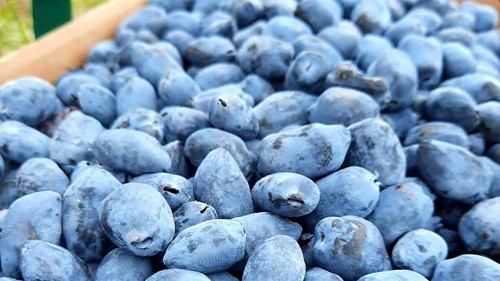
Arana Orchards is the largest commercial Haskap grower in Ontario, cultivating approximately 20,000 Haskap plants across 32 acres. What sets the farm apart is its scale and the entrepreneurial mindset behind it.
Haskap berries, sometimes called honeyberries, thrive in cold regions and boast one of the highest antioxidant concentrations of any food. Revered in Japan as the “berry of long life,” Haskaps align perfectly with growing consumer demand for local, nutritious, and minimally processed foods. For Leo, the crop represented more than market potential—it symbolized innovation rooted in place.
Establishing a fruit orchard in a region traditionally known for beef, dairy, grains and hay was no small undertaking. “It was daunting to find markets and convince buyers to take a chance on something new,” Leo recalls. But innovation at Arana Orchards doesn’t stop at growing Haskap berries. Arana Orchards is both a grower and processor, expanding its reach through value-added products such as jam, jelly, dipping sauce, and freeze-dried Haskap berries, which extend shelf life while preserving nutritional value. This commitment to value-added processing is a key piece of the orchard’s business model, allowing Arana Orchards to capture more value locally and build resilience in a competitive market.
The story of Arana Orchards is also one of community and connection. Partnering with Foodland Ontario, the orchard proudly uses the bilingual Foodland Ontario logo, helping connect with Franco-Ontarian consumers and reinforcing the importance of local food systems. The surrounding landscape of lakes, forests, clean air and distinct northern seasons provides both an ideal growing environment and a sense of purpose.
The name “Arana Orchards” itself reflects this deep-rooted family story, blending the names of Leo’s parents, Arnold and Johanna, who instilled in him the values of hard work, stewardship and respect for the land. Those values continue to guide decisions on the farm today, from production practices to community involvement.
By embracing an emerging crop and integrating production with processing, Arana Orchards demonstrates how entrepreneurship can revitalize family farms and create new agricultural opportunities in northern Ontario. It’s proof that innovation grows best when tradition, passion, and courage take root together.
Tradition meets innovation in Black Maitake cultivation
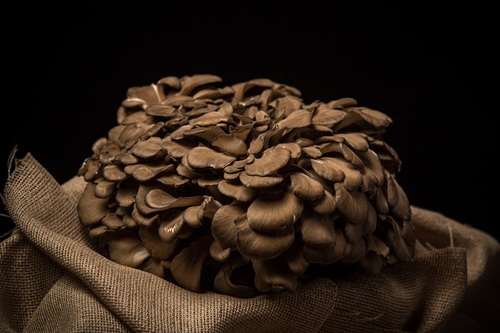
Innovation often begins with a deep respect for tradition. At Shogun Maitake, that philosophy has shaped one of the most remarkable success stories in modern mushroom cultivation by transforming the rare and elusive Black Maitake mushroom into a globally accessible culinary treasure. Shogun Maitake is the brainchild of Mr. Yoshinobu Odaira, a pioneer whose journey is rooted in Japan’s centuries-old mushroom-growing traditions.
Nature’s rarity, perfected by innovation
Historically, Black Maitake mushrooms were among the rarest of all fungi, growing only in the wild. Distinctive in appearance with their dark colouration and feathery texture, they are prized for a refined flavor profile that includes rich umami, earthy depth, mild nuttiness, and a subtle natural sweetness. Even when cooked, the thicker portions remain tender, making Black Maitake a favorite among chefs. Beyond taste, chefs value Black Maitake for its ability to enhance and balance other ingredients, elevating dishes without overpowering them.
At Shogun Maitake’s state-of-the-art facility in Ontario, expert cultivators reproduce the precise environmental conditions found in Japan’s mountain forests. The result is Black Maitake that mirrors wild-grown quality while being cultivated consistently, safely and sustainably.
Expanding beyond borders: Shogun Maitake Canada
The company, located in London, Ontario, operates a highly sophisticated facility that is expanding in 2026. Production currently delivers 1,000 pounds per week and when the business finishes its expansion, output will increase to its maximum production of 1,000 pounds per day. Since starting production in 2016, Mr. Odaira has continued to push boundaries and bring his lifelong knowledge to new and emerging markets.
Fresh Black Maitake is sold to hotels, restaurants, commercial chefs and high-end wholesale distributors.
2026 Spotlight: Women changing the agri-food sector
A family legacy, led by women, built on good farming
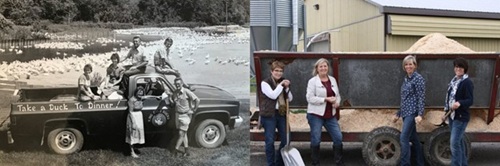
From its original 100-acre farm in Newmarket, King Cole Ducks has grown into Canada’s largest duck producer, spanning more than 1,200 acres across York Region, 19 farm locations and a team of 200 employees. Now in its fourth generation, King Cole Ducks remains proudly 100% Canadian-owned, family-run, and women-led.
When Jim and Marg Murby founded King Cole Ducks with their young son Bob in 1951, they were focused on building a good life from good land never imagining that their small Ontario farm would one day mark more than 75 years of continuous family farming excellence. What they did know, and what still defines King Cole Ducks today, is a simple belief: good farmers make good food, says Debbi Conzelmann, CEO of King Cole Ducks.
Now celebrating its 75th anniversary, that guiding philosophy has endured through generations of change, growth, and innovation, remaining the foundation of everything King Cole Ducks does.
A truly unique business
King Cole Duck’s most defining strength is being the only vertically-integrated duck operation of its kind in North America. From breeding stock and hatcheries to growing, processing, cooking, and product development, King Cole controls the entire farm-to-fork journey. That oversight ensures unmatched quality, traceability, and food safety.
The company is a leader in food safety and animal welfare.
The company was the first duck producer in North America to achieve Safe Quality Food Accreditation, a globally recognized food safety standard. Every bird is inspected by the Canadian Food Inspection Agency, and a dedicated quality assurance team works daily to exceed regulatory expectations.
Animal welfare is just as central to the company’s success. Ducks are free-run in spacious, well-ventilated barns, with fresh bedding, unlimited access to food and water, and strict biosecurity protocols. Every employee is trained in humane handling, reinforcing a culture where animal care is everyone’s responsibility.
Sustainable by nature, long before it was trendy
Responsible farming has long been part of King Cole Ducks’ approach. With zero product waste, the company recycles or repurposes nearly everything it produces:
- natural water recycling system and a commitment or focus to reduced water usage
- feathers are processed for duvets and pillows
- manure and wood shavings are composted into nutrient-rich fertilizer
- cash crops on King Cole land are fertilized naturally
- a reforestation program protects land for future generations
It’s a closed-loop system rooted in respect for the land, the animals, and the future.
From Ontario farms to the world’s tables
Though deeply rooted in Ontario, King Cole Ducks’ reach is global. Their products are enjoyed across North America and served internationally, from Japan and Dubai to airline lounges, cruise ships, and rail lines.
Closer to home, their Farm Fresh Duck Store connects the company directly to its community, offering products not found in grocery stores and allowing customers to meet the people behind their food.
As CEO Debbi Conzelmann puts it, “We’re not just a food company. We’re a family business, and we take responsibility for what people put on their plates.” After more than seven decades, that responsibility and pride has never been stronger.
How Taco House Co. is building local, one tortilla at a time
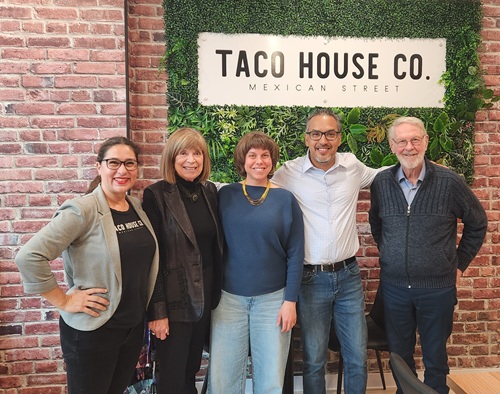
When Aurora Alcocer arrived in St. Thomas, Ontario from Monterrey, Mexico in 2008, she brought more with her than a suitcase, she carried generations of culinary knowledge and a deep appreciation for the food traditions she grew up with. Today, that heritage is at the heart of Taco House Co., a local taqueria dedicated to authentic Mexican street food and locally sourced ingredients.
From the very beginning, Aurora and partner Daniel made a conscious decision to prioritize locally-grown products wherever possible. Some key staples, especially corn products essential to Mexican cooking, were difficult to source locally, leaving the business dependent on American suppliers.
While those products worked, relying on cross-border supply chains came with vulnerabilities. Trade uncertainties and tariffs last year caused shipment delays from the United States, putting real pressure on the business. “There were moments when we simply couldn’t access what we needed,” Aurora explains. That challenge turned into an opportunity when Taco House Co. switched to Glenn’s Floury Corn, a product grown in Ontario that’s now central to their business.
One crop, endless possibilities
Floury corn has transformed how Taco House Co. operates. The same corn is used to make fresh tortillas, tortilla chips and tamales which are three essentials in a traditional taqueria, illustrating just how versatile a single local ingredient can be.
Visually, the corn stands out: large, robust kernels that cook into a beautiful, bright yellow. Functionally, it delivers the texture and flavour the kitchen needs. “It’s not just about tortillas,” Aurora says. “It’s one product that supports so many parts of our menu.”
More than that, the switch supports local agriculture and shortens the supply chain, making Taco House Co. more resilient. “It’s easier to sustain consistency and to support our own country’s economy at the same time,” Aurora adds.
Looking ahead, Aurora and Daniel see tortillas as more than just a component of their own kitchen. Their business model includes producing tortillas for Taco House Co., and supporting other restaurants, with room to grow beyond. It’s a vision rooted in collaboration rather than competition, helping strengthen the local food scene while staying true to traditional methods.
Tradition meets innovation
Glenn’s Floury Corn itself has an interesting story. Developed by Dr. Francis Glenn through years of traditional breeding. The corn uses a naturally occurring recessive gene known as opaque-1, which gives it a softer, floury texture compared to standard corn, which has a more “vitreous” kernel. Selected through decades of breeding for performance and flavour, it offers a nutty, corn taste and a silky texture which are qualities that shine in everything from tortillas and tamales to gluten-free cakes and cookies.
For Taco House Co., it’s the perfect match: a local ingredient that supports authenticity rather than compromising it. By choosing local ingredients, supporting an Ontario corn breeder and grower, and sharing authentic Mexican food, Taco House Co. proves that great tacos can also be a model for sustainable local food production.
And for customers, it means every bite tells a story of tradition, resilience and the power of keeping food close to home.
Local ingredients, global flavours
For sisters Sarab and Mandeep, food has always been about connection—to culture, to community, and to the place they call home in Ontario. Today, as the leaders of Hans Dairy, they’re carrying forward cherished South Asian recipes while putting local ingredients and local relationships front and centre. Their focus is simple: make authentic dairy products using the best Ontario has to offer.
Everything begins close to home. Hans Dairy works exclusively with Ontario dairy farms north of Brampton, sourcing 100% Ontario milk every day. Each month, more than 500,000 litres of fresh local milk arrive at their facility, forming the base of much-loved products like dahi, lassi and rice pudding. The result is food that tastes familiar and comforting, while also reflecting the freshness and quality of local production.
That same local-first approach extends beyond dairy. When Sarab and Mandeep developed Hans Dairy’s smoothie line, they partnered directly with Ontario fruit growers. Strawberries, peaches and blueberries are harvested at peak ripeness in-season, then frozen to lock in flavour to deliver bold, Ontario-grown taste year-round. By choosing local milk and fruit, the sisters support nearby farmers, reduce transportation distances and strengthen a more sustainable, community-focused supply chain.
Despite the company’s growth from the days when it opened its business in the 1970s, Hans Dairy remains deeply personal. New products are still tested with family and friends, and feedback is taken seriously to ensure tradition, quality and care remain at the centre of every decision. Under Sarab and Mandeep’s leadership, Hans Dairy continues to blend heritage recipes with modern tastes, proving that local food can also be deeply cultural.
Choosing Hans Dairy means choosing products made in Ontario, with Ontario ingredients, by a family committed to their community. Available at major grocers and independent retailers, Hans Dairy makes it easy to support local farmers while enjoying authentic flavours at home.

Summary
Ontario’s local food sector continues to build resilience and adaptability as it responds to evolving consumer preferences shaped by global influences and growing interest in food produced close to home. Across the supply chain, from farms and processors to retailers, public institutions, and community food spaces, the sector is steadily strengthening connections that support economic vitality, food security and long‑term sustainability.
Together, these developments point to a local food system that is increasingly connected, accessible and future‑ready. Through collaboration, innovation and shared commitment, Ontario’s local food sector will continue to nourish communities, support economic growth and thrive in a changing world.