

Fisheries Management Zone 11 (FMZ 11): Lake trout factsheet
Learn about lake trout in FMZ 11.
Background
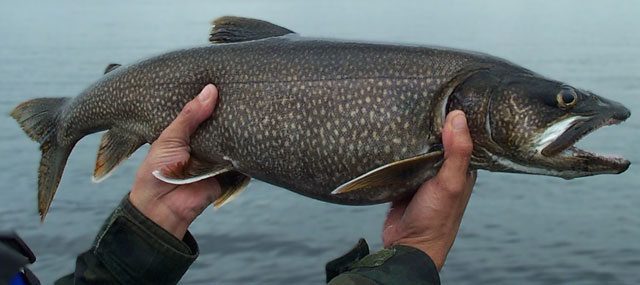
Lake trout are a cold-water fish native to Ontario. Only about 1% of Ontario’s lakes contain lake trout, but this represents 20 to 25% of all lake trout lakes in the world. Lake trout are adapted to deep oligotrophic (low nutrient) lakes and are sensitive to changes in water quality (such as low dissolved oxygen).
Fisheries management objective
To increase the abundance of lake trout, specifically mature lake trout and maintain or increase the number of lake trout age cohorts. For more information visit FMZ 11 Fisheries Management Plan.
Zone wide recreational fishing regulations
Season: February 15 to third Sunday in March and third Saturday in May to Labour Day
Limits: S-2; not more than 1 centimetres greater than 40 centimetres and C-1
Visit the Fisheries Management Zone 11 regulations page for details on zone exceptions and the latest fishing regulations.
Biological characteristics
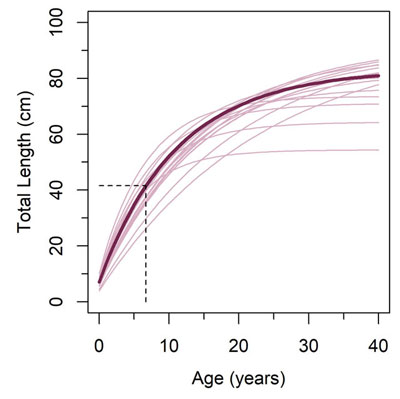
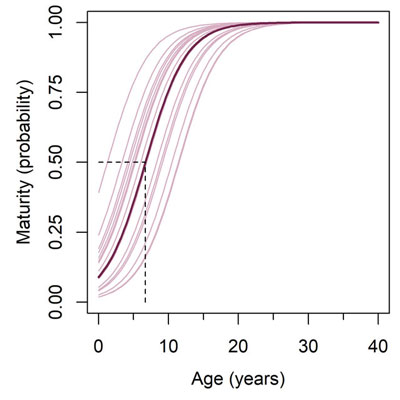
Lake trout grow slowly, mature late, have low reproductive potential and a slow replacement rate, making this fish susceptible to a variety of stresses such as overfishing and invasive species. In FMZ 11, male and female lake trout:
- mature around age 6 to 7 or about 41 centimetres in size
- have a maximum size upwards of 80 centimetres
- age upwards of 40 years
Trend assessment
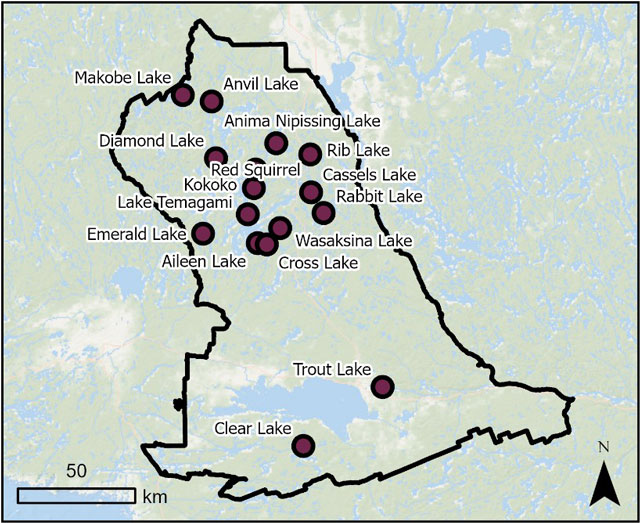
Change in fish population indicators over time are used to evaluate the success of recreational fishing regulations in achieving fisheries management objectives. Fish population indicators like abundance can provide information on how many fish there are in a lake, whereas indicators of fish age and length provide information on population structure or the number of mature fish. Using inland lake monitoring data, the following fish population indicators have shown a stable trend from 2008 to 2022, suggesting that lake trout are stable or unchanging. Regulations were implemented in 2020 and we will continue to monitor for changes in trends.
Trend in lake trout populations within FMZ 11 for 16 lakes from 2008 to 2022
Indicators include:
- abundance measured in units of catch count per unit effort
- biomass in units of catch weight per unit effort
- average total length
- mean age
- number of cohorts
All indicators are for fish greater than 40 centimetres only.
In FMZ 11, lake trout indicators are considered stable (not increasing or decreasing) including:
- abundance
- biomass
- average length
- average age
- number of cohorts
Management actions
Management actions to improve lake trout populations in FMZ 11 included a zone wide rule change in 2020 to protect mature fish. Additional time is needed to evaluate the success of this management action. Other actions to achieve fishery management objectives include:
- education and awareness
- enforcement priorities and practices
- fish and habitat designation in planning
- put-grow-take fish stocking
Key stressors for lake trout in FMZ 11
- Overharvesting: lake trout populations can only sustain low levels of angling pressure.
- Post-release survival rates (PDF): lake trout are sensitive to poor fish handling practices.
- Species introductions: lake trout are often found in simple fish communities with a small number of species. The introduction of native or non-native species to lake trout lakes can permanently damage populations.
Contact us
If you have any questions, contact the North Bay District at northbay@ontario.ca or