

Invasive Wild Pig Sightings: 2019–2020 Annual Report
Read our 2019–2020 annual report for information on invasive wild pig sightings in Ontario.
What is a wild pig?
A wild pig (Sus scrofa) is any pig living outside of a fence for which ownership cannot be determined, including Eurasian wild boar, domestic pigs, pot bellied pigs and hybrids.
Invasive wild pigs are not native to North America. They are considered the most damaging invasive mammal in the United States and are an emerging problem in Canada’s prairie provinces.
Wild pigs are a threat to Ontario because they damage natural and agricultural environments through rooting and trampling, prey on native flora and fauna, and can carry diseases that affect wildlife, livestock and humans. They also have very high reproductive rates, which means that it only takes a few pigs to become a big problem in a short time. MNRF is taking action to prevent the establishment of invasive wild pigs.
What kinds of reports do we receive?
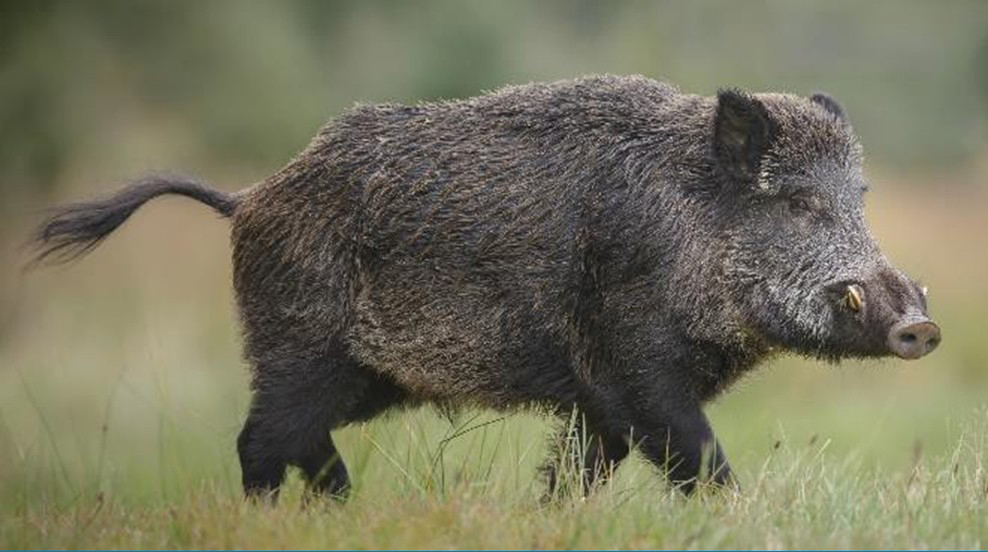
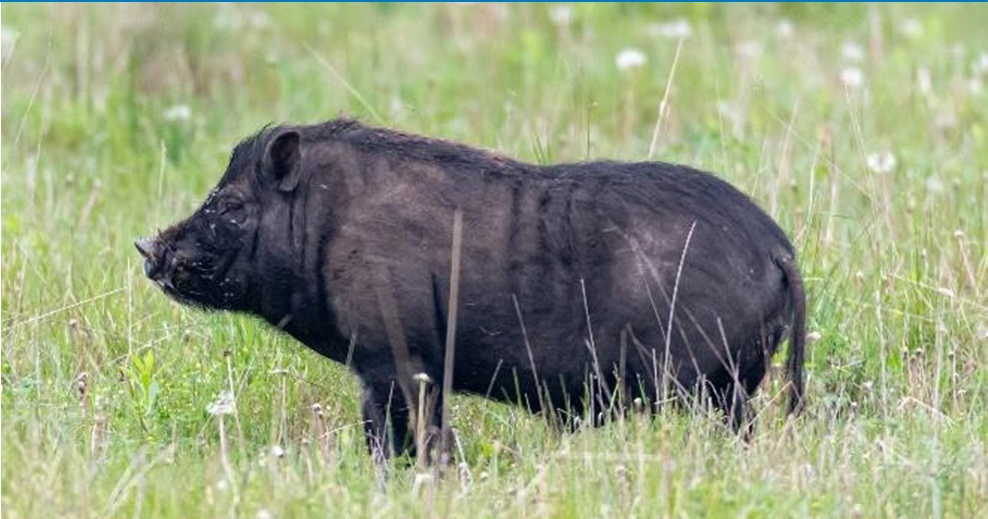
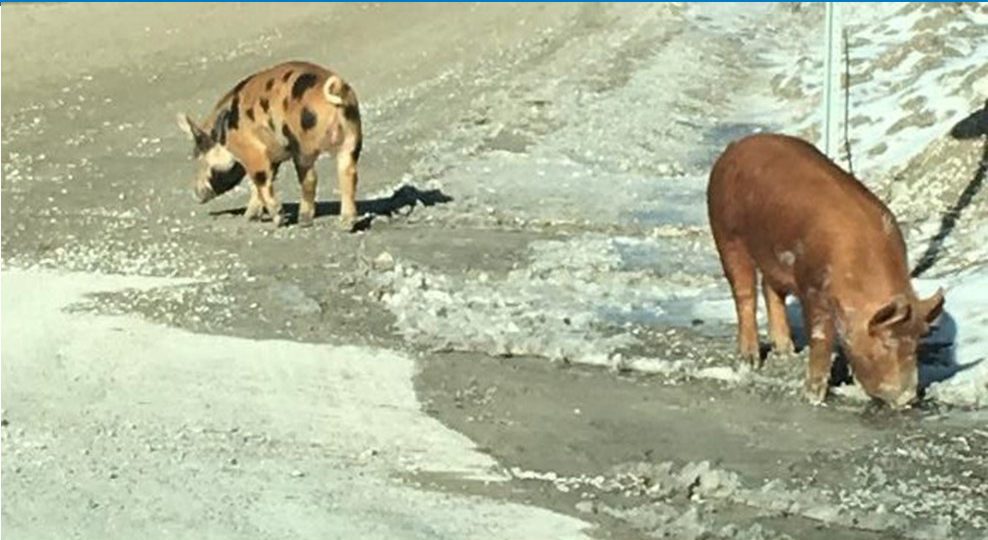
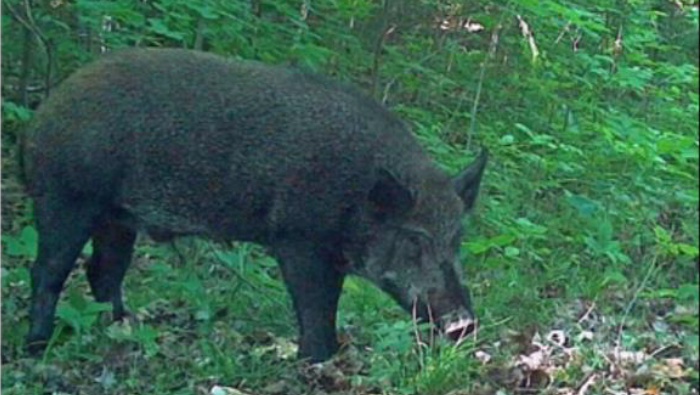
The MNRF receives a variety of sightings from the public – everything from domestic pigs loose on the road, to trail camera footage of Eurasian wild boar, to pot bellied pigs that have wandered away from home or have been abandoned. Pot bellied pigs are often mistaken for wild boar, since they may have coarse dark hair in a ridge along their back and may have visible tusks.
For the purposes of this summary, duplicate reports believed to describe the same group of pigs have been removed, as have reports where it was unclear if the animal was in fact a pig.
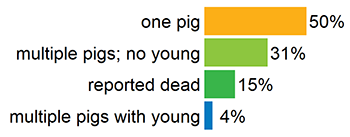
When did we receive the most reports of wild pigs?
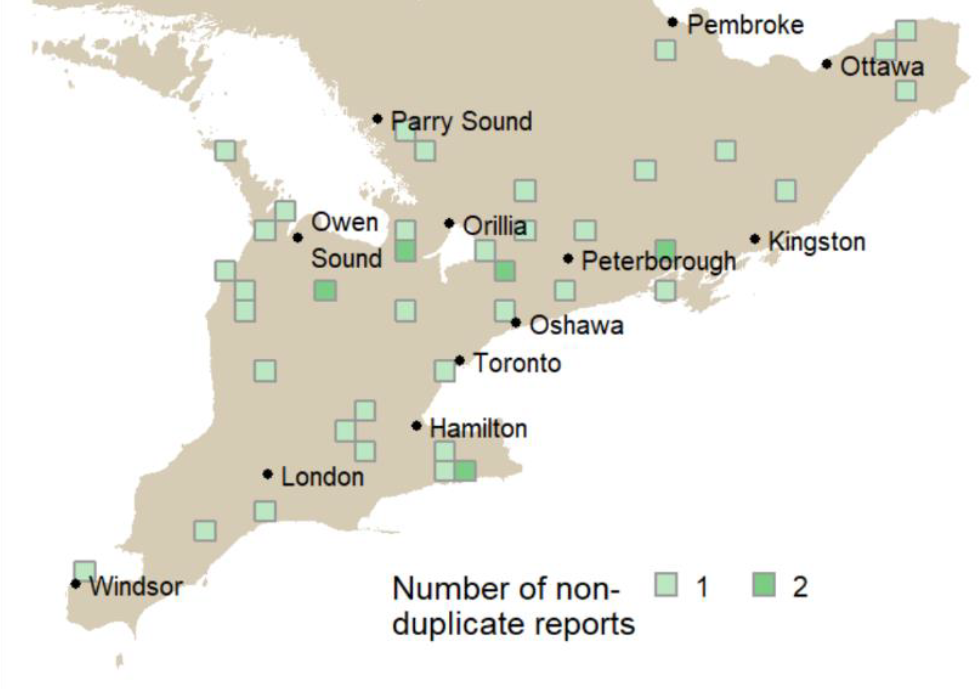
Based on the reports MNRF has received thus far, it’s likely that Ontario has small numbers of wild pigs scattered across southern, central and eastern Ontario.
These scattered reports do not indicate a breeding population of wild pigs. Very few reports were received from northern Ontario.
Unlike Ontario, many jurisdictions in North America have established populations of invasive wild pigs, like the prairie provinces or some U.S. states. Where established, wild pigs tend to live in large groups called sounders.
How many wild pigs are in Ontario?
Fortunately, Ontario still has time to prevent the establishment of wild pig populations. While reports of wild pigs from the public are critical to our understanding of the Ontario situation, the reports themselves cannot easily be used to estimate the number of wild pigs because:
- Wild pigs are less likely to be detected in areas with dense forest cover and where there are fewer people to report them.
- Sometimes, multiple people report the same wild pig(s), but it can be hard to know when this happens — especially if the pig is travelling and is seen in different places over time.
- Some wild pigs are domestic animals that have recently escaped. We rarely know if the animal returned to its home after it was reported.
- Our database contains reports of sightings dating back to 2011. We don’t know how many of these pigs are still at large, or even still alive.
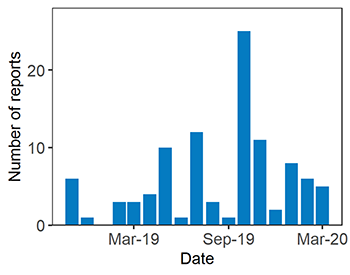
- The number of wild pig reports is closely related to media coverage. For example, the highest number of reports was received in October 2019, when there were many news articles about wild pigs in the media (see the spike in reports on the graph).
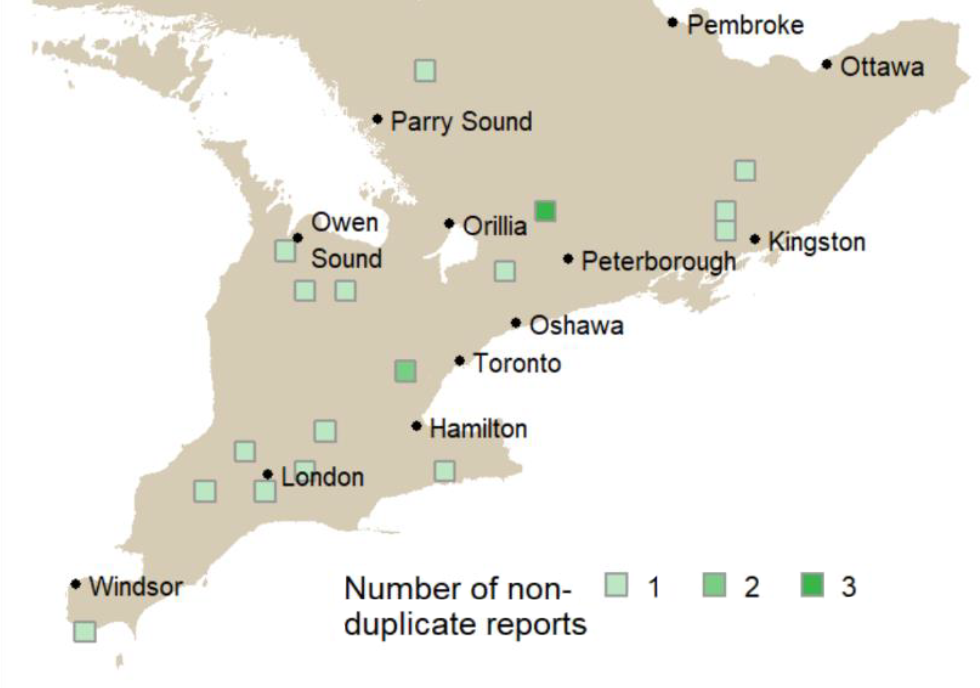
Where do reports of wild pigs occur in Ontario?
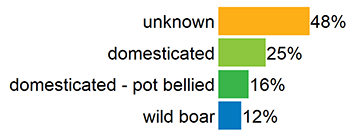
Our database of wild pig sightings contains all reports that are submitted by the public to the MNRF, no matter the breed of pig, its status (alive/deceased), or the possibility that it is someone’s pig that has escaped and may return home soon.
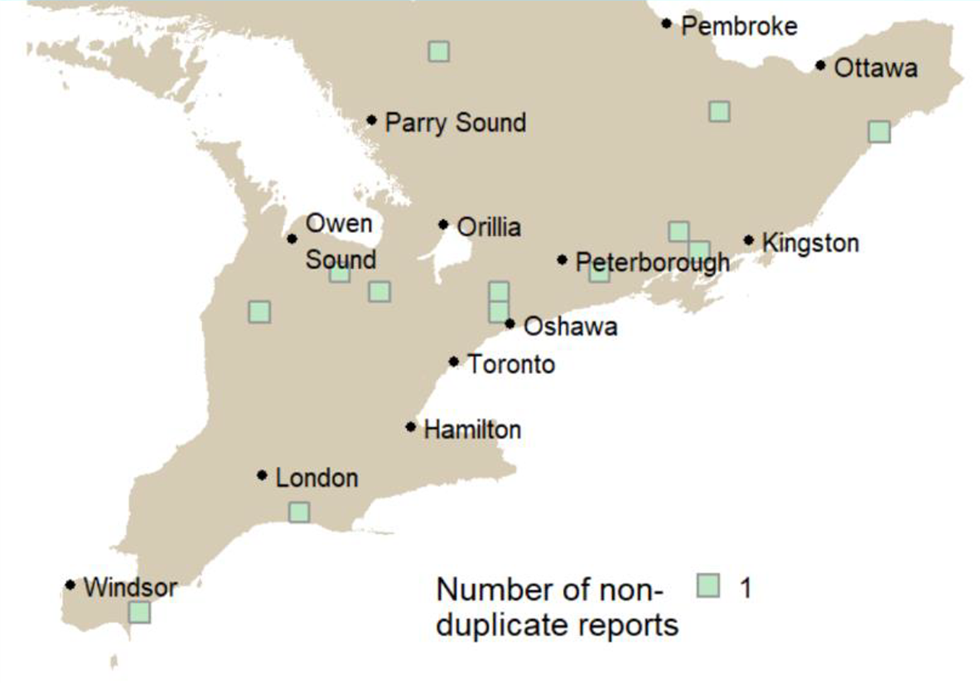
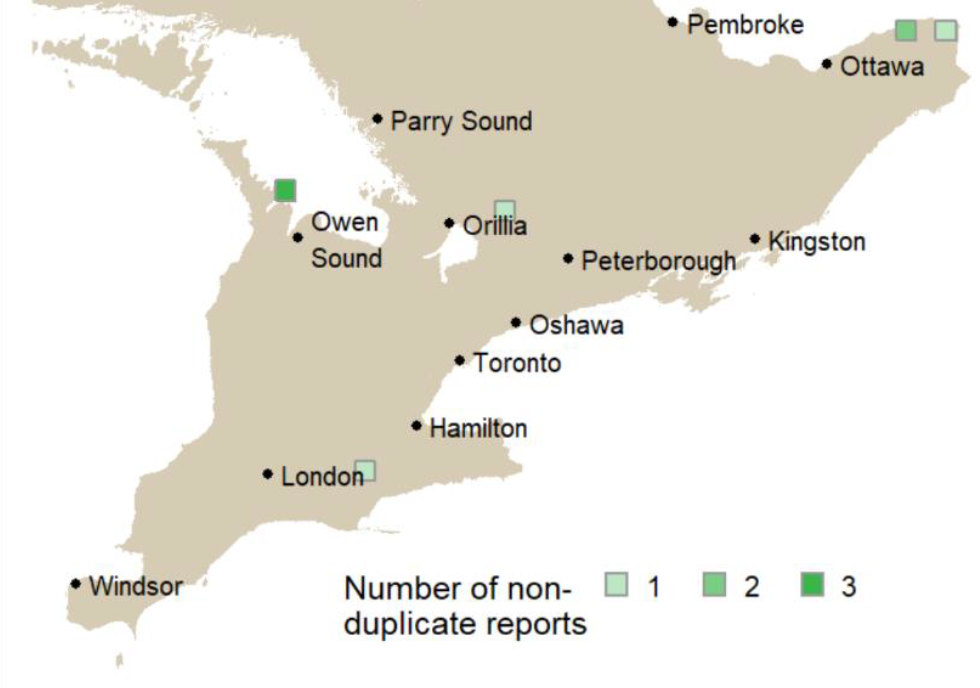
Below, we display live wild pigs reported to MNRF between October 15, 2018 and March 31, 2020. Reports submitted during this time include sightings of animals observed on the landscape as long ago as September 2011. Reports where pigs were known to have returned to their owners were omitted from the map. In addition to those shown on the map, one sighting was of escaped domestic pigs from the Latchford-Timiskaming area in northern Ontario.
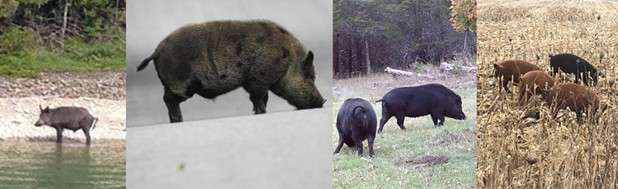
Domesticated
Some pigs are domesticated animals that have recently escaped. Many have likely returned to their farms.
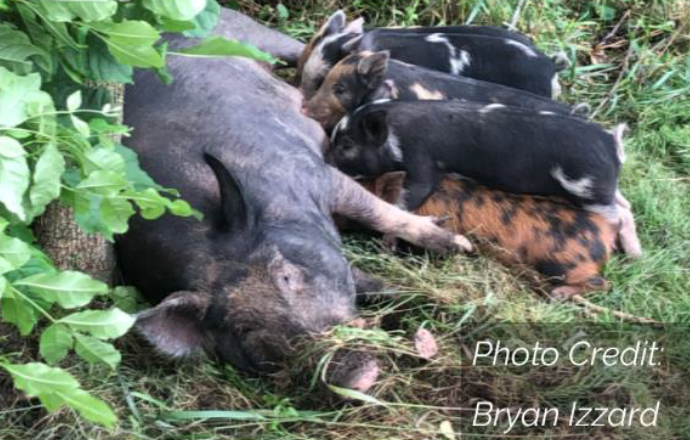
Domesticated — pot bellied
Many of the sightings MNRF receives are pot bellied pigs. While they can become feral, some sightings turn out to be pets that have wandered from home.
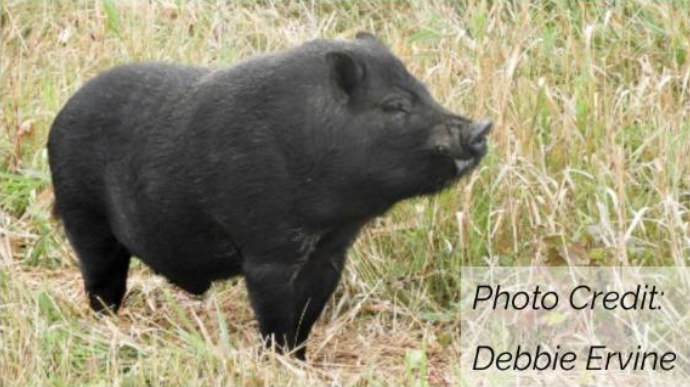
Wild boar
Some sightings appear to be wild boar, and these are a priority for investigation. Many of these sightings are close to wild boar farms.
Unknown
When we do not have a photo, we cannot determine what type of pig is reported. These sightings could be of domestic pigs, pot bellied pigs, wild boar or hybrids.
What do I do if I see a wild pig?
Include when and where you saw it, any photos you may have taken, and a detailed description of what you saw. Information from the public continues to play a critical role; reports assist the ministry in learning more about wild pig distribution on the landscape and guide policy and on-the-ground management efforts.
Based on the sightings that have been reported by vigilant Ontarians from across the province, the ministry has been working on a pilot project to determine the presence of invasive wild pigs, including on-the-ground follow up of high-priority reported sightings in areas where reports have suggested a high likelihood that wild pigs are present.
At these locations, ministry staff actively engage with residents to learn as much as possible, and set up trail cameras to detect whether wild pigs are still in the area. Where appropriate, the ministry is testing approaches for trapping and removing invasive wild pigs from the environment.
At this time, hunting wild pigs in Ontario is not recommended. This recommendation is based on research and management from other jurisdictions that have demonstrated that hunting is ineffective at eliminating invasive wild pigs and can accelerate their spread.
Wild pigs live in groups and may produce large litters once or twice a year. When they are exposed to hunting pressure, wild pigs quickly learn to avoid humans, disperse into new areas, and may continue to reproduce. This can make efforts to eliminate invasive wild pigs more difficult.
Also, in some North American jurisdictions where hunting was used to try to manage wild pig populations, the illegal release of wild pigs to create populations in areas where they didn’t occur before has caused rapid growth in pig numbers, instead of a decline.