

Content warning
This page includes topics that may be traumatic. Access support resources if you, or someone you know, needs help or support.
Understanding the impact of Indian Residential Schools
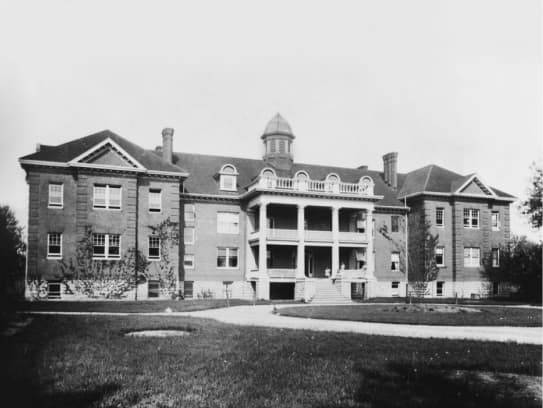
The Indian Residential School system operated across Canada for well over 100 years, with the last schools closing in the 1990s. Indian Residential Schools were created to separate Indigenous children from their families and communities, and to systematically strip away their traditions, cultural practices and languages.
More than 150,000 First Nations, Inuit and Métis children from across the country were forced to attend Indian Residential Schools, which were often located far from their homes. Thousands never made it home.
Each year on the federally recognized National Day for Truth and Reconciliation, we reflect and honour Survivors, their families and communities affected by Indian Residential Schools.
About Orange Shirt Day and the National Day for Truth and Reconciliation

Orange Shirt Day
September 30 is recognized as Orange Shirt Day, an Indigenous-led grassroots commemorative day inspired by the story of Indian Residential School Survivor Phyllis Webstad.
Phyllis was 6 years old when she wore her new orange shirt for her first day at St. Joseph Mission Indian Residential School. Her shirt was immediately taken from her by school staff.
Many across Canada wear an orange shirt on this day to honour Phyllis and other children who survived Indian Residential Schools and to remember those who did not.
National Day for Truth and Reconciliation
Canada marked the first National Day for Truth and Reconciliation on September 30, 2021, following the identification of potential unmarked burial sites at the former Kamloops Indian Residential School in British Columbia.
Survivors across Canada have long told stories of the abuse and deaths that took place at these institutions. The Tk’emlúps te Secwépemc First Nation’s announcement has galvanized nationwide efforts by Indigenous communities to locate their missing children.
Commemorating this day is an opportunity to honour Survivors and deepen understanding of the history and impact of Residential Schools. It is one essential step in a long journey towards truth-telling and meaningful reconciliation.
Commit to the ongoing process of reconciliation
You can support reconciliation by:
- learning the history between Indigenous and non-Indigenous peoples
- understanding the history and impact of Residential Schools
- exploring the unique intersections between treaty, constitutional, Indigenous and human rights in Canada and Ontario
- recognizing the rich contributions that Indigenous peoples have made to Canada and Ontario
- taking action to address historical injustices and present-day wrongs
- teaching others
Take time to learn the stories, experiences and ongoing effects of Residential Schools on the First Nations, Inuit and Métis peoples in Ontario.
National Centre for Truth and Reconciliation (NCTR)
The NCTR educates Canadians on the profound injustices inflicted on First Nations, Inuit and the Métis Nation by the forced removal of children to attend Residential Schools and the widespread abuse suffered in those schools. Their goal is to honour Survivors and to foster reconciliation and healing on the foundation of truth-telling.
Assembly of First Nations — It’s Our Time Toolkit
A tool to bring together First Nations and non-First Nations people and foster a spirit of cooperation, understanding and action. Featured learning modules include Book 6, which looks at the history of the Residential School System and impacts on Indigenous people.
Woodland Cultural Centre
The Woodland Cultural Centre in Brantford offers tours of the former Mohawk Institute Indian Residential School, Canada’s largest and longest running Indian Residential School.
Shingwauk Hall Residential Schools Centre
Situated on the site of the former Shingwauk Indian Residential School and current Algoma University in Sault Ste. Marie, the Shingwauk Residential Schools Centre facilitates ongoing research, exhibitions and educational programming on the history of Residential Schools. They offer guided historic site tours.
Chiefs of Ontario resources
Support for First Nations and community members in accessing services for mental health support, site searches and funding.
Support
Support is available if you, or someone you know, needs help or support.
A National Residential School Crisis Line is available to provide support to former Residential School students and their families. You can access emotional and crisis referral services by calling the free of charge 24-Hour National Crisis Line at
Indigenous peoples across Canada can also connect with The Hope for Wellness Help Line 24 hours a day, 7 days a week for counselling and crisis intervention. Call the toll-free help line at
Talk4Healing is a culturally grounded, fully confidential help line available in 14 languages for Indigenous women in Ontario. Call the toll-free number at
Free and confidential mental health support is available to anyone who may be affected.
Find a Friendship Centre near you offering support in your community.