

Water storage facility disinfection procedure
This procedure outlines steps to disinfect water storage facilities of municipal residential drinking water systems as required by their drinking water works permits. This technical information is for municipalities and contractors involved in the disinfection of water storage facilities.
When the procedure will take effect
This procedure will take effect through conditions in the Drinking Water Works Permit replacing the reference to ANSI/AWWA Standard C652 (AWWA C652). There are 2 scenarios that will apply depending on the timing of a system’s Municipal Drinking Water Licence renewal:
- permits specifying timelines for transition (scenario 1)
- permits that do not specify timelines for transition (scenario 2)
Drinking water systems must follow AWWA C652 unless their permit, or the ministry, authorizes them to use the Water Storage Facility Disinfection Procedure. Drinking water systems cannot partially implement the procedure.
Scenario 1: Permits specifying timelines for transition
If the licence for your system was renewed between 2023 and 2026, your permit includes an updated condition, typically condition 2.3.3 in Schedule B. This condition requires you to transition from AWWA C652 to this procedure within 6 months of its issuance.
Scenario 2: Permits that do not specify timelines for transition
If your permit does not include a condition requiring transition to this procedure, this requirement will be added in a future permit amendment. You are encouraged to consider early adoption and implementation of this procedure which can be requested by contacting the ministry at mdwlp@ontario.ca. Otherwise, you are required to use AWWA C652 until conditions in your permit indicate otherwise or you receive authorization to use the new procedure.
Preface
This Water Storage Facility Disinfection Procedure (“this procedure”) is a supporting document for Ontario legislation and regulations related to drinking water. Schedule B, Condition 2.3 of the Drinking Water Works Permit adopts this procedure by reference. Where this procedure refers to ANSI/AWWA Standard C652 - “Standard for Disinfection of Water-Storage Facilities”, the current version of the standard shall be used. The section numbers in this procedure match the section numbers of the 2019 version of AWWA C652. When an updated version of the standard is released, its corresponding section(s) and amended wording will supersede the requirements of the previous version. Definitions are listed in Appendix D and should be reviewed prior to using this procedure.
Table A (below) shows the applicable disinfection procedure for each component by location. Determine the proper disinfection procedure for a particular component by selecting its location from the “Location” column of Table A. Find the specific component to be disinfected within the rows for the selected location. Use the procedure named in the column heading above the selected component to disinfect that component. Sampling and documentation shall be completed as per the identified procedure, unless otherwise indicated in section 5 of this procedure.
| Location | Water Treatment Plant Disinfection Procedure | Water Storage Facility Disinfection Procedure | Watermain Disinfection Procedure |
|---|---|---|---|
| Water treatment plant | filters - filter basins and contents | raw water tanks | raw water piping and appurtenances |
| Water treatment plant | process water pumps and UV units | process water tanks and drinking water tanks | process water piping and appurtenances |
| Water treatment plant | drinking water pumps | raw | drinking water piping and appurtenances |
| Distribution system | drinking water pumps | drinking water storage facilities | drinking water piping and appurtenances |
Operating authorities shall use certified operators for activities that must be performed by a certified operator. Water quality analysts may perform sampling and testing if permitted through regulation. Storage facilities may only be isolated and placed into service by certified operators. Activities performed on isolated storage facilities are not required to be performed by certified operators, unless specified otherwise in this procedure. These activities, including taking microbiological samples and performing chlorine residual concentration testing, may be performed by any person authorized by the operating authority.
Operating authorities may use best management practices that exceed the minimum requirements in this procedure.
Deviations from the requirements of this procedure shall be requested and approved in advance by the Director.
1. Modifications to section 1 of AWWA C652 – general
Operating authorities shall ensure that the requirements of AWWA C652, as modified by this procedure, are followed. For clarity, where this procedure states no disinfection is required for a storage facility, the sampling required after its disinfection is also not required.
No disinfection is required when a storage facility is emptied and no maintenance is performed, provided the operating authority is satisfied that sanitary practices were used. Examples of sanitary practices are:
- cleaning observation hatches (or covers as applicable) and immediate area of loose dirt and debris prior to opening
- cleaning boots and spraying with a minimum 1% chlorine solution immediately prior to entering the storage facility
If a storage facility is filled after being left empty for more than 5 days, the operating authority shall:
- Obtain 1 set of microbiological samples as per section 5 of this procedure.
- Wait for satisfactory microbiological sample results prior to placing the storage facility into service. Section 5.1.2 of this procedure, “Exception – placing storage facility into service prior to receiving microbiological sample results” does not apply.
Where an operating authority believes that contaminated or improperly disinfected water was directed to users, the reporting requirements from Schedule 16-4 of Ontario Regulation 170/03 shall apply. The applicable corrective actions outlined in Schedules 17 or 18 of O. Reg. 170/03 shall also apply.
2. Modifications to section 2 of AWWA C652 – references
In addition to the standards referred to in section 2 of AWWA C652, this procedure refers to these 3 ministry’s procedures:
- Watermain Disinfection Procedure
- Water Treatment Plant Disinfection Procedure
- Municipal Drinking Water Well Disinfection Procedure
In their latest editions, these 3 documents form a part of this procedure to the extent specified within this procedure.
3. Modifications to section 3 of AWWA C652 – definitions
Appendix D of this procedure includes additional definitions, beyond those in section 3 of AWWA C652. In case of conflict, the definitions from this procedure will supersede the definitions of AWWA C652.
Where AWWA C652 refers to potable water, the definition of drinking water in Appendix D shall be used.
4. Modifications to section 4 of AWWA C652 – requirements
At concentrations over 10 mg/L, measurements of total chlorine and free chlorine shall be deemed equivalent.
4.1 Materials and cleaning
In section 4.1.2 of AWWA C652:
- “Operating facilities” refers to ancillary appurtenances, structures and pipes that meet these 2 criteria:
- come into contact with water during storage facility operation
- may be exposed to contaminants during the work activities
- Drain piping (as shown in Appendix A) shall be cleaned or flushed with a minimum of 2 pipe volumes of water.
- All surfaces within the interior of a storage facility shall be cleaned as per section 4.1.2 of AWWA C652.
- All surfaces within the interior of a storage facility that may come in contact with water during normal operation shall be disinfected.
- Any surfaces inside a storage facility that do not come in contact with water during normal operation may be disinfected at the operating authority’s discretion.
In addition, any component of chemical feed systems at a storage facility shall be cleaned and rinsed prior to it being placed into service. Rinsing shall be performed with solution at a minimum 200 mg/L chlorine concentration. Operating authorities may require a retention time after the chlorine solution is applied. Spraying or swabbing are acceptable alternatives to rinsing.
The requirements from section 4.2 of this procedure applies to this chlorine solution and associated equipment. When dealing with chemicals that are not compatible with chlorine, operating authorities shall consider rinsing with drinking water following the chlorine rinse.
4.2 Forms of chlorine for disinfection and rinsing
Chemicals used for disinfection shall meet the requirements of both of these standards:
- American Water Works Association (AWWA)
- American National Standards Institute (ANSI) safety criteria standard NSF/ANSI/CAN 60
The same requirements apply for the chlorine solution used for rinsing as per section 4.1 of this procedure. The equipment used to apply the chlorine solution is not required to meet the requirements of NSF/ANSI/CAN 61. It shall, however, only be used for chlorine solution applications. Deviations allowing the use of alternate disinfection chemicals (for example, hydrogen peroxide) shall be requested and approved in advance by the Director.
4.3 Methods of chlorination
Operating authorities may use a combination of the 3 chlorination methods outlined in this section. For example, an operating authority may use the following combination:
- chlorination method 1 to normal operating levels
- chlorination method 2 for space between operating levels and the overflow point
For clarification, a reference to filling to the overflow level in chlorination methods 1 and 3 means filling until overflow of water is confirmed. Filling to the overflow level is not required if an overflow point does not exist. Operating authorities shall, however, ensure that the storage facility is filled to the maximum fill level.
Operating authorities shall ensure that a chlorine meter is used to test the chlorine concentrations for compliance with Tables 1, 2 and 3. The ministry does not allow the use of test strips to measure the chlorine concentrations recorded to demonstrate compliance with this procedure.
For washdown pipes within storage facilities:
- If contamination is suspected, the requirements for Category 2 Watermain Breaks from the Watermain Disinfection Procedure shall be followed for repair, sampling and documentation.
- If no contamination is suspected, disinfection is not required. Operating authorities shall perform high velocity flushing after maintenance to clean out the pipes, unless this was achieved during storage facility cleaning.
Handling of water discharges to the natural environment
Operating authorities shall take steps to ensure that discharges of water to the natural environment comply with Condition 10.0 of Schedule B of the Municipal Drinking Water Licence.This includes following the applicable requirements of section 4.3 of AWWA C652 for dechlorination. Follow ANSI/AWWA C655: Field dechlorination, until the total chlorine residual concentration is no more than 0.02 mg/L in any of the following situations:
- for any water that is directly discharged into surface water
- if the discharge into the natural environment is likely to cause an adverse effect
If the dechlorinated discharged water meets the criteria of Condition 5.5 of Schedule C of the Municipal Drinking Water Licence, the discharge is deemed to be a Class I spill. Class I spills are defined in Ontario Regulation 675/98 made under the Environmental Protection Act.
Operating authorities may allow the use of hydrogen peroxide in addition to the dechlorination chemicals mentioned in section 4.2.3 of ANSI/AWWA C655: Field dechlorination. Deviations allowing the use of other alternate dechlorination chemicals shall be requested and approved in advance by the Director.
4.3.1 Chlorination method 1
Where a storage facility is disinfected using chlorination method 1 as per section 4.3.1 of AWWA C652, operating authorities shall use Table 1 for the:
- minimum retention periods
- minimum chlorine concentrations required after the retention periods
| Chlorine addition method | Minimum retention period | Minimum chlorine concentration required after retention period |
|---|---|---|
| Liquid-chlorine (gas) or sodium hypochlorite using chemical-feed pump | 1.5 hours 3 hours 6 hours 12 hours | 40 mg/L 20 mg/L 10 mg/L 5 mg/L |
| Hand poured sodium hypochlorite or calcium hypochlorite | 24 hours 48 hours | 10 mg/L 5 mg/L |
Operating authorities shall ensure that drain piping is purged of contaminants.
Operating authorities may require intermediate chlorine concentration tests in addition to the chlorine concentration test(s) after the minimum retention period as per Table 1.
4.3.2 Chlorination method 2
Where a storage facility is disinfected using chlorination method 2 as per section 4.3.2 of AWWA C652, operating authorities shall use Table 2 for the:
- minimum retention period
- initial chlorine concentration
Chlorine concentration used in chlorination method 2 shall be tested on the day of application.
| Chlorine addition method | Minimum retention period | Initial chlorine concentration |
|---|---|---|
| Application with suitable brushes or spray equipment | 30 minutes | ≥ 200 mg/L |
The interior surfaces of all pipes that convey water into or out of the storage facility, except washdown pipes, require disinfection. Examples of pipes requiring disinfection are inlet, outlet, recirculation and drain piping. If brushing or spraying a 200 mg/L chlorine solution on all pipe surfaces is impractical, use 1 of the following disinfection methods:
- fill the pipes with a chlorine solution of not less than 200 mg/L, which shall be retained for at least 30 minutes
- disinfect the pipes using chlorination method 1
When chlorine concentration samples cannot practically be taken after the piping is filled, the operating authority may use calculations to determine the initial chlorine concentration.
For the purpose of section 4.3.2.1 of AWWA C652, only the portion of the drain piping between the storage facility and the drain valve needs to be disinfected. Drain piping downstream of the drain valve does not require disinfection. Appendix A includes a diagram showing which pipes require disinfection.
Section 4.3.2.2 of AWWA C652 requires to purge the drain piping of the highly chlorinated water after starting to re-fill the storage facility. Operating authorities may instead choose to purge the drain piping content prior to admitting drinking water into the storage facility.
Section 4.3.2.2 of AWWA C652 states that the storage facility be filled to its overflow level. Operating authorities may instead choose to fill the storage facility to its maximum operating level without actually overflowing.
Operating authorities shall endeavour to place storage facilities into service as soon as possible after satisfactory microbiological sample results are received. Operating authorities shall ensure that sanitary and security practices are followed after disinfection until the storage facility is placed into service. If filling is not started within 5 days, the operating authority shall wait for satisfactory microbiological sample results prior to placing the storage facility into service. Section 5.1.2 of this procedure, “Exception – placing storage facility into service prior to receiving microbiological sample results” does not apply.
4.3.3 Chlorination method 3
Where a storage facility is disinfected using chlorination method 3 as per section 4.3.3 of AWWA C652, operating authorities shall use Table 3 for the:
- minimum initial chlorine concentrations
- minimum retention periods
When initial chlorine concentration samples cannot practically be taken from the storage facility, the operating authority may use calculations to determine the initial chlorine concentration.
| Initial chlorine concentration | Minimum retention period at 5% volume | Minimum retention period when storage facility filled to overflow level |
|---|---|---|
| ≥ 25 mg/L ≥ 50 mg/L | 12 hours 6 hours | 24 hours 24 hours |
In section 4.3.3.1 of AWWA C652, sodium hypochlorite solution may be poured into the storage facility prior to water depth reaching 5% of total storage volume required by section 4.3.1.2.2 of AWWA C652. This allows for adequate distribution and mixing of the chlorine solution.
Operating authorities shall ensure that drain piping is purged of contaminants.
4.4 Disinfection procedures when conducting underwater inspection and/or cleaning of storage facilities
In section 4.4.5.1.6 of AWWA C652, divers or Remotely Operated Vehicles (ROVs) are prohibited from disturbing the sediment inside the storage facility in any way. This restriction applies unless the operating authority explicitly approves the activity. Examples of such situations would be intentional removal of sediment or moving sediment to confirm floor condition. Where disturbing sediment is expected, observed or suspected, operating authorities shall take measures to ensure that disturbed sediments are not directed to users. This may include isolating the storage facility.
The requirements of section 4.4.5.2.3 of AWWA C652 related to the dive team personnel health do not apply as their personal medical information does not need to be disclosed.
In section 4.4.6 of AWWA C652, in lieu of using section 4.3.2 of AWWA C652 for disinfection of equipment and personnel, operating authorities shall use Table 4 for the:
- minimum chlorine concentrations
- minimum retention periods
When the chlorine concentration to meet the Table 4 requirements cannot practically be measured, the operating authority may allow the concentration to be calculated.
| Minimum chlorine concentration | Minimum retention period |
|---|---|
| 200 mg/L 300 mg/L 1% (10,000 mg/L) | 30 minutes 15 minutes Immediate |
Unless the storage facility is isolated, the operating authority shall ensure that all the following criteria are met:
- a certified operator is present
- the certified operator witnesses and confirms that the sanitary practices and disinfection requirements listed in this section are followed
In section 4.4.7 of AWWA C652, for clarity,
- for ROV inspections, microbiological samples are not required unless sediment disturbance is expected, observed or suspected
- after underwater inspection and/or cleaning activities using divers, microbiological samples are required whether the storage facility was kept in service or isolated
- if the storage facility was kept in service, the microbiological samples and associated chlorine residual concentration tests shall be taken by a certified operator or water quality analyst
5. Modifications to section 5 of AWWA C652 – verification
5.1 Water quality sampling and testing
Section 5.1 of this procedure provides the requirements for sampling and testing after a storage facility has been disinfected as per this procedure.
5.1.1 Microbiological sampling requirements
All microbiological samples shall be taken and handled as per the ministry’s Practices for the Collection and Handling of Drinking Water Samples document (as amended).
Operating authorities shall endeavour to take a set of microbiological samples that are representative of the contents of the storage facility. For example, a representative set of microbiological samples could include 1 of the following:
- samples from at least 2 locations
- two samples from the same location, taken at least 30 minutes apart, with water flowing between samples
- two samples from the same location, at least 16 hours apart, with or without water flowing
- any other sampling strategy approved by the Director
Suggested locations may include the following (but are not limited to):
- each cell of a storage facility
- each inlet and/or outlet pipe of a storage facility
When microbiological samples are taken from an isolated storage facility, additional samples shall be taken at the same time from the same location. These samples shall be tested immediately for 1 of these parameters below:
- free chlorine residual concentration if the system provides chlorination and does not provide chloramination
- combined chlorine residual concentration if the system provides chloramination
Any person authorized by the operating authority may take microbiological samples from isolated storage facilities and perform the associated chlorine residual concentration tests.
5.1.1.1 Result of testing
In section 5.1.1.1 of AWWA C652, where the situation shall be evaluated by qualified personnel, “qualified personnel” means operating authority or any employee thereof.
In section 5.1.1.1 of AWWA C652, repeat microbiological samples shall be taken from every location where the initial samples were taken. These samples shall be taken at least 30 minutes from the previous samples. If repeat microbiological samples are taken from a tap, the operating authority shall endeavour to have water flow continuously from the sample point between samples.
Microbiological samples results obtained from isolated storage facilities shall be uploaded to the ministry’s database by the laboratory. Non-satisfactory results from these samples are not reportable under Schedule 16 of O. Reg. 170/03.
5.1.1.2 Care in sampling
If samples are taken from a storage facility hatch, care shall be taken to ensure contamination is not introduced when the hatch is open. For example, the area may be covered with a tent during inclement weather.
5.1.1.3 and 5.1.1.4 Additional and optional sampling
The “recommended additional samples” per section 5.1.1.3 of AWWA C652 and the “optional sampling and testing” per section 5.1.1.4 of AWWA C652 shall be considered as optional and at the discretion of the operating authority. Determinations of acceptable values for these parameters shall be at the discretion of the operating authority.
5.1.1.5 Placing the storage facility into service
Operating authorities shall endeavour to place a disinfected storage facility into service as soon as possible after satisfactory microbiological sample results are received. Additionally, chlorine residual concentration shall be tested at all the following locations immediately before placing in service an isolated storage facility that will direct drinking water to users:
- at each inlet/outlet pipe
- at all locations where microbiological samples were taken
- at any other location required by the operating authority
Determinations of acceptable chlorine residual concentrations and any other water quality parameters shall be at the discretion of the operating authority. One of the following minimum chlorine residual concentrations shall however be achieved:
- at least 0.20 mg/L free chlorine residual concentration in a chlorinated system
- at least 1.0 mg/L combined chlorine residual concentration in a chloraminated system
If these concentrations cannot be achieved, the operating authority shall develop and implement a re-commissioning plan. The plan shall reflect the duration of isolation and the associated risks. The plan may include the implementation of section 4 of this procedure. As a minimum, the plan shall include the following 2 items:
- Steps to raise the chlorine residual concentrations to the minimum values mentioned above.
- Taking at least 2 consecutive sets of microbiological samples as per section 5.1.1 of this procedure at each sampling point after chlorine residual concentration has been raised. The operating authority shall wait for satisfactory results to place the isolated storage facility into service.
5.1.2 Exception - Placing storage facility into service prior to receiving microbiological sample results
The intent of this procedure is for operating authorities to keep the disinfected storage facilities requiring microbiological sampling isolated until satisfactory microbiological sample results are received.
There are circumstances where it may be impractical to wait for the microbiological sample results before placing the disinfected storage facility into service (meaning, water directed to users). The following are examples of acceptable circumstances:
- when the ability to meet drinking water demand may be compromised
- when stored drinking water levels may fall below acceptable limits
In these circumstances, the operating authority may place an isolated storage facility into service prior to receiving satisfactory microbiological sample results.
Any drinking water microbiological samples and their associated chlorine residual concentration tests shall be deemed drinking water samples within the meaning of O. Reg. 170/03:
- These samples and tests shall be taken by a certified operator or a water quality analyst.
- These results shall be uploaded to the ministry’s database by the laboratory.
- The following shall apply to adverse microbiological sample and/or chlorine residual concentration test results:
- the reporting requirements outlined in Schedule 16-3 of O. Reg. 170/03
- the applicable corrective actions outlined in Schedules 17 or 18 of O. Reg. 170/03
For disinfected raw or process water storage facilities, the operating authority shall arrange to take all the following samples:
- The microbiological samples obtained on the isolated storage facility as per section 5.1.1 of this procedure.
- Additional microbiological samples and chlorine concentration tests from the treated water sampling point. These shall be taken at an estimated point in time when both of the following criteria are met:
- the water from the disinfected storage facility is believed to have achieved “primary disinfection”
- the water has reached the treated water sampling point
A. After disinfection is performed as per section 4.3 of this procedure
After disinfection is performed, the operating authority may place the storage facility into service prior to receiving all satisfactory microbiological sample results if all the following criteria are met:
- The operating authority provides written notice of its intention to use this exception to the local ministry office and Medical Officer of Health in advance. If not possible, the written notices shall be provided as soon as reasonably possible. The written notice shall include the following 2 items at a minimum:
- the operating authority’s reason for using this exception rather than waiting for satisfactory microbiological sample results prior to placing the storage facility into service
- a description of the work performed and the disinfection method to be used
- The operating authority shall document and follow any direction from the local ministry office and/or the local Medical Officer of Health. The operating authority shall document if the following occurs:
- no additional direction was provided
- direction was not provided in time to be incorporated into the work performed
- An Operator-in-Charge verifies that the cleaning and disinfection of the storage facility meet the requirements of this procedure.
B. After underwater inspection and/or cleaning is performed as per section 4.4 of this procedure
When microbiological samples are required to be taken from isolated storage facilities, operating authorities may return the storage facility to service prior to receiving all satisfactory microbiological sample results if all the following criteria are met:
- a certified operator verifies that the sanitary practices and disinfection requirements of section 4.4 of this procedure are followed
- a certified operator states that there is no observed or suspected disturbance of sediment or that measures are taken to ensure that disturbed sediments are not directed to users
- if applicable, the chlorine residual concentration test result is acceptable to the operating authority
5.2 Record of compliance (documentation)
When using this procedure, operating authorities shall maintain records of the following information as a minimum. The information shall be retained as per the record-keeping requirements of section 27 of O. Reg. 128/04 and Condition 13.0 of Schedule B of the Municipal Drinking Water Licence. This section does not require that all the information be recorded on a single form.
- Statement that all surfaces requiring cleaning were cleaned as per section 4.1 of this procedure.
- If applicable, statement that any chemical system components at a storage facility requiring cleaning and rinsing, as per section 4.1 of this procedure, were:
- rinsed (or alternatively sprayed or swabbed) with a solution at a minimum 200 mg/L chlorine concentration
- rinsed with drinking water afterwards if necessary
- Type of water used for cleaning and/or disinfection (raw, process or drinking water).
- Statement that all screens (such as vent, overflow) were checked after cleaning.
- For the chemical used for disinfection, include all the following items:
- name and form of chemical
- concentrations as required
- statement that it meets the requirements of both the AWWA and NSF/ANSI/CAN 60 Standards
Disinfection procedure
For all disinfection methods in this procedure:
- Method of disinfection used.
- Date and time disinfection started and ended with calculation of retention period(s) in minutes or hours (2 retention periods in chlorination method 3).
- Statement that drain piping was purged.
- Statement whether a chlorine meter was used to measure chlorine residual concentrations used for disinfection. If the concentrations were calculated, reason why it was impractical to use a chlorine meter.
- If water was discharged to the natural environment:
- description of handling of disinfection water
- if dechlorination was required, total chlorine residual concentration of water discharged after dechlorination and name of chemical used for dechlorination
- statement whether discharge met the requirements of Condition 5.5 of Schedule B of the Municipal Drinking Water Licence, including which sub-clause of Condition 5.5 was met
Chlorination method 1:
- If sodium hypochlorite was used, include if added with chemical-feed pump or hand-poured.
- Statement that water was filled to overflow level and overflow was confirmed. If an overflow point does not exist, a statement that water was filled to maximum fill level.
- Chlorine concentration test result at end of retention period at each sampling point.
Chlorination method 2:
- Method of application (brush or spray).
- Test result or calculated value of chlorine concentration sprayed or brushed.
- Statement that all surfaces up to the overflow point, including outside of pipes, were thoroughly coated.
- If impractical to coat inside of a pipe - initial chlorine concentration (tested or calculated) and retention period.
Chlorination method 3:
- Test result or calculated value of initial chlorine concentration.
- Approximate measurement and percentage of volume filled initially.
- Statement that water was filled to overflow level for second portion of disinfection and overflow was confirmed. If an overflow point does not exist, a statement that water was filled to maximum fill level.
Underwater inspection and/or cleaning:
- Type of inspection: ROV or divers.
- Statement whether storage facility was kept in service at the time or isolated. If isolated, date and time storage facility was isolated.
- Statement whether there was observed or suspected disturbance of sediment. If applicable, description of measures taken to ensure that disturbed sediments were not directed to user.
- Statement that access hatches and immediate area were cleaned of loose dirt of debris prior to opening.
- Initial water quality – chlorine residual concentration test results at representative locations.
- If the storage facility was kept in service at the time, daily microbiological sample and associated chlorine residual concentration test results.
- Statement that equipment and personnel were disinfected, chlorine concentration used for disinfection and retention period if applicable.
- Name of certified operator present (if required).
- Post inspection microbiological sample and chlorine residual concentration test results (if required).
Microbiological sampling:
- Date, time and location of microbiological samples.
- Microbiological sample and applicable chlorine residual concentration test results.
- If applicable, name of certified operator or water quality analyst who took the microbiological samples and associated chlorine concentration residual tests.
Placing into service:
- Date and time of placing into service (if applicable).
- Statement that sanitary practices were maintained following disinfection until the storage facility was placed into service.
- If applicable, the day a storage facility was placed into service:
- chlorine residual concentration test result(s)
- date, time and location of the test(s)
- plan and associated records if any chlorine residual concentration test result was too low
- Exception as per section 5.1.2: If a disinfected storage facility was placed into service prior to receiving microbiological sample test results:
- Description of the circumstances requiring the placing into service prior to receiving microbiological sample test results.
- After disinfection:
- Copy of written notice sent to the local ministry office and the local Medical Officer of Health.
- Response to any direction received. Document if no additional direction was provided or direction was not provided on time.
- Name of Operator-in-Charge who verified that the cleaning and disinfection of the storage facility met the requirements of this procedure.
- After underwater inspection and/or cleaning:
- name of certified operator who verified that the sanitary practices and disinfection of the storage facility met the requirements of this procedure
6. Delivery
No modification to this section.
Appendix A – Pipes that require disinfection using the Water Storage Facility Disinfection Procedure
Figure 1 - Example of storage facility and its associated piping
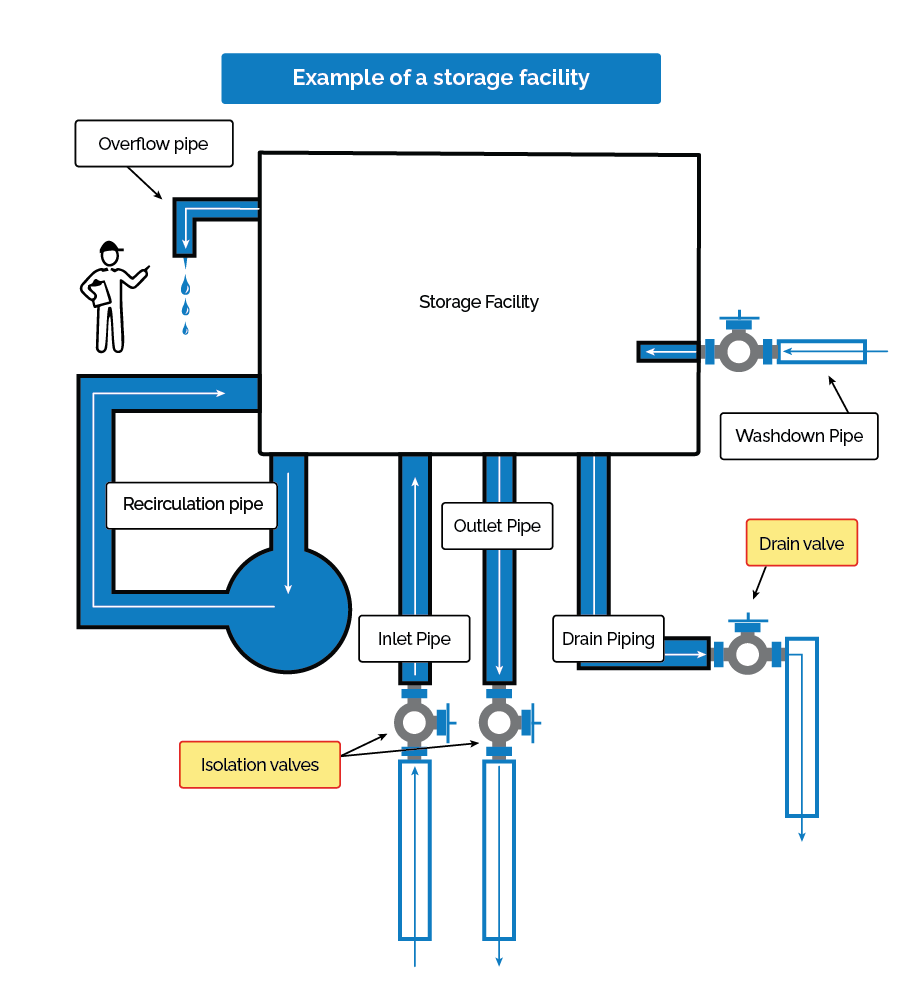
Figure 1 is an example of a storage facility and pipes which may be connected to it: inlet, outlet, washdown, recirculation, drain and overflow pipes. These pipes are shown in blue around the storage facility. The overflow pipe is at the top left of the storage facility. Water drips out of the overflow pipe. A man with an umbrella is watching the water drip down from the overflow pipe.
The white arrows of the inlet, washdown and recirculation pipes go towards the storage facility. The white arrows of the outlet and drain pipes are coming out of the storage facility. The inlet, outlet, washdown and drain pipes have isolation valves on them. Blue arrows, located on the non-storage facility side of the valves, go in the same direction as the white arrows.
Figure 1 is an example of a storage facility and its associated piping. Disinfection is required for the portions of the inlet, outlet, washdown, recirculation and drain pipes that connect to the storage facility up to their isolation valves. These portions are shown in blue in the figure.
The portions of the inlet, outlet, washdown and drain pipes after their isolation valves, shown in white in the figure, do not require disinfection. Overflow pipes from storage facility do not require disinfection.
For chlorination methods 1 and 3, overflow of water must be confirmed. If an overflow point does not exist, water shall be filled to maximum fill level.
Appendix B – Flowcharts - section 4 – requirements – (disinfection of storage facility)
Section 4 of this procedure provides steps required to disinfect a storage facility.
- When disinfecting a storage facility and its associated sampling, section 4 of AWWA C652 must be followed as modified by this procedure.
- Section numbers in bold refer to AWWA C652. Section numbers in normal font refer to this procedure.
- No disinfection is required if a storage facility is emptied, no maintenance is performed and the operating authority is satisfied that sanitary practices were used.
- At concentrations > 10 mg/L, measurements of total chlorine and free chlorine shall be deemed equivalent.
Figure 2 - Section 4 requirements – disinfection of storage facility
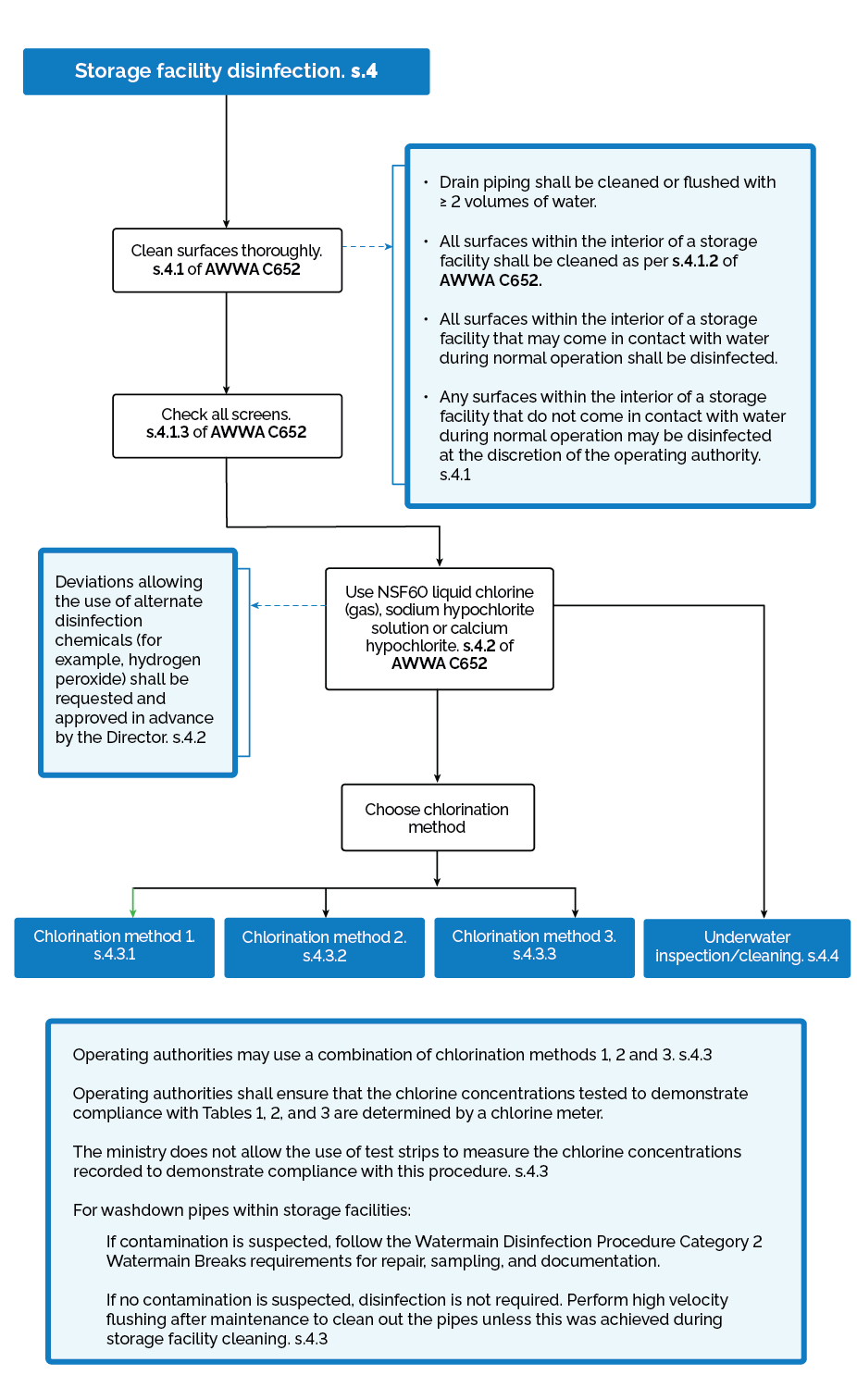
Figure 2 provides the main steps required to disinfect a storage facility as per section 4 of this procedure:
- Step 1: Clean surfaces thoroughly as per section 4.1 of AWWA C652.
- Drain piping shall be cleaned or flushed with greater than 2 volumes of water.
- All surfaces within the interior of a storage facility shall be cleaned as per section 4.1.2 of AWWA C652.
- All surfaces within the interior of a storage facility that may come in contact with water during normal operation shall be disinfected.
- Any surfaces within the interior of a storage facility that do not come in contact with water during normal operation may be disinfected. The decision to disinfect these surfaces is at the discretion of the operating authority.
- Step 2: Check all screens of the storage facility as per section 4.1.3 of AWWA C652.
- Step 3: Use NSF60 liquid chlorine (gas), sodium hypochlorite solution or calcium hypochlorite. Refer to section 4.2 of AWWA C652 for more details. Deviations allowing the use of alternate disinfection chemicals, such as hydrogen peroxide, shall be requested and approved in advance by the Director.
- Step 4: The operating authority shall use the applicable section of the document depending on the work performed on the storage facility:
- Section 4.4 of this procedure: disinfection requirements after underwater inspection or cleaning. Instructions specific to this type of disinfection are found in Figure 7.
- Section 4.3 of this procedure: use chlorination methods 1, 2 or 3 for any work requiring disinfection which is not covered by section 4.4. Instructions specific to each chlorination methods are found in Figures 3, 4 and 5 respectively. The following notes also apply to section 4.3.
- When using chlorination methods, operating authorities may use a combination of the chlorination methods 1, 2 and 3.
- Operating authorities shall ensure that the chlorine concentrations tested to demonstrate compliance with Tables 1, 2, and 3 of this procedure are determined by a chlorine meter. The ministry does not allow the use of test strips to measure the chlorine concentrations recorded to demonstrate compliance with this procedure.
- When dealing with washdown pipes within storage facilities:
- If contamination is suspected, follow the Watermain Disinfection Procedure category 2 watermain breaks requirements for repair, sampling, and documentation.
- If no contamination is suspected, disinfection is not required. Perform high velocity flushing after maintenance to clean out the pipes unless this was achieved during storage facility cleaning.
Figure 3 - Chlorination method 1 requirements
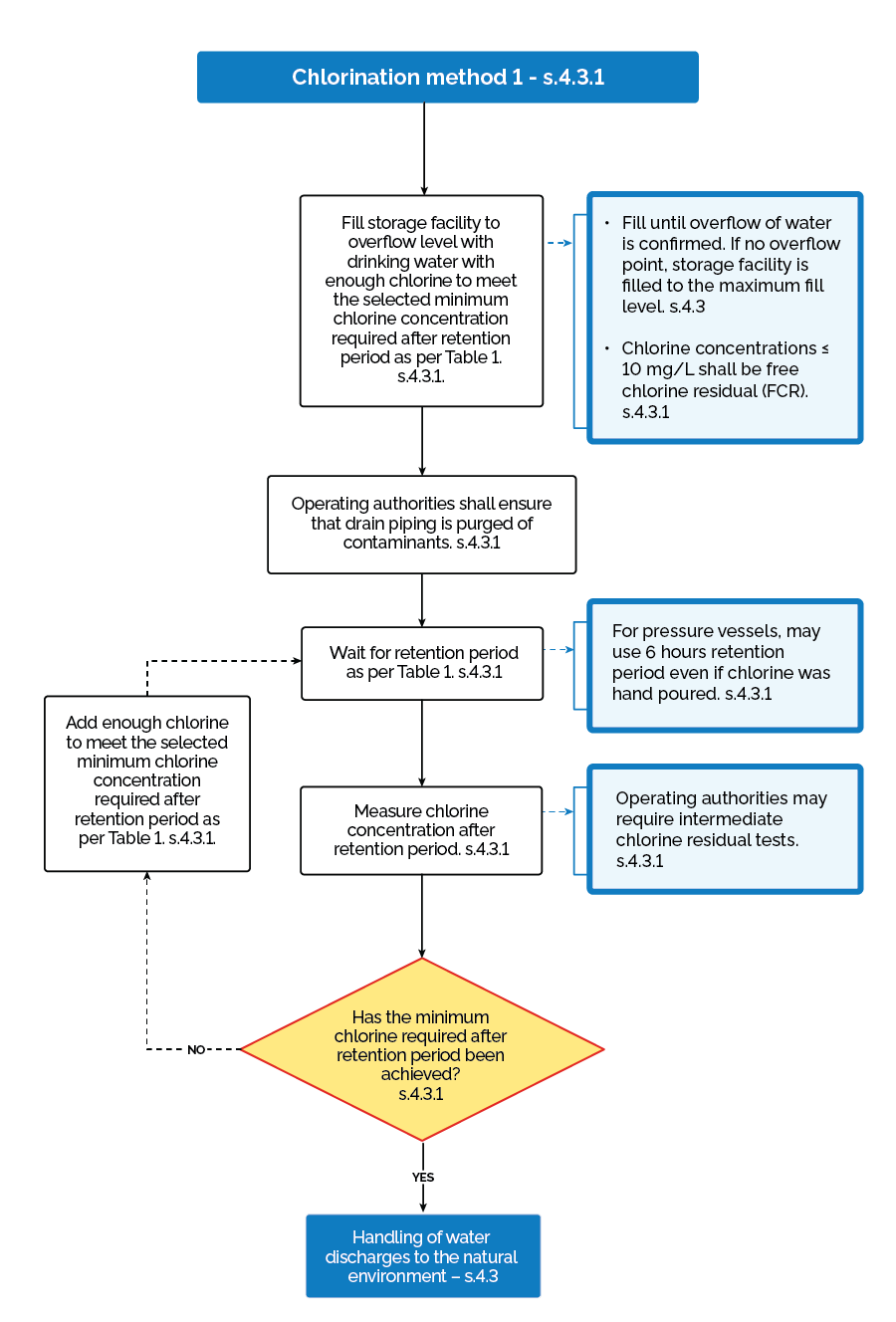
Figure 3 shows the requirements from section 4.3.1 of this procedure when using chlorination method 1 to disinfect a storage facility. The following steps are required:
- Step 1: Fill the storage facility to overflow with drinking water chlorinated enough to meet the Table 1 minimum concentration after the retention period.
- Fill until overflow of water is confirmed. If there is no overflow point, the storage facility is filled to its maximum fill level.
- Chlorine concentrations ≤ 10 mg/L shall be measured as free chlorine residual (FCR).
- Step 2: Operating authorities shall ensure that drain piping is purged of contaminants.
- Step 3: Wait for retention period stated in Table 1 of section 4.3.1 of this procedure. For pressure vessels, the operating authority may use a 6-hour retention period even if chlorine was hand poured.
- Step 4: The operating authority may require chlorine residual tests before the retention period is completed. The operating authority shall arrange to measure the chlorine concentration in the storage facility after the retention period. Has the minimum chlorine required after retention period been achieved?
- If yes, proceed to the step 5.
- If no, add enough chlorine to meet the selected minimum chlorine concentration required after retention period as per Table 1. Repeat steps 3 and 4.
- Step 5: Proceed to the section named: Handling of water discharges to the natural environment.
Figure 4 - Chlorination method 2 requirements
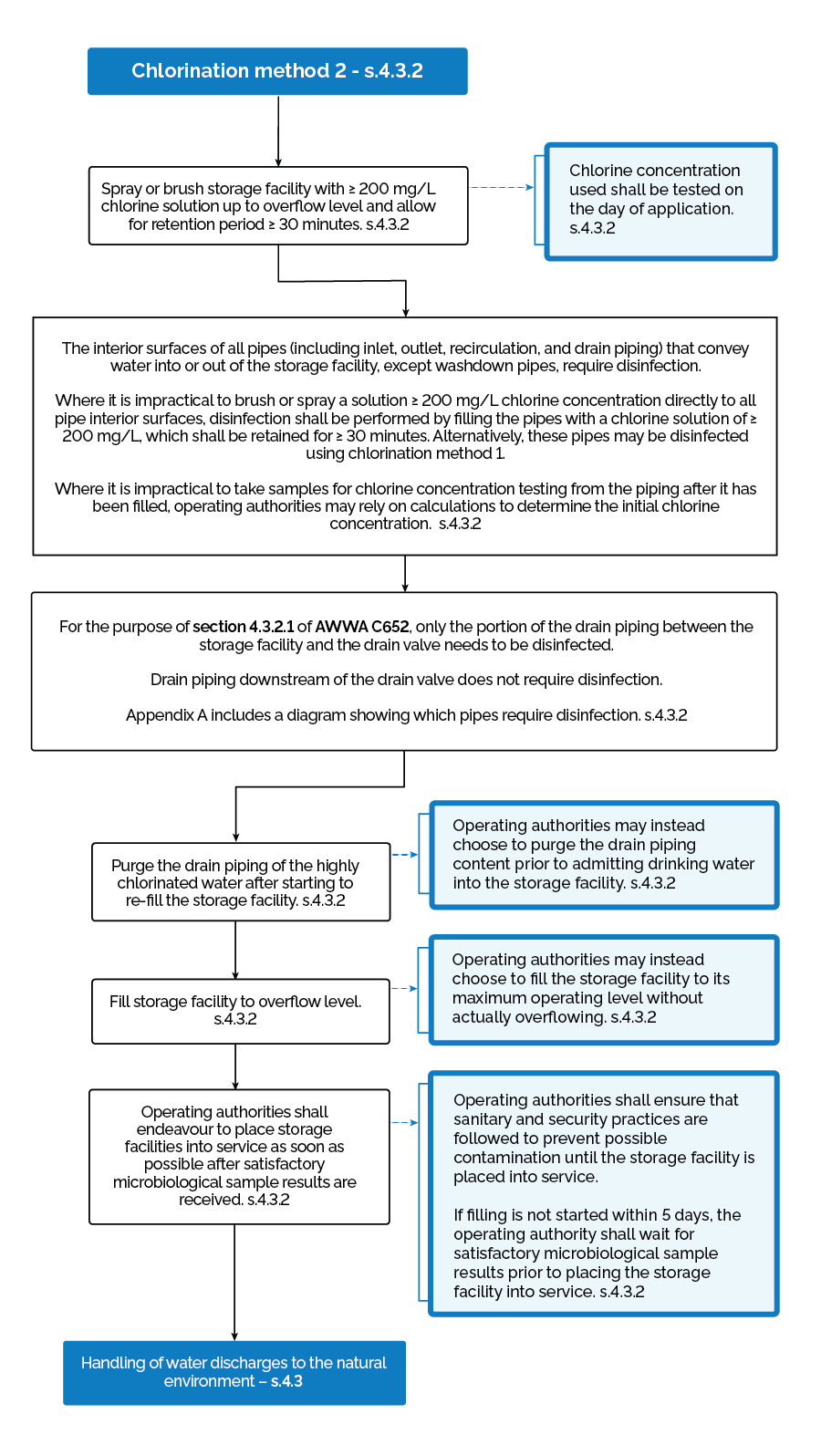
Figure 4 shows the requirements from section 4.3.2 of this procedure when using chlorination method 2 to disinfect a storage facility. The following steps are required:
- Step 1: Spray or brush storage facility with at least 200 mg/L chlorine solution up to overflow level. Chlorine concentration used shall be tested on the day of application. Keep chlorine solution on for a retention period at least 30 minutes. When chlorine concentration samples cannot practically be taken after the piping is filled, the operating authority may use calculations to determine the initial chlorine concentration
- The interior surfaces of all pipes that convey water into or out of the storage facility, except washdown pipes, require disinfection. Examples of pipes requiring disinfection are inlet, outlet, recirculation and drain pipes.
- If brushing or spraying a 200 mg/L chlorine solution on all pipe surfaces is impractical, use 1 of the 2 disinfection methods below.
- Fill the pipes with a chlorine solution of not less than 200 mg/L. Retain the solution for at least 30 minutes.
- Disinfect the pipes using chlorination method 1.
- Step 2: Purge the drain piping of the highly chlorinated water after starting to re-fill the storage facility. Operating authorities may instead choose to purge the drain piping content prior to admitting drinking water into the storage facility.
- Step 3: Fill storage facility to overflow level. Operating authorities may instead choose to fill the storage facility to its maximum operating level without actually overflowing.
- Step 4: Operating authorities shall endeavour to place storage facilities into service as soon as possible after satisfactory microbiological sample results are received.
- Operating authorities shall ensure that sanitary and security practices are followed to prevent possible contamination until the storage facility is placed into service.
- If filling is not started within 5 days, the operating authority shall wait for satisfactory microbiological sample results prior to placing the storage facility into service.
- Step 5: Proceed to the section named: Handling of water discharges to the natural environment.
Figure 5 - Chlorination method 3 requirements
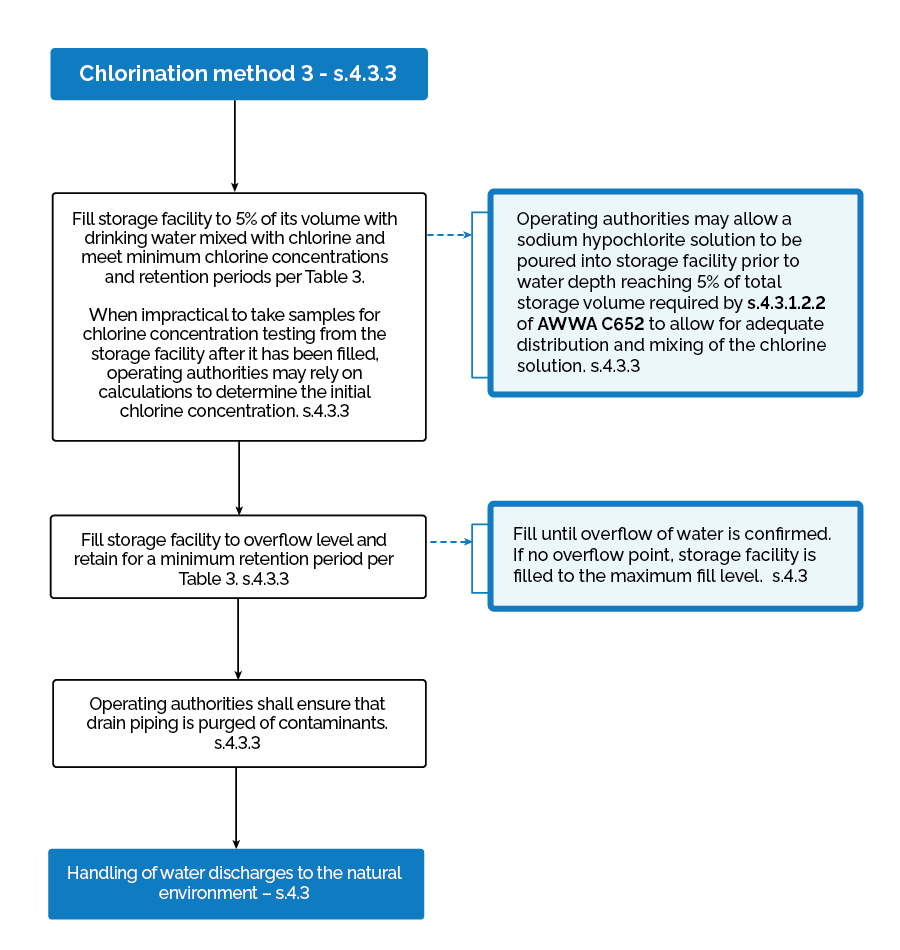
Figure 5 shows the requirements from section 4.3.3 of this procedure when using chlorination method 3 to disinfect a storage facility. The following steps are required:
- Step 1: Fill storage facility to 5% of its volume with drinking water mixed chlorinated enough to meet the Table 3 minimum chlorine. When initial chlorine concentration samples cannot practically be taken from the storage facility, the operating authority may use calculations to determine the initial chlorine concentration.
- Operating authorities may allow pouring a sodium hypochlorite solution into storage facility prior to water depth reaching the required 5% of total storage volume. This will allow for adequate distribution and mixing of the chlorine solution.
- Step 2: Fill storage facility to overflow level and retain for a minimum retention period per Table 3. Fill until overflow of water is confirmed. If there is no overflow point, the storage facility is filled to the maximum fill level.
- Step 3: Operating authorities shall ensure that drain piping is purged of contaminants.
- Step 4: Proceed to the section named: Handling of water discharges to the natural environment.
Figure 6 - Requirements for handling of water discharges to the natural environment
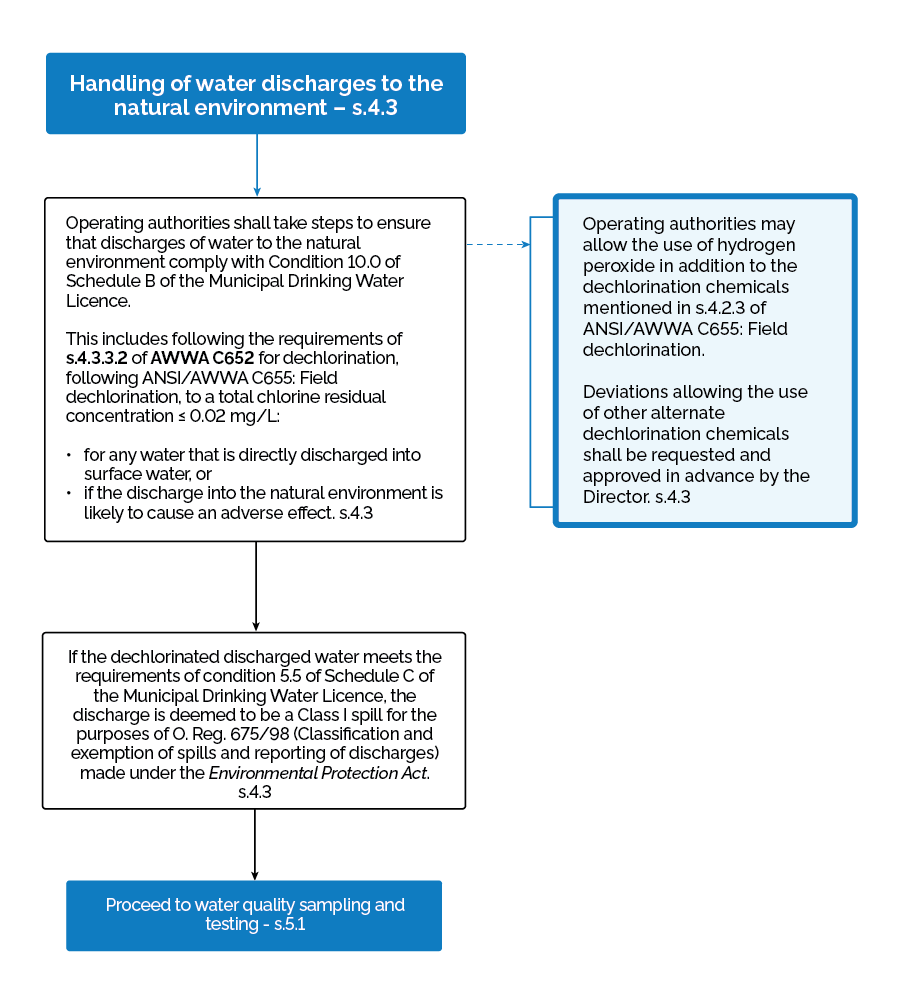
Figure 6 shows the requirements from section 4.3 of this procedure for handling of water discharges to the natural environment. The following steps are required:
Step 1: Operating authorities shall take steps to ensure that discharges of water to the natural environment comply with Condition 10.0 of Schedule B of the Municipal Drinking Water Licence.
This includes following the applicable requirements of section 4.3 of AWWA C652 for dechlorination. Follow ANSI/AWWA C655: Field dechlorination, until the total chlorine residual concentration it no more than 0.02 mg/L in any of the following situations:
- for any water that is directly discharged into surface water
- if the discharge into the natural environment is likely to cause an adverse effect
Operating authorities may allow the use of hydrogen peroxide in addition to the dechlorination chemicals mentioned in section 4.2.3 of ANSI/AWWA C655. Deviations allowing the use of other alternate dechlorination chemicals shall be requested and approved in advance by the Director.
If the dechlorinated discharge meets the requirements of Condition 5.5 of Schedule C of the Municipal Drinking Water Licence, the discharge is considered a Class I spill. Class I spills are defined in Ontario Regulation 675/98 made under the Environmental Protection Act.
- Step 2: Proceed to section 5.1 of this procedure: Water quality sampling and testing.
Figure 7- Requirements for disinfection after underwater inspection or cleaning of a storage facility
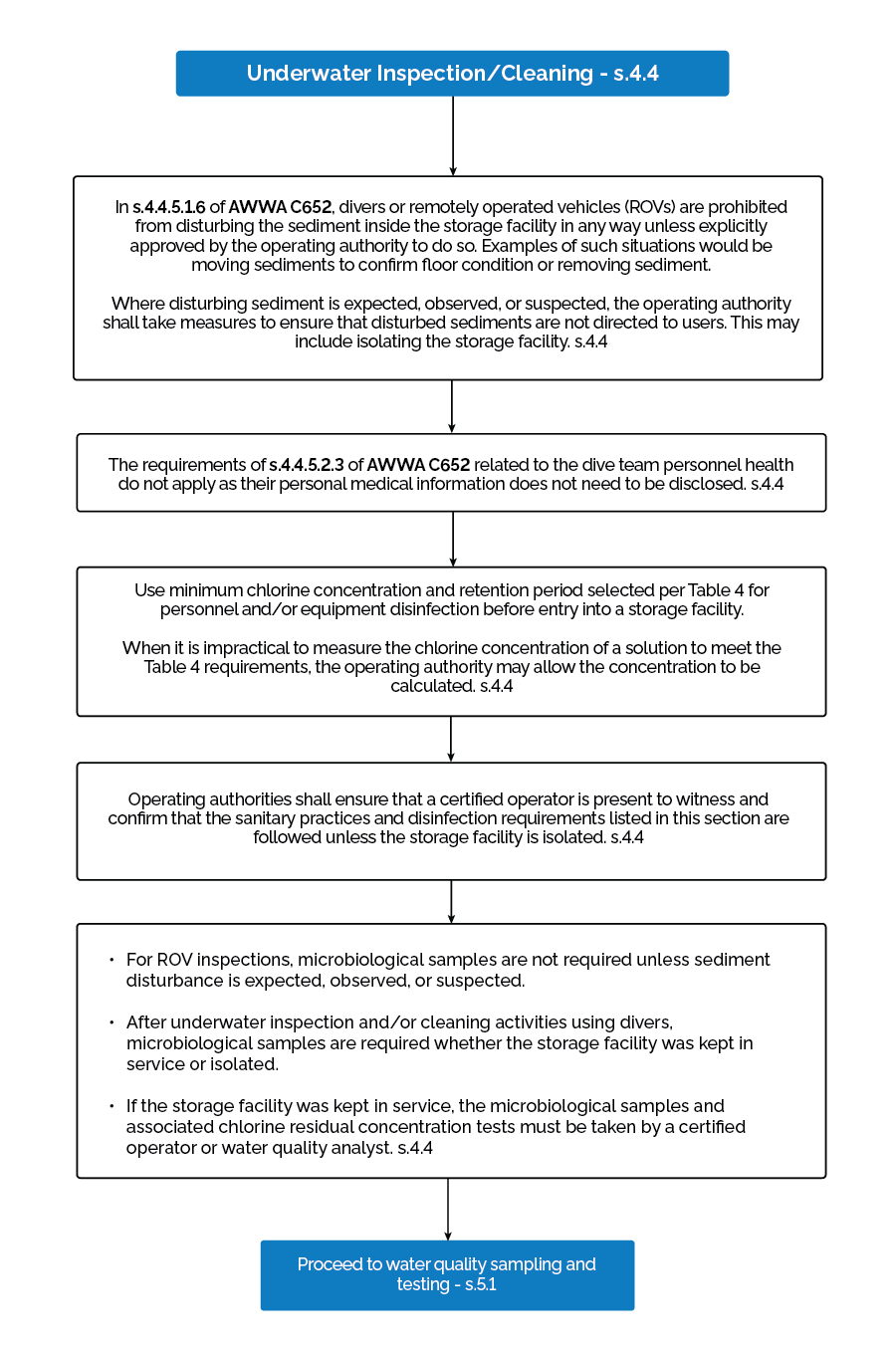
Figure 7 shows the requirements from section 4.4 of this procedure for disinfection after underwater inspection or cleaning of a storage facility. The following steps are required:
- In section 4.4.5.1.6 of AWWA C652, divers or remotely operated vehicles (ROVs) are prohibited from disturbing the sediment inside the storage facility in any way. This restriction applies unless the operating authority explicitly approves the activity. Examples of such situations would be moving sediments to confirm floor condition or removing sediment. Where disturbing sediment is expected, observed, or suspected, the operating authority shall take measures to ensure that disturbed sediments are not directed to users. This may include isolating the storage facility.
- The requirements of section 4.4.5.2.3 of AWWA C652 related to the dive team personnel health do not apply as their personal medical information does not need to be disclosed.
- Use minimum chlorine concentration and retention period selected per Table 4 for equipment disinfection before entry into a storage facility. When the chlorine concentration to meet the Table 4 requirements cannot practically be measured, the operating authority may allow the concentration to be calculated.
- Unless the storage facility is isolated, the operating authority shall ensure that all the following criteria are met:
- a certified operator is present
- the certified operator witnesses and confirms that the sanitary practices and disinfection requirements listed in this section are followed
- The requirements for taking microbiological samples are the following:
- for ROV inspections, microbiological samples are not required unless sediment disturbance is expected, observed, or suspected
- after underwater inspection and/or cleaning activities using divers, microbiological samples are required whether the storage facility was kept in service or isolated
- if the storage facility was kept in service, the microbiological samples and associated chlorine residual concentration tests must be taken by a certified operator or water quality analyst
Appendix C – Flowchart - section 5.1 – water quality sampling and testing
Section 5.1 of this procedure provides the requirements for sampling and testing after a storage facility has been disinfected as per this procedure.
The following are general notes related to this section:
- When sampling and testing after disinfection a storage facility, section 5 of AWWA C652 must be followed as modified by this procedure.
- All section numbers in Figure 8 refer to this procedure.
- All microbiological samples shall be taken and handled as per the ministry’s Practices for Collection and Handling of Drinking Water Samples document (as amended).
- Any person authorized by the operating authority may take microbiological samples from isolated storage facilities and perform the associated chlorine residual concentration tests.
- If samples are taken from a storage facility hatch, care must be taken to ensure contamination is not introduced when the hatch is open. For example, the area may be covered with a tent during inclement weather.
- The “recommended additional samples” under sections 5.1.1.3 and the “optional sampling and testing” under section 5.1.1.4 of AWWA C652 are considered as optional and at the discretion of the operating authority. Determinations of acceptable values for these parameters shall be at the discretion of the operating authority.
Figure 8 – section 5.1 – water quality sampling and testing after a storage facility has been disinfected
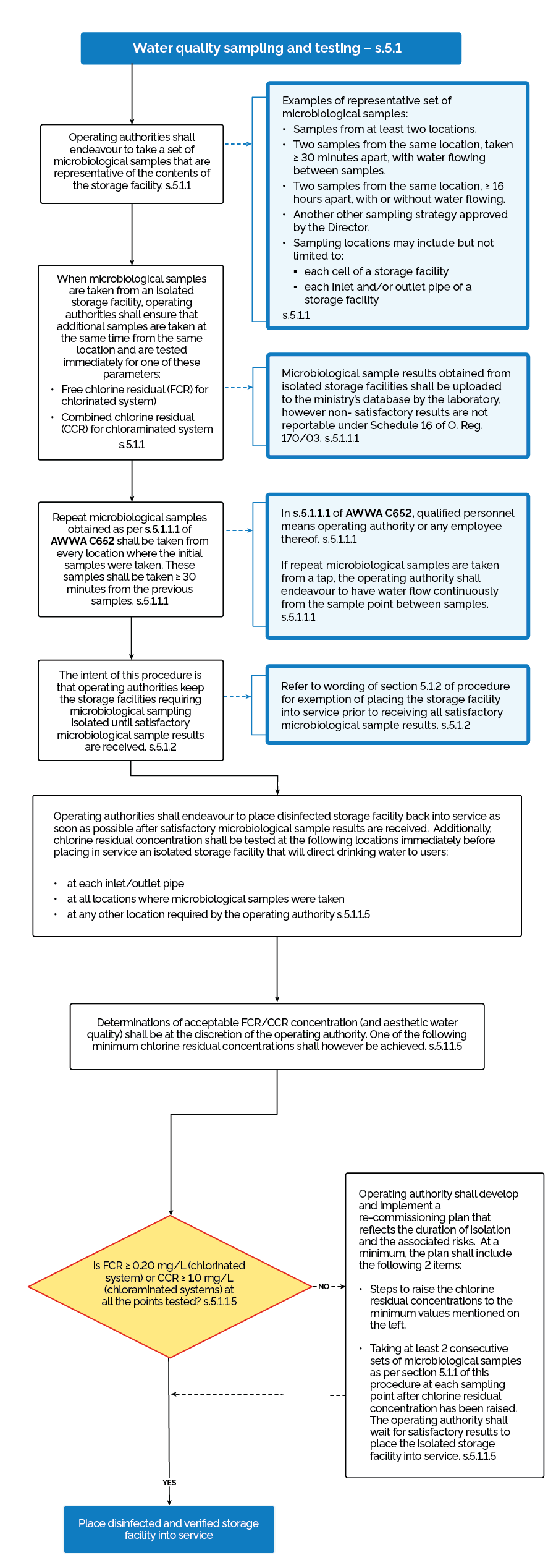
Figures 8 shows the requirements from section 5.1 of this procedure for sampling and testing after a storage facility has been disinfected as per this procedure. The following steps are required:
Step 1: Operating authorities shall endeavour to take a set of microbiological samples that are representative of the contents of the storage facility. Examples of representative set of microbiological samples:
- samples from at least 2 locations
- two samples from the same location, taken at least 30 minutes apart, with water flowing between samples
- two samples from the same location, at least 16 hours apart, with or without water flowing
- another other sampling strategy approved by the Director
Sampling locations may include but not limited to:
- each cell of a storage facility
- each inlet and/or outlet pipe of a storage facility
Step 2: When microbiological samples are taken from an isolated storage facility, operating authorities shall ensure that additional samples are taken at the same time from the same location and are tested immediately for 1 of these parameters:
- free chlorine residual (FCR) for chlorinated system
- combined chlorine residual (CCR) for chloraminated system
Microbiological samples results obtained from isolated storage facilities shall be uploaded to the ministry’s database by the laboratory. Non-satisfactory results, however, are not reportable under Schedule 16 of O. Reg. 170/03.
- Step 3: Repeat microbiological samples obtained as per section 5.1.1.1 of AWWA C652 shall be taken from every location where the initial samples were taken. These samples shall be taken at least 30 minutes from the previous samples.
- in section 5.1.1.1 of AWWA C652, qualified personnel means operating authority or any employee thereof
- if repeat microbiological samples are taken from a tap, the operating authority shall endeavour to have water flow continuously from the sample point between samples
- Step 4: The intent of this procedure is that operating authorities keep the storage facilities requiring microbiological sampling isolated until satisfactory microbiological sample results are received. Refer to wording of section 5.1.2 of procedure for exemption of placing the storage facility into service prior to receiving all satisfactory microbiological sample results.
- Step 5: Operating authorities shall endeavour to place disinfected storage facilities back into service as soon as possible after satisfactory microbiological sample results are received. Additionally, chlorine residual concentration shall be tested at the following locations immediately before placing in service an isolated storage facility that will direct drinking water to users:
- at each inlet/outlet pipe
- at all locations where microbiological samples were taken
- at any other location required by the operating authority
- Step 6: Determinations of acceptable FCR/CCR concentration (and aesthetic water quality) shall be at the discretion of the operating authority. One of the following minimum chlorine residual concentrations shall however be achieved. Is FCR ≥ 0.20 mg/L (chlorinated system) or CCR ≥ 1.0 mg/L (chloraminated systems) at all the points tested?
- If yes, proceed to step 7.
- If no, operating authority shall develop and implement a re-commissioning plan that reflects the duration of isolation and the associated risks. At a minimum, the plan shall include the following 2 items:
- Steps to raise the chlorine residual concentrations to the minimum values mentioned on the left.
- Taking at least 2 consecutive sets of microbiological samples as per section 5.1.1 of this procedure at each sampling point after chlorine residual concentration has been raised. The operating authority shall wait for satisfactory results to place the isolated storage facility into service.
- Step 7: Place disinfected and verified storage facility into service.
Appendix D - Definitions
- Appurtenance
- means an appurtenance, within the meaning of O. Reg. 170/03, that is in contact with water.
- AWWA C652
- means ANSI/AWWA Standard C652 - “Disinfection of Water-Storage Facilities”, version 2019, as updated.
- Certified operator
- means certified operator within the meaning of O. Reg. 170/03.
- Chlorine meter
- means a calibrated electronic direct readout colourimetric or amperometric chlorine meter that has a readout that displays to at least 2 significant figures. Another method may be approved by the Director.
- Component
- means a part of a drinking water system that is normally in contact with raw water, process water or drinking water.
- Contaminant
- means foreign matter that is not intended to enter drinking water.
- Contaminated/contamination
- means the presence of a contaminant in drinking water.
- Director
- means a Director appointed pursuant to section 6 of the Safe Drinking Water Act (SDWA) for the purposes of Parts V/VI of the Act.
- Disinfected/disinfection
- means a process that inactivates pathogenic microorganisms on the surfaces of system components in contact with water by chemical oxidants or equivalent agents. This definition does not include “primary disinfection” based on log removal/inactivation credits.
- Drinking water
- means drinking water within the meaning of the Safe Drinking Water Act (SDWA).
- Drinking water system
- means drinking water system within the meaning of the Safe Drinking Water Act (SDWA).
- Isolate/isolation
- means operate valves to ensure that there is no flow of water to or from a specific section of a storage facility, component and/or its associated piping.
- Log removal/inactivation credit
- means a value assigned to a unit treatment process used to achieve “primary disinfection”, expressed in logarithmic units, for the removal or inactivation of a specific pathogen or group of pathogens, such as viruses, bacteria and protozoa.
- Microbiological sample
- means water sample taken and tested for Escherichia coli and total coliforms by a licensed and accredited laboratory.
- Ministry
- means Ontario’s Ministry of the Environment, Conservation and Parks.
- Municipal Drinking Water Well Disinfection Procedure
- means any future “Municipal Drinking Water Well Disinfection Procedure” published by the ministry, as amended.
- Operating authority
- means operating authority within the meaning of the Safe Drinking Water Act (SDWA).
- Operator-in-Charge
- means an operator-in-charge within the meaning of O. Reg. 128/04.
- Pipe/piping
- means any pipe or conduit that conveys water, inside a building or underground.
- Potable water in AWWA C652
- means drinking water.
- Pressure vessel
- means an enclosed vessel containing raw, process or drinking water that is pressurized during normal operation.
- Process water
- means water that is in the process of being treated in a water treatment plant. This means, after the point where log removal/inactivation credit treatment has started, but before all log removal/inactivation credit treatment has been achieved.
- Raw water
- means water before the point where log removal/inactivation credit treatment starts.
- Satisfactory
- as related to drinking water, means, microbiological sample results that are negative for Escherichia coli and total coliforms
- as related to raw or process water, microbiological sample results acceptable to the operating authority
- Storage facility
- means any tank, reservoir, elevated tank, standpipe or pressure vessel that contains raw, process or drinking water, other than filter basins.
- Tank
- means any clearwell and any tank (including any tank within the water treatment plant process and pressure/surge tank that is bladderless). Tank does not include filter basins.
- Treated water
- means water inside the water treatment plant after the point where log removal/inactivation credit treatment has been completed.
- Water quality analyst
- means a water quality analyst within the meaning of O. Reg. 128/04.
- Water Treatment Plant Disinfection Procedure
- means any future “Water Treatment Plant Disinfection Procedure” published by the ministry, as amended.
- Watermain Disinfection Procedure
- means the ministry’s “Watermain Disinfection Procedure”, dated August 1, 2020, as amended.
Appendix E – Version history
| Version | Details | Date |
|---|---|---|
| 1.0 | Initial publication of the Water Storage Facility Disinfection Procedure. | August 27, 2026 |
Contact us
For more information, you can contact the Client Services and Permissions Branch at:
Tel: 1-866-793-2588 - Monday to Friday, 9 a.m. to 5 p.m.- email: mdwlp@ontario.ca
Footnotes
- footnote[1] Back to paragraph Any water used for the purposes of, but not limited to, flushing, cleaning and disinfection shall be drinking water. In a water treatment plant, if drinking water is not available, water that has received the highest level of treatment available may be used.
- footnote[2] Back to paragraph Raw water of drinking water systems that use chlorination prior to filtration as part of their log removal/inactivation credit calculations is not considered as raw water for this procedure. It is considered process water. Operating authorities who want this water considered as raw water for this procedure may seek approval from the Director for a deviation.
-
footnote[3]
Back to paragraph
Raw water piping/tanks:
- For systems using a well as a raw water source, raw water piping only includes the piping from the well to the water treatment plant. Piping within the well is to be disinfected as per the Municipal Drinking Water Well Disinfection Procedure.
- Raw water piping and appurtenances that convey the following shall be cleaned as per the Watermain Disinfection Procedure:
- surface water
- “Groundwater Under Direct Influence of Surface Water (GUDI) without adequate insitu filtration”
- Raw water tanks that contain surface water or “GUDI without adequate insitu filtration” shall be cleaned as per the Water Storage Facility Disinfection Procedure. No disinfection is required.
- Raw water piping and appurtenances that convey non-GUDI groundwater or “GUDI with adequate insitu filtration” shall be cleaned, disinfected and sampled as per the following sections of the Watermain Disinfection Procedure:
- Section 1 for addition, modification, replacement, extension and planned maintenance. If applicable, microbiological sampling as per section 1.1.3 of the Watermain Disinfection Procedure is required.
- Microbiological sampling of drinking water as per section 1.1.4 of the Watermain Disinfection Procedure is not required. The operating authority may request additional treated water microbiological samples to verify that the piping and appurtenances have been adequately disinfected. Samples should be collected from a treated water sampling point once water from the disinfected piping and appurtenances is believed to have achieved “primary disinfection”.
- Section 2 for emergency repairs of existing piping and appurtenances. Microbiological sampling as per section 2.4.3 of the Watermain Disinfection Procedure is optional.
- Raw water tanks that contain non-GUDI groundwater or “GUDI with adequate insitu filtration” shall be cleaned, disinfected and sampled as per the Water Storage Facility Disinfection Procedure.
- footnote[4] Back to paragraph Disinfection as per the Water Storage Facility Disinfection Procedure is required for the isolated portions of the storage facility inlet, outlet, washdown, recirculation and drain pipes.
-
footnote[5]
Back to paragraph
For disinfection of pressure vessels that cannot withstand high chlorine concentrations, use 1 of the following methods:
- Chlorination method 1 of the Water Storage Facility Disinfection Procedure with 6 hours retention period even if chlorine was hand poured.
- Chlorination method 2 of the Water Storage Facility Disinfection Procedure.
- footnote[6] Back to paragraph Chlorine concentrations less than or equal to 10 mg/L shall be free chlorine residual.
- footnote[7] Back to paragraph Disinfection of pressure vessels may use as little as 6 hours retention period even if chlorine was hand poured.