
Minister’s message
I am delighted to introduce the Destination Niagara Strategy, our government’s plan to protect and grow Ontario’s economy by unlocking the full potential of the Niagara Region as a world-renowned tourism destination.
From introducing new ways to experience the iconic Niagara Falls to encouraging exploration of the vibrant region beyond, we plan to enhance and promote the Niagara Region as a must-visit tourism spot. We’re repositioning the region as Ontario’s Playground – the ultimate destination for visitors of all ages, where Falls, fun and flavour await.
Niagara is already recognized for its world-class entertainment and family-friendly experiences. Its breathtaking natural landscapes, extraordinary wineries, exciting casino venues and vibrant cultural attractions draw more than 13 million visitors each year. This influx of tourists not only supports local businesses – it also generates significant revenue and employment opportunities that will benefit the region for years to come.
Our government sees an opportunity to build on this foundation and unlock Niagara’s enormous potential as both a globally recognized tourism destination and an economic engine for the province. Investing in the Niagara Region is a direct investment in Ontario’s broader prosperity, strengthening the communities, workers and industries that keep our province moving.
The Destination Niagara Strategy outlines how we can protect and grow Ontario’s economy by attracting more visitors to the Niagara Region and encouraging them to stay longer. Ontario will target investments and development across five key pillars: tourism attractions; world-class gaming; wine and culinary tourism; arts and culture; and transportation development. This will position Niagara as one of the most sought-after destinations for both leisure and business travel. This strategy will guide our efforts to put Niagara at the top of every traveller’s bucket list while making it easier for all visitors to get to the unforgettable experiences that the region offers.
I encourage you to explore the Destination Niagara Strategy and join us in our commitment to making the Niagara Region a top destination for both global and domestic travellers. Together, we can build a vibrant and thriving tourism industry that benefits all Ontarians, both now and for future generations.
Sincerely,
Minister of Tourism, Culture and Gaming

Current state of the Niagara Region
Niagara’s $3 billion tourism industry is a key driver of the regional economy and supports 40,000 jobs and a wide range of businesses. The region attracts more than 13 million tourists each year and its industry represents a six per cent share of the region’s GDP.
Though globally recognized as the home of the iconic Niagara Falls and over 100 breathtaking vineyards, the Niagara Region has so much more to offer leisure and business travellers than just waterfalls and wine.
Steeped in rich history, from its Indigenous roots and early settlement stories to its pivotal role in the War of 1812 and the Underground Railroad, Niagara has played a major role in the development of our province and our nation. From critically acclaimed performances at the annual Shaw Festival to world-class golf courses, thrilling casino and gaming options, interactive museums, captivating cultural attractions and delectable farm-to-table dining experiences, visitors can find a wide variety of ways to explore the region. Home to one of Ontario’s four UNESCO World Biosphere Reserves along the Niagara Escarpment, the region’s scenic nature trails, parks and beaches offer breathtaking escapes while its award-winning wineries and craft product producers showcase the best of local flavour.
It’s a region bursting with experiences that captivate every kind of traveller, solidifying its reputation as an unbeatable destination for families, couples on romantic getaways, food lovers chasing their next culinary delight and thrill seekers alike.
Visitors can also experience Niagara through a wealth of outdoor attractions for nature explorers and adventure seekers. The Niagara Glen Nature Reserve is a highlight, featuring rugged trails that wind through a pristine forest and along the Niagara River’s whirlpool. For a scenic experience, the Niagara Parkway Recreation Trail stretches for over 50km, perfect for cycling or walking with stunning views of the river and historic landmarks. Hikers can also explore the Bruce Trail, Canada’s oldest and longest marked footpath, which follows the Niagara Escarpment and offers breathtaking vistas and unique geological formations. These trails provide an ideal way to enjoy the region’s natural beauty year-round.
The Niagara Parks Commission, an agency of the Ministry of Tourism, Culture and Gaming, features many attractions and experiences that showcase the rich cultural and environmental heritage of the area. The Niagara Parks Commission continually makes investments to improve and refresh its must-see guest experiences and venues, such as Niagara City Cruises, Journey Behind the Falls, the Niagara Parks Power Station and Tunnel, Zip Line to the Falls and the Table Rock House Restaurant.
According to Destination Ontario’s Ontario Consumer Survey, conducted by Context Research Group in March 2025, more than half of Ontario travellers (52 per cent) listed the Niagara Region as their favourite destination in Ontario for a short getaway.
When asked why the Niagara Region is their favourite Ontario destination, these travellers praised the region for Niagara Falls, wineries, family traditions and a mix of attractions for all ages. And when asked about “must-visit” food destinations within Ontario, Niagara was the most mentioned, known for its scenic wine tours, farm-to-table dining experiences and vibrant culinary festivals.
The chart below outlines what Canadian travellers took part in during their most recent visit to the region:

Share of visits to Niagara that participated in each activity*
Arts and culture (festivals, fairs, historic sites)
Attractions-based leisure tourism (theme parks, sports events, zoos/aquariums, national and provincial nature parks)
Casinos
Sightseeing
Visit friends or relatives
Shopping
Restaurant or bar
Any outdoor/sports activity
*2023 (domestic only)
Vision
Our government is implementing a comprehensive strategy to unlock the Niagara Region’s full potential for visitors beyond the Falls, elevating the destination to be internationally recognized as Ontario’s playground.
We see the Niagara Region as a world-class, multi-day destination primed for increased year-round visitation, expanded international tourism and robust economic growth.
Recognizing the critical role tourism plays in creating a strong, sustainable and versatile economy, the Destination Niagara Strategy offers a roadmap to transform the region as a place where natural beauty, culinary excellence and world-class entertainment come together.
Through both private- and public-sector investment, we plan to strengthen Ontario’s reputation as a top-tier international tourist destination.
Announced as part of the 2025 Ontario Budget and Fall Economic Statement, the Destination Niagara Strategy supports our government’s priority to strengthen Ontario’s tourism sector, with the potential to attract nearly 25 million visitors annually and double the economic impact of tourism in the area.
Strategic goals
Increase visitation rates
Double the number of overall visitors, leveraging new marquee attractions and increased connectivity to the region to inspire broader audiences to choose Niagara as their next travel destination.
Extend average visit length
Maximize economic impact by doubling the average length of stays from 1-2 days to 3-4 days. Visitors will be encouraged to explore beyond the Falls, visiting the region’s beaches, wineries, arts and cultural festivals and more.
Increase global recognition
Attract attention from international markets, boosting Niagara’s rank as a must-visit destination for global travellers. Collaborations with international travel agencies and media will be key components of this effort.
Encourage private investment
Promote interest in new developments from private investors to stimulate further economic growth in the region and beyond.
Realizing our vision
The Destination Niagara Strategy identifies five key pillars through which we will achieve our goals:
Tourism attractions
Developing exciting new attractions and visitor experiences, as well as opportunities for nature lovers. With more to see, play and do across the Niagara Region we can both attract new tourist markets and encourage longer stays so visitors can experience it all.
World-class gaming
Exploring opportunities to expand existing casino and gaming experiences, including potentially opening the market to multiple new world-class casinos. Ontario’s goal is to bring in additional hotels and entertainment options along with top tier dining to bolster economic development and international tourism.
Wine and culinary tourism
Supporting agritourism and Niagara’s wine and culinary sectors. Visitors can taste their way through the region’s unique terroir at world-class vineyards, restaurants, breweries, cideries, orchards, farms, markets and more.
Arts and culture
Promoting the heritage and history of the region and investing in iconic cultural opportunities like the Shaw Festival. The region’s cultural offerings are unrivalled, immersing visitors in the stories of Niagara’s significant historical contributions and beyond.
Transportation development
Improving and expanding transportation options across Niagara Region. By better connecting Niagara to the rest of the Greater Golden Horseshoe and the world, we can increase accessibility and reduce the time it takes to access key destinations and tourist attractions.
Next steps: Tourism attractions
Ontario is actively seeking to develop bold, world-class attractions designed to captivate new audiences and encourage visitors to extend their stays, enriching the province’s tourism landscape with fresh, unforgettable experiences.
Introducing new attractions throughout the region will keep Niagara vibrant and engaging, ensuring visitors have something to discover through all four seasons.
Initial phases of the Destination Niagara Strategy have already seen success. In August 2025, the Niagara Parks Commission opened Niagara Takes Flight, a $25 million state-of the art flying theatre experience which gives visitors a new, multi-sensory way of experiencing the iconic Niagara Falls and surrounding region.
In its first month, Niagara Takes Flight welcomed more than 52,000 visitors and generated nearly $1.2 million in gross revenue.
Several large-scale development projects are currently underway, adding to Niagara’s tourism landscape:
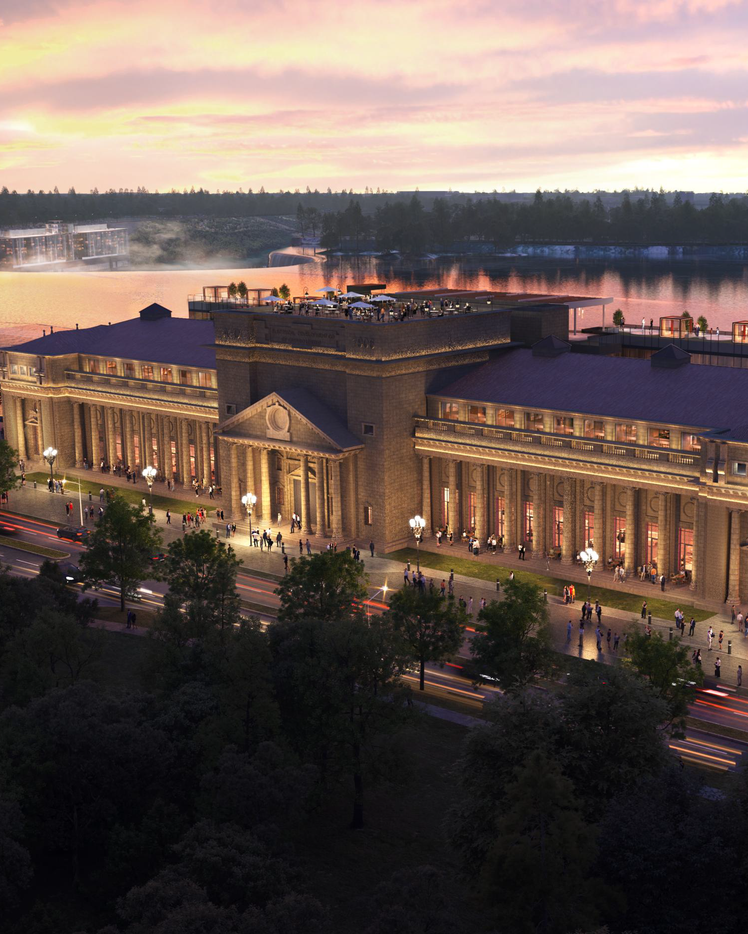
- Toronto Power Generating Station, a former hydroelectric power station, is a national historic site overlooking the iconic Canadian Horseshoe Falls. Built in 1906, the site is being revitalized into a new, multi-faceted visitor attraction near the brink of Niagara Falls, set to include a free museum and art gallery, wellness and social spa, craft brewery, theatre, spaces for events and educational programming and Niagara Region’s first-ever five-star boutique hotel with expected completion by 2028.
- Funded entirely through a more than $300 million private-sector investment, this redevelopment will see the building repurposed after sitting vacant for 50 years, supporting new jobs and boosting local economies in the region.
Additional Niagara Parks Commission projects are being discussed that will add new activities to the region:
- New observation wheel: To offer visitors a bigger, better and bolder perspective as they experience Niagara Falls, taking in the beauty of the region from above.
- Niagara Parks Marina redevelopment: The Niagara Parks Commission is planning to redevelop the marina in Fort Erie into a world-class recreation destination and marine access point, attracting additional visitors and serving the community across the region.
- Ontario Power Generating Station redevelopment: Located at the bottom of the Falls, this site offers a unique opportunity for a new visitor experience that preserves its architectural and heritage attributes.
- Niagara River Line Attraction: The proposed Niagara River Line is a fully accessible, all-season automated electric tram running 3.8 km through Queen Victoria Park. Its suspended capsules would give visitors unmatched views of Niagara Falls while connecting them to major attractions across the park. The project is expected to deliver significant economic benefits, generating an estimated $490 million in GDP and creating 3,800 jobs within its first eight years.
The government is also exploring options for a brand-new major attraction within the region, a marquee theme park, offering an exciting new venue where families can create long-lasting memories.
Alongside these new attractions, Niagara offers some of Ontario’s most spectacular natural experiences. Visitors can explore the region through a wealth of outdoor activities for nature lovers and adventure seekers. Niagara is home to numerous sites within the Niagara Geopark, showcasing globally significant geological features that tell the story of the region’s natural history. These natural attractions provide opportunities for education, exploration and immersion in landscapes shaped over millions of years.

Next steps: World-class gaming
Casinos and gaming are central to the Niagara Region’s tourism and economy. From table games to state-of-the-art machines, Niagara’s casinos attract over 5 million visitors a year and generate over $500 million in annual gaming revenue, making it a major driver of tourism and a significant contributor to public services.
Ontario intends to elevate the Niagara gaming experience. One of the options being considered is to expand the gaming market with the development of multiple new, world-class casinos. More options would enhance Niagara’s reputation as a must-visit, world-class destination that rivals others across the globe.
Modernization of gaming in Niagara also has the potential to create more opportunities for economic development. Elevating the gaming experience would not only provide better options for visitors, but also encourage the development of new hotels, entertainment venues and restaurants, further stimulating the economy while creating thousands of jobs.
By supporting the gaming industry, Niagara can leverage its unique assets to create unforgettable experiences for visitors, ensuring sustained economic growth for the region.

Next steps: Winery and culinary tourism
Niagara is home to internationally recognized and award-winning agricultural products and is the largest wine producing region in Canada. The region is responsible for 86 per cent of grape production in Ontario and approximately two-thirds of Canada’s total grape and wine production.
Beyond grapes, Niagara’s extensive network of farms and greenhouses plays a key role in shaping the region’s food culture. This agricultural foundation creates strong opportunities for agritourism across the region and sets the stage for further growth as demand for authentic farm-to-table experiences continues to rise.
As top activities for bachelor/bachelorette parties and couples looking to unwind, visitors can stop by some of Ontario’s top farmers’ markets, restaurants, wineries, cideries, craft breweries and distilleries to taste their way through the flavours of the region. By promoting the Niagara Region’s “taste of place,” we’re building its status as a leader for agritourism and culinary tourism, with multiple restaurants already recognized by the prestigious MICHELIN guide.
Niagara’s grape and wine industry is an important part of the region’s economy. We are committed to seeing it grow and thrive, providing a range of supports for Ontario’s grape farmers and wine sector, including:
- The Ontario Grape Support Program which helps Ontario grape farmers and wineries by increasing the percentage of Ontario grapes in blended wine. The program provides up to $35 million in annual support to eligible wineries over five years, beginning in 2025–26 until 2029–30, with total program funding amounting to $175 million.
- Extending the VQA Wine Support Program until 2029–30 and enhancing program eligibility to include ice wines, as well as VQA wine sold in convenience stores and on-site winery retail stores. These program enhancements will provide additional support to VQA wine producers, expanding the total support to $84 million in annual support, with total program funding amounting to $420 million over the next five years.
- Introducing the Wine Boutique Support Program that will provide up to $16.7 million over five years, beginning in 2025–26, to support a portion of capital expenses for off-site winery retail stores that relocate into grocery stores, supporting more opportunities for business and convenience for consumers.
- Through the Municipal Housing Infrastructure Program, the Niagara Region will receive up to $41 million in provincial funding for irrigation pipelines to help deliver water to hundreds of farms and agricultural businesses. To further support the grape and wine sector, we have directed the Liquor Control Board of Ontario (LCBO) to promote and prioritize small and Ontario-made products and producers in stores. Our goal is to make it easier for consumers to experience the region’s exceptional local products.

Next steps: Arts and culture
By investing in, developing and enhancing key sites, historical landmarks and cultural venues in the Niagara Region, Ontario will create unforgettable experiences that encourage longer stays and repeat visits.
Shaw Festival
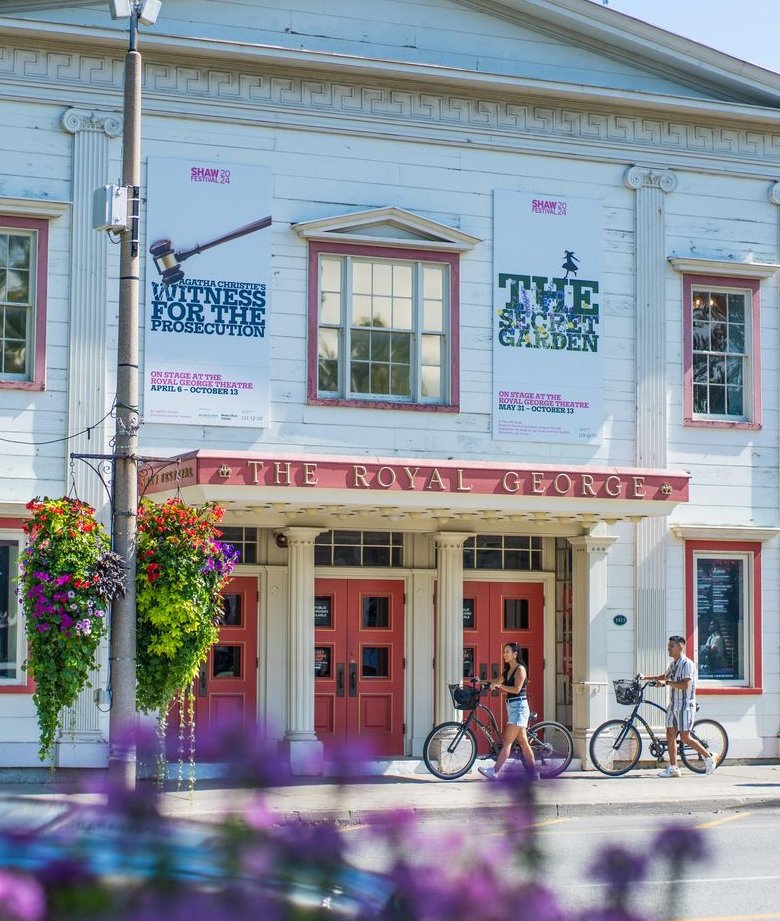
The Royal George Theatre was built in Niagara-on-the-Lake during the First World War as a temporary building to house lectures and entertainment for officers. Today, it’s known as one of the iconic theatres of the Shaw Festival.
Ontario is investing $35 million to rebuild, enlarge and add accessible facilities to the iconic Royal George Theatre, ensuring the site will continue to be a home for world-class productions and can be enjoyed by modern audiences for years to come. We have also committed an additional $250,000 in funding to support visitor experiences during the Shaw Festival, one of Canada’s premier cultural organizations that draws visitors from all over the world. The Shaw Festival is a cultural icon for Ontario and for Canada, and it is just one of the many great reasons to visit Niagara-on-the-Lake and the broader Niagara Region throughout the year.
Festivals and events
From breathtaking vineyard concert series to electrifying casino stage productions, Niagara is a powerful destination for cultural and entertainment events, consistently hosting globally recognized artists and events that draw visitors from near and far.
Through the Experience Ontario program, our government supports several festivals and events in Niagara Region, including 2025’s Niagara Grape and Wine Festival, Niagara Falls Winter Festival of Lights and Canal Days Marine Heritage Festival.
Rich cultural history
The Niagara Region is steeped in history, serving as a crossroads of cultures for centuries. The Indigenous peoples of this land shaped its stories. During the War of 1812, Niagara became a strategic battleground, with Fort George in Niagara-on-the Lake playing a pivotal role in defending Upper Canada against American forces. Today, visitors can explore restored fortifications, historic sites and interpretive programs that bring this era to life. Building on this rich heritage means highlighting Indigenous perspectives and connecting historic landmarks with the region’s cultural and natural landscapes to create a more inclusive and immersive story.
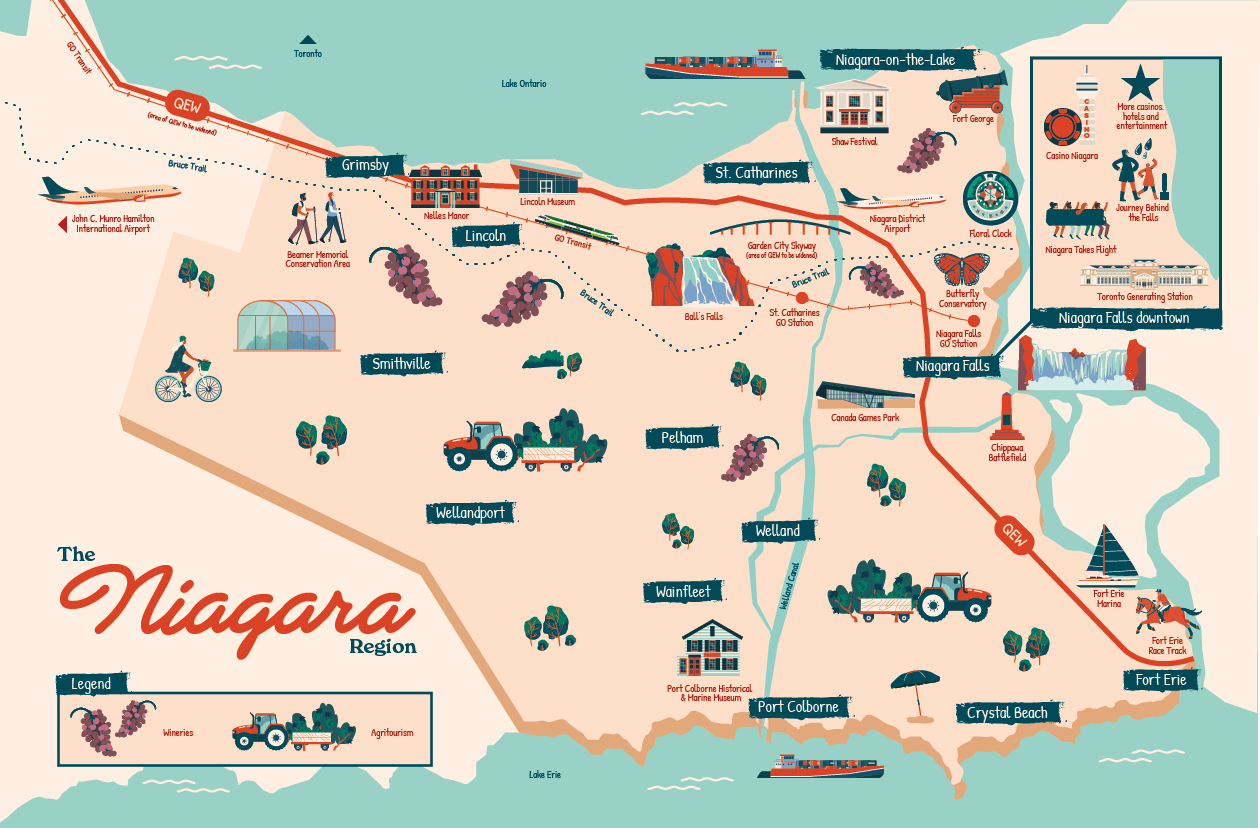
Beyond Fort George, Niagara is home to significant historical landmarks that deepen the region’s cultural landscape. Ball’s Falls Conservation Area in Jordan, with its preserved 19th century hamlet, historic mill and natural surroundings, offers visitors an immersive look at early settler life. In Grimsby, Nelles Manor, one of the oldest stone homes in Ontario, is a testament to Loyalist history and the region’s early development. These sites highlight Niagara’s natural landscapes and historic significance while creating a comprehensive and engaging cultural narrative for visitors.
Next steps: Transportation development
Investing in transportation is integral to supporting tourism growth across Niagara. Transportation developments will increase connectivity to the region, making Niagara more accessible for Ontarians, Canadians and international visitors by reducing commuting times and congestion.
While the region can be accessed from Toronto Pearson, Billy Bishop and Hamilton International Airports, there is an opportunity to leverage Niagara District Airport’s central location and proximity to key tourist sites to unlock Niagara’s full economic potential as an international tourism destination.
As noted in their recently released 2025-2045 Master Plan, Niagara District Airport could generate more than $1 billion in economic output and bring over seven million passengers through the region over the course of the plan’s execution. In addition, the government is launching the Niagara Air Access Feasibility Study to assess opportunities to improve air access to Niagara Region, and how existing infrastructure, including airports, can be used to address needs.
Other plans to improve transportation include:
- Twinning the QEW Garden City Skyway bridge across the Welland Canal and widening the QEW from Burlington to St. Catharines to improve travel between the Greater Golden Horseshoe, Niagara Region and U.S. border crossings.
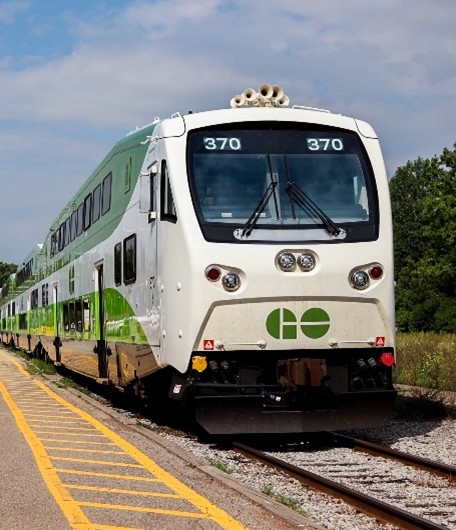
- Increasing direct GO Rail Transit service from Union Station in Toronto to Niagara Falls, enhancing existing daily roundtrips, seven days a week.
- Exploring ways to support integrated transportation services, including investigating potential alternative modes of transportation to the region.
The Niagara Falls Train Station recently unveiled its $4.4 million renovation completing the first multi-phase project to transform it into a modern, multi-modal transit hub with increased GO Train ridership. As of November 1, 2025, weekend service has expanded to four trains both Saturday and Sunday, with plans to further increase service.
Marketing and promotion
Dedicated marketing and promotion campaigns focused on the Niagara Region will be implemented internationally through Destination Ontario. These efforts will play a crucial role in driving market visibility and elevating Niagara as an ideal tourism destination.
This work has already begun with Niagara Falls and Niagara Parks Commission representatives joining Destination Ontario’s September 2025 Asia Mission delegation with Minister Stan Cho in priority markets, educating and inspiring travel professionals and consumers in Japan, South Korea and China to choose Niagara for their next travel destination.
Ontario’s “We Stand” 2025 campaign, designed to boost domestic travel, featured the Niagara Region prominently.

Conclusion
Niagara is more than a natural phenomenon, a wonder or a destination. It’s a cornerstone of Ontario’s economy and catalyst for growth, innovation and shared prosperity.
Through our Destination Niagara Strategy, our government is charting a bold course that expands Niagara’s potential beyond the Falls and strengthens the region’s role in protecting Ontario’s economy. This strategy is designed to attract visitors from around the world, support local businesses and safeguard economic opportunity while curating unforgettable experiences for visitors.
For generations, Niagara has been a place where Ontario families have made lasting memories and where international visitors from around the world have come to experience the majesty and wonder of the Falls. With more to see and do throughout the region, its future is even brighter. Together, we’re transforming Niagara into a world-class, year-round destination – one that inspires pride, celebrates culture, draws global attention and delivers lasting benefits for the people of Ontario.
This is not just an investment in tourism. By investing in the Niagara Region, we are protecting jobs, supporting Ontario’s visitor economy and strengthening the prosperity and growth of our province for generations to come. The success of Niagara is a direct reflection of the success of Ontario and this strategy will ensure the region continues to grow and thrive well into the future.