

Strategies for managing growth rates of market pigs
Explore nutritional and management options to slow pig growth during market disruptions.
ISSN 1198-712X, Published July 2025
Introduction
While most pig farmers aim for their animals to reach market weight quickly, it’s sometimes necessary to slow animal growth rates. Some situations, such as market disruptions, processing plant closures, disease outbreaks or trade disputes can create situations where producers have to hold animals longer than planned.
Many pork producers face significant supply chain disruptions when processing plants temporarily shut down or operate at reduced capacity due to restrictions. Producers often have to hold animals longer than planned, creating challenges in managing feed costs and animal health and welfare while facing financial strain and uncertainty.
During market disruptions, the ability to slow growth while preserving animal welfare becomes important for producer profitability and pig health.
Nutritional strategies for slowing growth
Several nutritional strategies can reduce growth rates in market pigs while maintaining animal health. Each nutritional strategy offers different advantages and considerations. Before taking actions to reduce animals’ growth rates, it is important to discuss options specific to your operation with experts such as your nutritionist and veterinarian. Always provide pigs with clean and fresh water, even when implementing these strategies.
Low protein and amino acids
Reducing dietary protein, particularly limiting lysine content, is one of the most effective and well‑researched approaches for controlling animals’ growth. Lysine is the first limiting amino acid in corn-soybean meal diets. This means that adequate lysine is essential for muscle development and growth. By restricting lysine, producers can limit muscle growth
Standardized ileal digestible (SID) lysine should decline by at least 25–33% to reduce growth. The typical requirement for SID lysine levels is 0.70% for pigs over 75 kg
A corn-only diet contains approximately 0.16% SID lysine. Feeding a corn-only diet can limit protein intake while providing adequate energy
Decreasing SID lysine is appealing because it’s economically efficient during market disruption. For example, removing protein sources from the diet can significantly reduce feed costs and reduce growth rates during times when protein ingredients such as soybean meal prices are high. The diet remains simple to formulate and mix and requires only the addition of a vitamin-mineral premix to provide animals with the necessary non‑protein nutrients.
There are important implications for carcass composition when feeding a low SID-lysine diet, such as a corn-based diet. When protein synthesis is limited but energy intake is normal, pigs shift more nutrients toward fat synthesis. This results in decreased carcass leanness and increased backfat measurements
High-fibre diets
When you add fibrous ingredients to pig diets, several mechanisms work together to slow growth rates:
- Fibre physically fills the digestive tract, creating a sense of satiety that can reduce overall feed consumption.
- Fibre dilutes the energy concentration of the diet, meaning that even if a pig consumes the same volume of feed, it receives fewer calories.
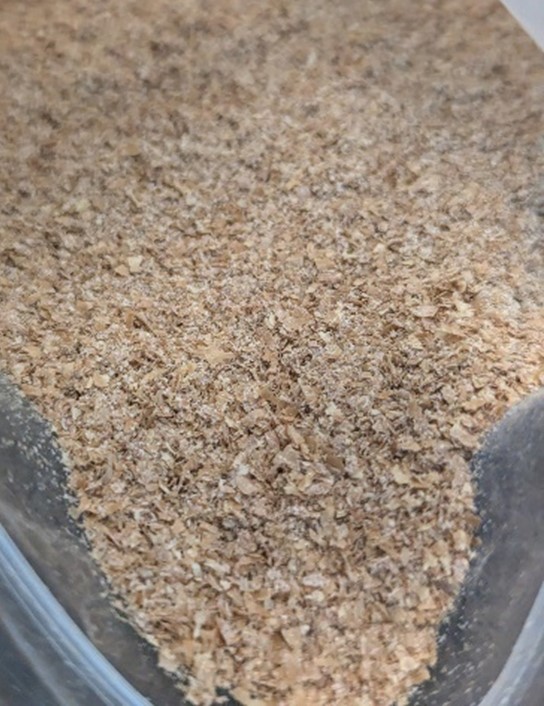
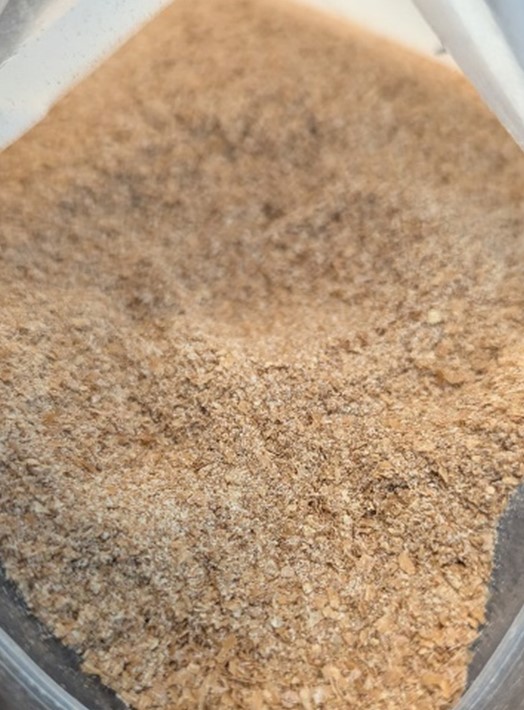
- Some types of fibre reduce nutrient digestibility and absorption, limiting the energy available for growth. Common fibre sources include wheat middlings (Figure 1), oat hulls (Figure 2), beet pulp, alfalfa meal and soybean hulls.
When fibre is increased less than 10%, pigs may increase their feed intake to maintain their daily energy requirements. Once fibre nears gut capacity, both feed intake and growth rate decline as the pig cannot physically consume enough feed to meet its energy requirements. For effective growth reduction, dietary neutral detergent fibre (NDF) levels must exceed 20%
High-fibre diets become more effective during warm weather. Fibre fermentation in the hindgut generates heat as a byproduct, increasing the pig’s core body temperature. The additional heat production adds to the effects of environmental heat stress, further reducing feed intake and growth rate.
High-fibre diets also reduce carcass yield and increase manure volume, which may create challenges in manure storage systems
Dietary electrolyte balance
Changing dietary electrolyte balance (dEB) by including calcium chloride (CaCl2) or ammonium chloride (NH4Cl) can also affect animal growth. Effective growth reduction typically requires a dEB below -250 mEq/kg. This creates a mild metabolic acidosis in the pig, which naturally suppresses appetite. Including CaCl2 at 3–4% of the diet (dEB ≤ -282 mEq/kg) reduces average daily gain (ADG) by 77–93%
Pigs fed diets with an altered electrolyte balance maintain or increase carcass leanness while showing decreased backfat. The addition of chloride to swine diets may be an effective strategy to decrease feed intake while maintaining body condition and nutrient digestibility. However, there may be trade‑offs in meat quality characteristics, as decreased loin pH and reduced tenderness have been reported when feeding diets contain 2% calcium chloride
Ensure pigs are given unlimited access to fresh drinking water when changing electrolyte balances because an altered electrolyte balance can affect water metabolism. Additionally, changing the electrolyte balance requires nutritional expertise as it can affect bone health. Consult an expert such as a nutritionist or a veterinarian before implementing this strategy.
Removal of feed additives
Most feed additives are included in the diet to enhance feed efficiency and growth performance. Eliminating additives such as prebiotics, probiotics, acidifiers, exogenous enzymes and mycotoxin binders can serve 2 purposes during market disruptions: reducing feed costs and deliberately decreasing feed efficiency to slow growth
Eliminating prebiotics, probiotics, acidifiers and exogenous enzymes can reduce digestive efficiency, resulting in less nutrient absorption and utilization. The removal of growth-promoting additives creates a subtle but cumulative effect on performance. Another approach involves removing synthetic amino acids such as lysine, methionine, threonine and tryptophan from the diet. This creates amino acid imbalances that reduces efficient protein synthesis.
Removing feed additives can have several advantages. For example, it can be implemented quickly by reformulating diets without the additives. It also tends to have milder effects on growth compared to more aggressive approaches such as manipulating electrolyte balance and reducing protein content.
However, the magnitude of growth reduction from additive removal alone may be insufficient during severe or prolonged market disruptions. For optimal results, you may have to use it in combination with other strategies.
Management strategies
Beyond nutritional interventions, adjusting feeding management can help control growth rates in finishing pigs. Ensure that pigs have constant access to clean, fresh water.
Feeding method adjustments
Controlling feed access offers a direct approach to managing growth rates in finishing pigs. This strategy involves physically limiting how much feed pigs can consume by adjusting feeder mechanisms or controlling feeding times.
When implementing feed restriction, moderation is important. The goal is to slow growth, not create hunger that could compromise animal health and welfare. This approach is similar to feeding gestating sows, where adequate nutrition is provided while preventing excessive weight gain.
Feed restriction typically involves tightening feeder adjustment mechanisms to reduce feed flow or implementing scheduled feeding times rather than allowing continuous access. While effective, these methods demand significant labour investment for monitoring and adjustment. Turning feeders on and off throughout the day can be particularly time‑consuming and requires consistent management.
Monitor pigs closely during feed restriction. Restricted feed access increases the risk of aggressive behaviours, including fighting and tail-biting, which can lead to injuries requiring treatment or culling
Restricted feeding environments often favour dominant animals, who may consume their normal intake, while submissive pigs receive less feed. This hierarchy can increase weight variation at marketing time, creating additional challenges when sending animals to processors.
Conclusion
Each strategy discussed comes with its advantages, limitations and welfare considerations. All these strategies require careful monitoring of animal health, behaviour and performance metrics. Small adjustments may be necessary as animals adapt to dietary changes or as environmental conditions shift.
Before implementing any nutritional or management changes, consult with experts such as a qualified swine nutritionist or your veterinarian. They can provide recommendations based on specific farm conditions, available feed ingredients and target growth reduction goals. They can also help monitor the effectiveness of the chosen strategy and suggest modifications as needed.
Author credits
This fact sheet was authored by Dr. Youngji Rho, PhD, feed ingredient and by-product specialist, acting, Ministry of Agriculture, Food and Agribusiness (OMAFA).
Footnotes
- footnote[1] Back to paragraph Tokach, M.D., Goodband, B.D., DeRouchey, J.M., Woodworth, J.C., & Gebhardt, J.T. (2021). Slowing pig growth during COVID-19, models for use in future market fluctuations. Animal Frontiers, 11(1), 23–27.
- footnote[2] Back to paragraph National Research Council, Division on Earth, Life Studies, & Committee on Nutrient Requirements of Swine. (2012). Nutrient requirements of swine.
- footnote[3] Back to paragraph Wensley, M.R., Tokach, M.D., Woodworth, J.C., Goodband, R.D., DeRouchey, J.M., & Gebhardt, J.T. (2023). Nutritional strategies to reduce growth of pigs during emergency situations. In Journal of Swine Health and Production (Vol. 31, Issue 4, pp. 193–196). American Association of Swine Veterinarians.
- footnote[4] Back to paragraph Rao, Z.X., Gebhardt, J.T., Tokach, M.D., Woodworth, J.C., DeRouchey, J.M., & Goodband, R.D. (2020). Evaluation of Nutritional Strategies to Reduce Growth Rate of Pigs Beyond 200 lb Body Weight. Kansas Agricultural Experiment Station Research Reports, 6(10).
- footnote[5] Back to paragraph Patience, J., & Greiner, L. (2020). Approaches to Reducing Feed Intake and Growth Rate in Market Hogs During Interruption of Animal Movement.
- footnote[6] Back to paragraph Helm, E.T., Ross, J.W., Patience, J.F., Lonergan, S.M., Huff-Lonergan, E., Greiner, L.L., Reever, L.M., Hastad, C.W., Arkfeld, E.K., & Gabler, N.K. (2021a). Nutritional approaches to slow late finishing pig growth: implications on carcass composition and pork quality. Journal of Animal Science, 99(1), skaa368.
- footnote[7] Back to paragraph Helm, E.T., Ross, J.W., Patience, J.F., Lonergan, S.M., Huff-Lonergan, E., Greiner, L.L., Reever, L.M., Hastad, C.W., Arkfeld, E.K., & Gabler, N.K. (2021b). Nutritional approaches to slow late finishing pig growth: implications on carcass composition and pork quality. Journal of Animal Science, 99(1), skaa368.