

Fire extinguishers
Fire extinguishers are for putting out small, contained fires or helping people escape safely and are not for large or out-of-control fires. In most cases, the best action during a home fire is to get everyone out immediately and call the fire department once outside.
Training and preparation
- Use an extinguisher only if proper training has been received.
- Contact the local fire department for training or questions.
Buying and maintaining a fire extinguisher
If you choose to purchase a fire extinguisher:
- Choose a “class ABC” fire extinguisher. This type is rated for most common household fires.
- Look for a recognized Canadian certification mark from a qualified safety testing laboratory, including ETL, ULC, or CSA:
 Canadian Standards Association (CSA)
 Underwriters Laboratories of Canada (ULC)
 Electrical Testing Laboratories (ETL)
- Keep the extinguisher in an easy-to-reach place following manufacturer instructions.
- Inspect the extinguisher once a month and check the pressure.
- Have a certified technician service the extinguisher every year.
Using a fire extinguisher
If a small fire occurs and an extinguisher must be used, follow these safety steps:
- Keep a clear exit behind the person using the extinguisher. Never let the fire get between a person and the exit.
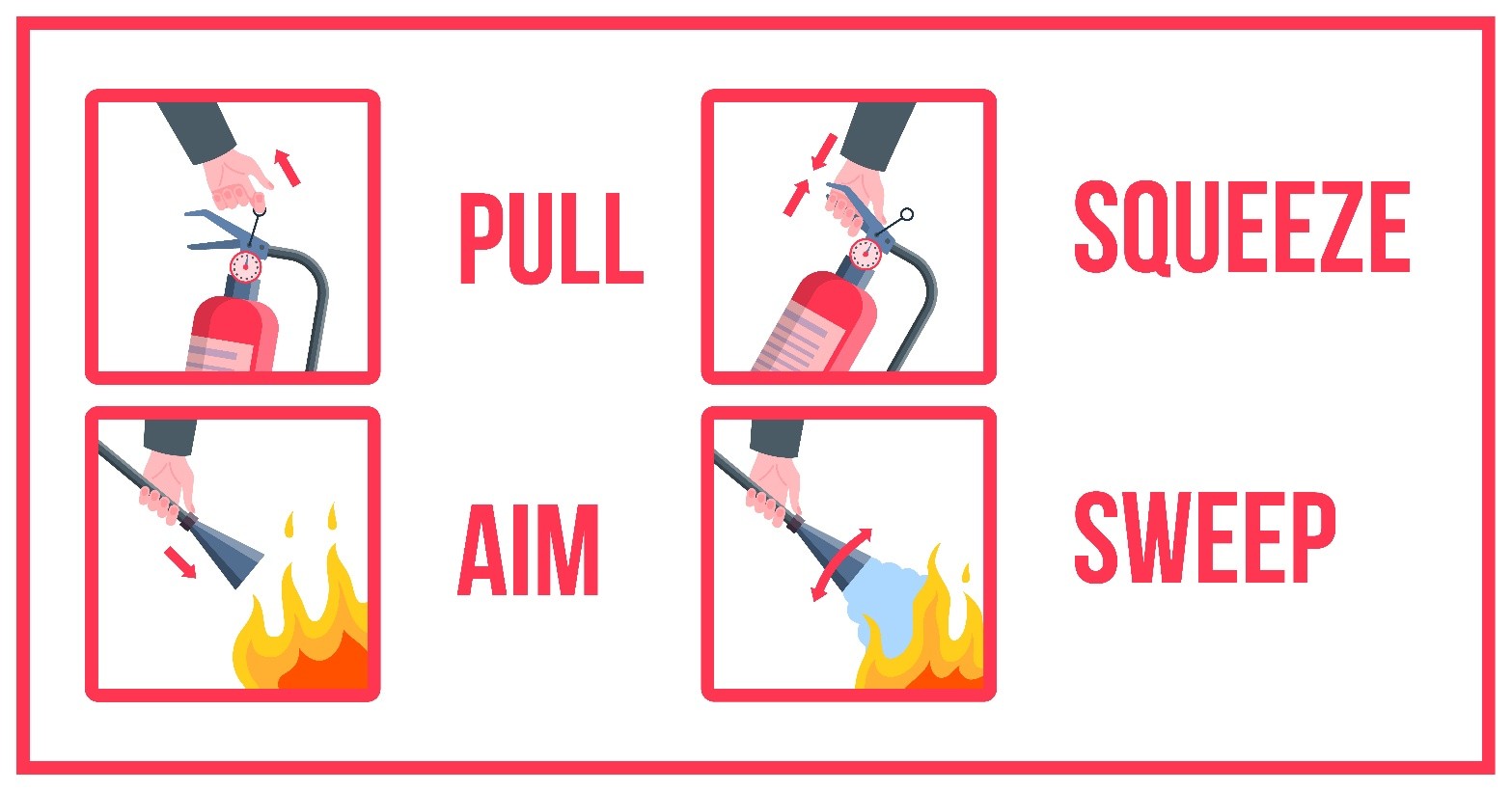
- Use the PASS method to operate a fire extinguisher:
- Pull the pin
- Aim the nozzle at the base of the fire
- Squeeze the trigger
- Sweep the nozzle from side to side until the extinguisher is empty
When to leave
Knowing when to leave if a fire starts, is a critical part of being prepared. If the fire does not go out after using an extinguisher, immediately:
- back out of the area
- close the door, if possible, while exiting to help slow the fire
- call 9-1-1 from a safe location outside
Extinguishing stovetop fires
If a pot catches fire, slide a fitted-lid over it to smother the flames and turn off the heat. Do not move the pot until it is completely cool.
Updated: November 03, 2026
Published: September 29, 2026