

2024-2025 Annual Report on the Implementation of the Canada-Ontario Agreement for the Conservation of Caribou, Boreal Population in Ontario
Learn about the progress made in 2024–2025 under the 5-year conservation agreement with the Government of Canada for the conservation of Boreal Caribou in Ontario
Introduction
The 2024–2025 Annual Report on the Agreement for the Conservation of Caribou, Boreal Population in Ontario is a joint report by the Government of Canada and the Government of Ontario. It outlines achievements from April 2024 through to April 2025 with respect to implementing the Canada-Ontario Agreement for the Conservation of Caribou, Boreal Population in Ontario (the “conservation agreement”).
The 5-year conservation agreement between the province and the Government of Canada establishes collaborative commitments to conserve Boreal Caribou.
- Its goal is to sustain or improve the environmental conditions necessary for recovery of Boreal Caribou at the range-scale, informed by the best available science, with support from Canada and working collaboratively with Indigenous and non-Indigenous partners.
- Its purpose is to support implementation of conservation measures, building on the base of existing management under Boreal Caribou conservation frameworks, that create the environmental conditions necessary to maintain and recover self-sustaining local populations of Boreal Caribou in Ontario.
As the third year of a five-year agreement, this report describes the progress made towards long-term conservation outcomes. Ontario and Canada continue to work together through a collaborative approach that continues to consider the knowledge, expertise and capacity of governments, industry, academia and other stakeholders and from Indigenous communities and organizations. Both parties recognize that achieving Boreal Caribou protection and recovery must consider biological and economic factors.
Additional background information about Boreal Caribou in Ontario, and copies of the reports released under the conservation agreement to date are available.
Summary of 2024–2025 progress
Outcomes and results
Implementation of the conservation agreement has generated results and can be organized according to four outcomes that advance caribou conservation:
- Habitat restoration
- Support of stewardship activities
- Knowledge generation for decision-making
- Evaluation of Boreal Caribou Conservation Frameworks
1. Habitat restoration
Most of Boreal Caribou habitat in Ontario is on Crown land managed under the Crown Forest Sustainability Act, 1994 (CFSA), the Provincial Parks and Conservation Reserves Act, 2006 (PPCRA) and the Public Lands Act, 1990. This legislation and associated policy and regulations contains obligations related to the maintenance of biological diversity and management of habitat.
As a result, efforts under the conservation agreement have focused on actions to restore habitat that are in addition to those required by provincial legislation and regulation. Results are being achieved in two broad categories: identification of areas whose restoration would benefit Boreal Caribou and where restoration is feasible; and restoration of habitat. Activities underway include:
Identification of areas for restoration:
- In the Lake Superior Coast Range and Discontinuous Distribution, habitat restoration opportunities are being identified by First Nations communities.
- In the Brightsand Range, a catalogue of prioritized sites for habitat restoration is being prepared based on reducing the probability of caribou-wolf encounters.
- Across the province’s protected areas, identification of priority areas for restoration is occurring as part of Conservation Measure 2.1 Habitat Restoration Initiative.
Habitat restoration:
- Rehabilitation of at least 50 km of roads previously used for forestry in the Brightsand Range is underway.
- Decommissioning and restoration of at least 10 km of retired roads bordering the Pagwachuan Range is underway including removal of culverts and road materials and planting of trees.
2. Support of stewardship activities
Action to advance caribou conservation by those external to federal and provincial governments, called stewardship, is critical to caribou conservation due to the rights of Indigenous people, and the knowledge, expertise and capacity of Indigenous communities and organizations, conservation groups, industry and other partners. In its first three years of implementation, the Caribou Conservation Stewardship Program (CCSP) has achieved the following results aligned with the outcome of supporting stewardship activities. The CCSP has supported:
- Thirty-two projects with an investment of more than $17 million.
- Projects led by eight First Nations organizations, five conservation groups, three universities, and nine private sector organizations.
- Eight projects that build the caribou conservation capacity of Indigenous communities including to undertake activities like caribou monitoring and habitat restoration.
- Ten projects involving gathering and integrating Traditional Ecological Knowledge with scientific data.
- Projects whose collective scope includes all of Ontario’s fourteen Boreal Caribou ranges.
3. Knowledge generation for decision-making
The following are the priorities of the Boreal Caribou Knowledge Plan (Appendix B) designed to fill gaps in knowledge to support decision making. Progress has been made toward each of these priorities including work in collaboration with partners:
- Incorporating local and Traditional Ecological Knowledge in caribou management decisions
- Assessing caribou population and habitat state, including at the range-level
- Evaluating disturbance impacts on caribou behaviour
- Evaluating effectiveness of methodologies to mitigate impacts and restore habitat
- Incorporating local and Traditional Ecological Knowledge in caribou management decisions
- For information on progress please see the sections on Outcomes and Results (Support of stewardship activities) and Engagement and Collaboration.
- Assessing caribou population and habitat state
Population State
- Implementation of the Boreal Caribou Monitoring Program continues with population state information collected in twelve of Ontario’s fourteen ranges since 2022 by Ontario and through stewardship projects, and Endangered Species Act, 2007 (ESA) permit holders. This work includes:
- Assessment of elements of population distribution, size and/or trend through aerial surveys (Berens, Brightsand, Churchill, Kesagami, Kinloch, Lake Superior Coast, Nipigon, Spirit, Swan and Sydney ranges).
- Assessment of population status through camera traps (Lake Superior Coast Range).
- Assessment of population size and/or trend through genetic studies of fecal pellets collected during aerial surveys (Churchill, Kesagami, Nipigon, Spirit and Swan ranges) and with aerial surveys planned for Berens, Brightsand (second collection since 2020), Pagwachuan, and Sydney ranges in 2026.
- Assessment of population trend has occurred through:
- Estimation of survival through GPS collaring of adult female caribou (collaring occurred in Berens, Churchill, Kinloch, Missisa, Ozhiski and Sydney ranges in 2025 and is planned for Brightsand, James Bay, Kesagami, Nipigon, and Pagwachuan ranges in 2026).
- Estimation of recruitment using collar-targeted demographic classification aerial surveys will be conducted in 2026 for the Berens, Churchill, Kinloch, Missisa, Ozhiski, and Sydney ranges. In 2027, surveys are planned for these same ranges, as well as Brightsand, Nipigon, Pagwachuan, James Bay, and Kesagami provided collars are deployed in these ranges in winter 2026.
- Assessment of distribution and spatial population structure through the assembly of telemetry data and aerial survey data with results for Missisa and Ozhiski ranges expected in 2026–2027 and 2027–2028. Assessment of data in other ranges (Berens, Brightsand, Churchill, Kesagami, Kinloch, Nipigon, Pagwachuan and Sydney) is also planned.
- Canada has also undertaken and partnered with collaborators on survey activities that can contribute to understanding of population state. This work includes assessment of elements of population distribution, size, habitat use and genetics through aerial surveys and genetic studies of fecal pellets collected during aerial surveys (James Bay, Missisa, Nipigon, Ozhiski, and Pagwachuan ranges) together with ongoing camera trap studies that can contribute information on population distribution and habitat use of caribou and caribou predators.
Habitat state
- Cumulative disturbance estimates in each range in the Continuous Distribution have been updated using data up to 2022, including natural and anthropogenic disturbance.
- An enhanced definition of Boreal Caribou habitat quality is being tested that is specific to Ontario’s boreal forest and focused on terrestrial lichens (a key winter food source for Boreal Caribou) and a project in the Brightsand Range is underway to develop a scalable model to identify and classify lichen.
- Evaluating disturbance impacts on caribou behaviour
- Caribou collaring studies (Missisa, Ozhiski, Berens, Sydney, Kinloch and Churchill ranges) are underway and already providing information on caribou movement and habitat use.
- Nutritional resources and habitat selection are being mapped and assessed in the Continuous Distribution to improve understanding of caribou nutritional needs.
- Progress on a project to improve knowledge of caribou ecotype boundaries and seasonal habitat selection in the Far North ranges includes application of collars to caribou, moose, and wolves in the Ozhiski and Missisa Ranges. (This project will also increase understanding of the relationship between disturbance, moose, predators such as wolves and bears, and Boreal Caribou populations.)
- As a key step in an investigation of the abandonment and re-occupancy by Boreal Caribou of areas disturbed by forest fires and forest management, telemetry data has been compiled, screened and subsampled. Simultaneously, a project is underway to assess changes to Boreal Caribou habitat use following disturbance in the Kenogami Forest (Nipigon and Pagwachuan Ranges).
- The rate of northward recession of Boreal Caribou distribution in relation to habitat disturbance is being assessed. Preliminary analyses of changes in the breadth of Boreal Caribou distribution have been completed. Assessment of changes in habitat disturbance as it relates to changes in range breadth continues with results on track for 2026–2027.
- The development of a tool to enable the simulation of the impacts on habitat and population dynamics of caribou, moose and wolves of timber harvesting and climate change is underway, as part of a study of the future effects of climate change on caribou population density and habitat suitability in the seven southern ranges of the Continuous Distribution. Results are on track for 2026–2027. Meanwhile, the modelling of Boreal Caribou habitat disturbance scenarios in the Brightsand and Churchill ranges has been improved through the incorporation of potential climate change effects (for example, wildfire).
- A project to develop and apply improved methodologies for detecting and classifying disturbance from linear features, such as roads, is underway, as is a project in the Sydney Range to identify early exploration activities on abandoned sites and associated habitat disturbance.
- Under research projects focusing on evaluating the short and medium-term responses of vegetation and wildlife (for example, caribou, predators and alternate prey species) to active and passive forestry road decommissioning treatments were initiated. Vegetation sampling was completed and trail cameras were deployed at decommissioned road segments across northwestern Ontario.
- Evaluating effectiveness of methodologies to mitigate impacts and restore habitat, including in relation to:
- Under Conservation Measure 1.3 Habitat Restoration Assessment Initiative, a protocol to assess the effectiveness and efficiency of site-level habitat restoration approaches has been drafted and, following engagement with Indigenous communities and organizations and stakeholders, will be finalized.
- Examination of the characteristics of vegetation (for example, types and structure) regrowing on abandoned forestry roads in the Sydney Range is underway and criteria to identify when roads have been effectively functional will be finalized in 2026.
4. Evaluation of Boreal Caribou Conservation Frameworks
Progress is being made on the evaluation of the federal and provincial conservation frameworks.
In Ontario, results achieved include:
- Studies undertaken by Ontario indicate that the relationship between the proportion of the range that is disturbed and the likelihood that a local population is self-sustaining is not the same in ranges where disturbance is dominated by natural disturbance (for example, ranges in Ontario’s Far North) versus anthropogenic disturbance. Under Conservation Measure 1.4 Boreal Caribou Knowledge Plan, evaluation is underway of the relative importance of ecological mechanisms that influence caribou vital rates (for example, survival, recruitment) in Ontario’s Far North with a view to refining measures that predict the likelihood that a local population is self-sustaining. Results are anticipated in 2027–2028. This work includes increasing the reliability of Boreal Caribou survival and recruitment estimates through collaring of caribou, moose and wolves, aspects of which are occurring under Conservation Measures 1.1 Boreal Caribou Monitoring Program and 1.4 Boreal Caribou Knowledge Plan.
- Under Conservation Measure 3.1 Forest Management Planning, projects are currently underway to assess the effectiveness and support implementation of Caribou-related direction in the Forest Management Guide for Boreal Landscapes (the “Boreal Landscape Guide”, or “BLG”). Ontario will review the results of these projects and the results of other work under the conservation agreement and consider whether any revisions to the BLG are warranted. Any proposed revisions to the BLG will consider input from Indigenous communities and stakeholders. Highlights of progress in 2024–2025 include:
- Draft results for the project to re-estimate the Simulated Ranges of Natural Variation (SRNVs) in the BLG Regions were presented to and discussed with stakeholders and Indigenous communities and organizations during virtual information sessions and in-person workshops in November and December 2024. The results are on track to be finalized in early 2026.
- A jurisdictional scan was completed to determine how Boreal Caribou habitat connectivity is quantified by other jurisdictions in Canada for forest management planning. Compared to other jurisdictions in Canada, Ontario’s approach to quantifying caribou habitat amount and arrangement is unique. Ontario is the only jurisdiction in Canada that provides explicit direction to forest management planners to manage caribou habitat connectivity.
- Estimates of cumulative disturbance (i.e., natural disturbances such as fires and anthropogenic disturbances such as forestry operations) have been updated for each year from 2017–2022, for Boreal Caribou ranges overlapping the managed forest. Cumulative disturbance estimates are used by forest management planning teams when applying caribou direction in the BLG.
Progress is being made in implementing the recommendations set out in the Science Assessment Report prepared by experts under Conservation Measure 4.1 Evidence-based Approaches, including the following results:
Recommendation: improve understanding of caribou populations and develop a coherent monitoring approach.
- Implementation of the coordinated Boreal Caribou Knowledge Plan and Boreal Caribou Monitoring Program continues with information having been collected in each of the 14 ranges since 2022 and collection ongoing in collaboration with partners (aerial surveys, collaring, fecal and other DNA studies, camera traps, estimation of habitat disturbance by range).
Recommendation: provide new models and incentives to encourage data and knowledge sharing to ensure that up-to-date information is available for research and decision-making.
- The Caribou Conservation Stewardship Program (CCSP) under Conservation Measure 5.1 Stewardship is a new model to encourage data and knowledge sharing and to update information. By funding projects, it has also supported the development of new models with the objective of knowledge sharing. Examples include projects that:
- Apply novel non-invasive approaches to understanding the status of caribou populations by studying fecal DNA.
- Establish a research chair at Lakehead University to advance caribou conservation through research, education and engagement activities.
- Build caribou conservation capacity in First Nations communities.
- Develop and share new information related to caribou nutrition, habitat needs and use, mapping and classifying lichen in caribou habitat, and techniques to mitigate the threat of road-mediated predation.
Recommendation: identify effective, short-term management actions to improve probabilities of caribou persistence.
- Under Conservation Measure 1.3 Habitat Restoration Assessment Initiative, a protocol to assess the effectiveness and efficiency of site-level habitat restoration approaches has been drafted and, following engagement with Indigenous communities and organizations and stakeholders, will be finalized.
- Under Conservation Measure 2.1 Habitat Restoration Initiative a methodology has been developed and work is underway to identify priority areas for habitat restoration.
- Under Conservation Measure 5.1 Stewardship, work is underway to:
- Develop and apply improved methodologies for detecting and classifying disturbance from linear features, such as roads.
- Increase knowledge of effective techniques to mitigate the threat of road-mediated predation of Boreal Caribou.
- Under Conservation Measure 3.2 Mineral Exploration and Development, with a view to reviewing and updating best management practices, information is being analyzed that has been collected via site visits and scans of literature and the approaches of other jurisdictions.
Engagement and collaboration
Insight from stakeholders, Indigenous communities and Indigenous organizations is essential to successfully implementing the conservation agreement. In turn, a commitment to information sharing, consultation, engagement and collaboration with these parties is integral to the conservation agreement.
In 2024–2025, Ontario engaged Indigenous communities and organizations and stakeholders in the following ways:
- Under Conservation Measure 1.1. Boreal Caribou Monitoring Program, in February 2025, 52 Indigenous communities located within or near the Swan, Spirit, Nipigon, Berens, Brightsand, Churchill, Kinloch, and Sydney ranges were contacted as part of the Boreal Caribou Monitoring Program, specifically regarding an initiative to undertake aerial surveys and collaring of Boreal Caribou in those ranges. In advance of these activities, each community was given an opportunity to learn more, provide feedback, and participate in the aerial surveys. Meetings occurred with seven communities at their request, and two members from the same Indigenous community participated in aerial surveys in the Nipigon Range.
- Meetings with a stakeholder working group continued to assist Ontario in understanding the biological, social, cultural, and economic factors involved in the implementation of the conservation agreement. The working group met regularly in 2024 and consists of representatives from conservation groups, the mining and forestry sectors, and municipalities.
- Under Conservation Measure 3.3 Lake Superior Coast Range Management Plan, the Lake Superior Roundtable met with a focus on collaboration and input on the development of a management plan for the Lake Superior Coast Range and Discontinuous Distribution. The Roundtable includes participation from Indigenous communities, industry, municipalities and non-governmental organizations (NGOs). A draft of the posting for public comment proposing a management approach was shared with the Roundtable in early December 2024, discussed by the Roundtable later in December 2024 and participants provided written feedback in early 2025.
- Under Conservation Measure 1.4 Boreal Caribou Knowledge Plan, Indigenous communities were engaged as part of research projects. For example, information about a project in Ontario’s Far North regarding Boreal Caribou survival and reproduction was shared at the Northern Ontario First Nations Environment Conference (Thunder Bay), Mushkegowuk Research and Knowledge Sharing Summit (Timmins) and Four Rivers Environment Gathering (Thunder Bay). Virtual meetings were also held with Attawapiskat First Nation and Ginoogaming First Nation. The purpose of this engagement was to provide communities with results of previous work and information about planned work, and to obtain their input.
- Under Conservation Measure 3.1 Forest Management Planning, draft results for the project to re-estimate the Simulated Ranges of Natural Variation (SRNVs) in the BLG Regions were presented to and discussed with stakeholders and Indigenous communities and organizations during virtual information sessions and in-person workshops in November and December 2024. Participants at the virtual information sessions included attendees from 11 Indigenous communities and organizations and 30 stakeholder groups. Feedback from the workshops is being considered as the estimates are being updated.
- Under Conservation Measure 1.3 Habitat Restoration Assessment Initiative, in May 2024, virtual information sharing sessions were held with Indigenous communities and organizations and stakeholders, to provide an overview of the conservation measure and provide information about the development of the assessment protocol and seek initial input on the design of the assessment protocol. Participants included attendees from 11 Indigenous communities and organizations and 22 stakeholder groups.
- Ontario is continuing to engage with Indigenous communities and organizations on Boreal Caribou conservation. Funding is available to Indigenous communities and organizations to support engagement in the implementation of the conservation agreement, including capacity to provide feedback and otherwise contribute to implementation. Discussions took place between Ontario and several Indigenous communities in 2024–2025 to facilitate access to funding under the Caribou Conservation Stewardship Program.
Governance
Ontario and Canada have successfully established and maintained governance forums for implementation of the conservation agreement, consisting of:
- Maintaining the Caribou Conservation Section in the Species at Risk Branch of the Ministry of the Environment, Conservation and Parks (MECP), dedicated to undertaking and coordinating caribou conservation activities work across Ontario ministries, including MECP, Ministry of Natural Resources (MNR), Ministry of Energy and Mines (MEM), and Ministry of Indigenous Affairs and First Nations Economic Reconciliation (IAFNER).
- Regular Ontario-Canada Assistant Deputy Minister meetings.
- Monthly Ontario-Canada Director meetings supported by regular information sharing and collaboration, participation in working groups and other discussions to inform implementation and reporting on progress.
Monitoring and science
1.1 Boreal Caribou Monitoring Program
- An aerial survey with fecal DNA collection was completed in the Nipigon Range, and an aerial survey with fecal DNA collection and demographic classifications was completed for the Spirit and Swan ranges. The results will be used to determine winter distribution, count the number of individuals based on genetic analysis, assess population demographics (for Spirit and Swan ranges), and add to the genetic database for caribou in Canada.
- Under the CCSP, a fecal DNA capture-recapture study in the Kesagami Range was undertaken.
- Collaring of 105 adult female caribou across the Berens, Churchill, Kinloch, and Sydney ranges. Collars will remain on caribou for up to three years and the data will allow for estimation of annual survival rates for each range, provide habitat use data, and allow for future collar-targeted demographic surveys.
- Cumulative disturbance estimates were updated for the thirteen Boreal Caribou ranges in the Continuous Distribution.
- A report on the results for the surveys completed in 2024 in Berens and Sydney ranges was drafted, providing updated information on population distribution, recruitment, demographic structure, and group size for caribou observed in these ranges.
- Further monitoring activities including surveys and collaring will continue to be conducted for the upcoming years of the Agreement and the findings will continue to be publicly shared.
1.2 Boreal Caribou range boundary review and updating
- Work on the development of the review methodology was further advanced. Compilation of data and discussion with experts was undertaken to identify key factors for consideration in the range boundary review (i.e., new information on genetics, climate change impacts on habitat, and animal movement).
- Projects under Conservation Measure 1.4 Boreal Caribou Knowledge Plan are underway to provide information to support the range boundary review, such as projects focusing on Boreal Caribou population distribution and structure, and a project focusing on the effects of climate change on Boreal Caribou habitat and density.
1.3 Habitat restoration assessment initiative
- Virtual information sharing sessions were held in May 2024 with Indigenous communities and organizations and stakeholders to provide an overview of Conservation Measure 1.3, provide information about the development of the assessment protocol, and seek initial input on the design of the assessment protocol.
- A vendor was procured in September 2024 to complete a catalogue of historical (i.e., pre-2002) silviculture records and maps for management units in or near Boreal Caribou ranges. The vendor provided the final catalogue in January 2025, and the catalogue was used to evaluate potential data sources for incorporation into the draft assessment protocol.
- A draft assessment protocol was developed, with consideration of input from the May 2024 virtual information sharing sessions and evaluation of available data sources. The draft assessment protocol primarily focuses on evaluating site-level results of past forest management practices in forest stands where the regeneration objective was to establish desirable conditions for Boreal Caribou. These results may have application beyond the forest sector. Engagement with Indigenous communities and organizations and stakeholders is being planned in early 2026 to provide an overview of and seek input on the draft assessment protocol. Following engagement, the final assessment protocol will be completed and implemented.
1.4 Boreal Caribou Knowledge Plan
- The Boreal Caribou Knowledge Plan was finalized (Appendix B) and is being implemented. Please see the Outcomes and Results (3. Knowledge for Decision-making) for a progress update on specific projects.
1.5 Data sharing
- Data sharing between Ontario and Canada continued by request, as a matter of regular business (for example, results of aerial surveys) and through existing data sharing agreements.
Habitat protection and restoration
2.1 Habitat restoration initiative
- Continued progress was made on developing a prioritized list of public land locations in Ontario for Boreal Caribou habitat restoration. A process and criteria for identifying sites were prepared. Collection of data to support the application of the approach occurred.
2.2 Protected areas initiative
- Continued work on a draft Preliminary Wabakimi Provincial Park Management Plan, to outline the management direction (i.e., land and recreational uses and Boreal Caribou considerations) for the area for the next 20 years.
- The draft Plan recognizes the park’s main values (including caribou), identifies existing pressures, and outlines specific management actions to offer protection to these values.
- Opportunities to expand protected areas under the Provincial Parks and Conservation Reserves Act, 2006 in Boreal Caribou distribution, including the potential regulation of sites identified during Ontario’s Living Legacy Land Use Strategy, are being considered.
- Ministry partners involved in developing options for expanding Woodland Caribou Provincial Park and Missinaibi Provincial Park continue to be engaged.
Planning and management
3.1 Forest management planning
- Project plans to assess the effectiveness and support implementation of caribou-related direction in the Boreal Landscape Guide (BLG) continued to be implemented. Key progress in 2024–2025 included:
- Draft results for the project to re-estimate the Simulated Ranges of Natural Variation (SRNVs) in the BLG Regions were presented to and discussed with stakeholders and Indigenous communities and organizations during virtual information sessions and in-person workshops in November and December 2024. Feedback from these workshops is being considered as the project team works to finalize the results.
- As of March 2025, cumulative disturbances have been re-estimated in the Boreal Caribou ranges overlapping the managed forest, for each year from 2017–2022. Publication of these results is anticipated to occur in 2025, in coordination with results from the Boreal Caribou Monitoring Program.
- A vendor was procured in November 2024 to perform a jurisdictional scan of how Boreal Caribou habitat connectivity is considered in forest management planning. The vendor provided their final report in March 2025.
3.2 Mineral exploration and development initiative
- A Report on an Internal Literature Review and Jurisdictional Scan Across Canada: Summary of Findings was drafted. This included a review of all guidance available for mineral exploration and development activities in Ontario, and a comparison of best management practices for mineral exploration and development in other jurisdictions across Canada.
- An ongoing review of records for past mineral exploration activities to see what data is available across Boreal Caribou Ranges was initiated to inform the review of historical sites for natural recovery.
- A field trip to six sites was undertaken on October 23 and 24, 2024 with partner ministries to test a methodology in order to complete the review of historical sites for natural recovery. The purpose of this work is to assess how sites are regenerating naturally, to support recommendations for updating the best management practices in Ontario.
3.3 Lake Superior Coast Range management plan
- The Lake Superior Roundtable, which includes participants from Indigenous communities, industry, municipalities and NGOs, continued discussions regarding the draft management approach for the Lake Superior Coast Range (LSCR) and Discontinuous Distribution.
- An inventory of activities underway that contribute to the implementation of components of the draft plan was developed. Those activities include, monitoring caribou, assessment of habitat quality and identifying areas for habitat restoration, monitoring predators and ice conditions on the islands, and increasing the caribou conservation capacity of First Nation communities.
- Implementation of these activities continued including the activities described in Appendix C organized by two geographic locations: the Slate Islands, Michipicoten Island and Caribou Island; and the mainland of the LSCR.
Updates to Boreal Caribou conservation frameworks
4.1 Evidence-based approaches
- An expert group reviewed information from Canada and Ontario on their Boreal Caribou conservation frameworks and submitted a report in February 2024 containing observations and recommendations. Ontario and Canada are taking action based on the observations and recommendations of the expert group including through the implementation of the Canada-Ontario Boreal Caribou Conservation Agreement. Please see the Outcomes and Results section above (4. Evaluation of Boreal Caribou Conservation Frameworks) for information on action being taken.
4.2 Updating federal and provincial policy frameworks
- Ontario and Canada continue to monitor results across conservation measures for consideration of applicability of adoption or incorporation into Boreal Caribou conservation frameworks.
Stewardship collaborations and funding
5.1 Stewardship collaborations and funding
- An open call for applications was made under the Caribou Conservation Stewardship Program for projects that contribute to the maintenance, recovery or adaptive management of populations of Boreal Caribou, including on-the-ground habitat restoration and protection or other conservation activities such as monitoring and research. Thirteen new projects were funded, bringing the total to 32. More information about the stewardship projects funded to date is available.
- Highlights of the work underway through projects granted funding in 2024–2025 include:
- Restoring habitat in the Brightsand Range by identifying and rehabilitating roads.
- Increasing understanding of the relationship between caribou habitat disturbance and Boreal Caribou, moose, and predators such as wolves and bears in Ontario’s Far North.
- Developing and applying methods to detect and classify habitat disturbances from linear features such as roads.
- Increasing understanding of population size and genetic diversity in ranges through a fecal DNA study in the Kesagami Range.
- A catalogue of stewardship projects was developed and is being kept up to date to support better collaboration and avoid duplication of effort.
Unforeseen circumstances or stochastic events impacting conservation measures
Prior to the implementation of aerial surveys and caribou collaring planned to occur in February and March 2025, 52 Indigenous communities associated with the Swan, Spirit, Nipigon, Berens, Brightsand, Churchill, Kinloch and Sydney ranges were contacted. Opportunities were presented to each community to meet and learn more about the surveys and collaring, provide feedback to inform the work and participate in the aerial surveys. Nine communities expressed an interest in meeting, and nine sessions were scheduled. However, only seven sessions took place, as two communities did not attend their scheduled sessions. Three community members from two Indigenous communities expressed interest in participating in the aerial surveys. Two community members were able to participate. The third community member was not able to participate due to scheduling conflicts.
Additionally, procurement costs for aerial surveys and caribou collaring services completed in 2024–2025 were lower than originally anticipated.
Appendix A: Detailed updates on conservation agreement implementation
Note: A comprehensive table describing all conservation measures in full can be found in Appendix B of the Canada-Ontario Agreement for the Conservation of Caribou, Boreal Population in Ontario
| Conservation measure | Goal | Timelines in conservation agreement | Summary of results achieved in 2024–2025 | Status | Next steps 2025–2027 |
|---|---|---|---|---|---|
| 1.1 Boreal Caribou Monitoring Program | Improved understanding of the current and projected future status of Boreal Caribou at a Range-scale. | Ontario will: 2024–2027
| Aerial surveys with fecal DNA collection completed in three ranges (Nipigon, Spirit, and Swan). Caribou capture and collaring with hair and fecal DNA collection completed in four ranges (Berens, Churchill, Kinloch, and Sydney). Engagement completed with Indigenous communities where monitoring activities occurred. Updates of estimates to cumulative disturbance estimates completed. 2023 (Year 1) Boreal Caribou Monitoring Program report published. A separate report regarding 2024 (Year 2) monitoring activities was drafted. Continued to fund fecal DNA mark-recapture projects and other monitoring initiatives under conservation measure 5.1. | On track | 2025–2027 — Undertake procurement and other actions necessary for monitoring work and undertake monitoring activities in priority ranges, including engagement with Indigenous communities. Continue to implement the monitoring program and share the results. |
| 1.2 Boreal Caribou Range Boundary Review and Updating | Ranges are defined in a manner that supports Boreal Caribou conservation. | Ontario will: 2022–2024
2024–2025
| Continued the development of an approach to review range boundaries. Compiled data identified knowledge gaps and took action to address them. | Partially completed. Anticipated to be on track in 2025–2026. | 2025–2027 — Further refine and apply the range boundary review approach. Apply results to refining federal and provincial range boundaries if results warrant, with Canada. |
| 1.3 Habitat Restoration Assessment Initiative | Improved habitat through implementation of effective and efficient Habitat Restoration approaches at a Range-scale. | Ontario will: 2022–2024
2024–2025
| Developed draft assessment protocol, with consideration of input received from May 2024 virtual information sharing sessions. Completed catalogue of historical (i.e., pre-2002) silviculture records and maps for management units in or near Boreal Caribou ranges. The catalogue was used to evaluate potential data sources for the draft assessment protocol. Once the assessment protocol is finalized, it will be implemented to assess the effectiveness and efficiency of habitat restoration approaches. | Partially completed. Anticipated to be on track in 2025–2026. | 2025–2026 — Engage on draft assessment protocol with independent experts, Indigenous communities and organizations, and stakeholders and develop final assessment protocol based on input received from engagement. Begin implementing the assessment approach and report on results as they become available. 2026–2027 — Complete initial implementation of the assessment approach. Assess the effectiveness of the assessment approach, determine next steps, and apply results to inform policies and approaches. |
| 1.4 Boreal Caribou Knowledge Plan | Further enhance the evidence-based foundation of Boreal Caribou conservation decision-making at a provincial and Range-scale. | Ontario and Canada will: 2024–2027
| Boreal Caribou Knowledge Plan and its implementation plan were finalized. Continued implementation of Knowledge Plan projects. | On track | 2025–2027 — Continued implementation including engagement of Indigenous communities and organizations and stakeholders. Annual reports on progress prepared by Directors. 2026–2027 — Report on progress and identify next steps. |
| 1.5 Data Sharing | Available data and information is shared between Ontario and Canada at no charge to support Boreal Caribou conservation decision-making. | Ontario and Canada will: Ongoing
| Data sharing continued between Ontario and Canada by request or through existing data sharing agreements. | On track | 2025–2027 — Continue to share available data and information as it becomes available. |
| Conservation measure | Goal | Timelines in conservation agreement | Summary of results achieved in 2024–2025 | Status | Next steps 2025–2027 |
|---|---|---|---|---|---|
| 2.1 Habitat Restoration Initiative | Improve Boreal Caribou habitat by decreasing fragmentation and cumulative disturbance. | Ontario will: 2022–2024
2023–2025
| Developed criteria and process for identifying potential sites for Priority List. | Partially completed. Anticipated to be on track in 2026–2027. | 2025–2027 — Finalize prioritized list. Communicate prioritized list to those able/required to take action. Implementation of Habitat Restoration activities, including through Stewardship Projects identified in conservation measure 5.1. Continued implementation and evaluation of next steps. |
| 2.2 Protected Areas Initiative | Enhance protection of Boreal Caribou habitat through protected areas using a Range-scale approach. | Ontario will: 2024–2027
| Work continued on the draft Preliminary Wabakimi Provincial Park Management Plan, including engagement with Indigenous communities. Ongoing collaboration across provincial ministries on priority projects, such as exploring potential expansion of Woodland Caribou Provincial Park and Missinaibi Provincial Park. | Partially completed. Anticipated to be on track in 2025–2026. | 2025–2027 — Continue to undertake Indigenous community and public consultations on the additional stages of the management planning process that includes consideration of Boreal Caribou and finalize the draft preliminary management plan for Wabakimi Provincial Park. Continue to work on management planning for Wabakimi Provincial Park and updates to Woodland Caribou Provincial Park's management direction. Continue to explore opportunities to increase protection of Boreal Caribou habitat through taking steps to advance the regulation of additions to Missinaibi and Woodland Caribou Provincial Parks. If/where opportunities are identified for the expansion of existing, and the establishment of new protected areas, initiate action to implement them. |
| Conservation measure | Goal | Timelines in conservation agreement | Summary of results achieved in 2024–2025 | Status | Next steps 2025–2027 |
|---|---|---|---|---|---|
| 3.1 Forest Management Planning | Forest operations conducted in Crown Forests are undertaken in accordance with an approved forest management plan under the CFSA in a manner that supports the maintenance or recovery of Self-sustaining Local Populations. | Ontario will: 2023–2027
| Project plans to assess the effectiveness and support implementation of caribou-related direction in the Boreal Landscape Guide (BLG) continued to be implemented. This included, for example, re-estimating cumulative disturbances in Boreal Caribou ranges overlapping the managed forest for each year from 2017–2022, and procuring a vendor to perform a jurisdictional scan of how Boreal Caribou habitat connectivity is considered in forest management planning. | On track | 2025–2027 — Describe and communicate the plans to assess the effectiveness of existing direction in supporting the maintenance or recovery of Self-sustaining Local Populations to stakeholders and Indigenous communities. Implement the plans to assess the effectiveness of existing direction and evaluation of next steps. |
| 3.2 Mineral Exploration and Development Initiative | Mineral exploration and mining development activities are undertaken in a manner that supports the maintenance or recovery of Self-sustaining Local Populations. | Ontario will: 2023–2024
2024–2025
| Work continued to refine the literature review and jurisdictional scan. A review of records regarding past mineral exploration activities in Boreal Caribou Ranges was initiated to inform the review of historical sites for natural recovery. Site visits were completed to test a methodology to assess natural regeneration of past mineral exploration activity. The purpose of this work is to assess how sites are regenerating naturally, to support recommendations for updating the best management practices in Ontario. Work to assess effectiveness of current BMPs is ongoing. | Partially completed. Anticipated to be on track in 2025–2026. | 2025–2026 — Undertake additional site visits to assess how historical sites have regenerated. Finalize Report on an Internal Literature Review and a Jurisdictional Scan Across Canada: Summary of Findings. 2025–2027 — Take action to update and implement best management practices. |
| 3.3 Lake Superior Coast Range Management Plan | Clarity on the management approach for Boreal Caribou in the Lake Superior Coast Range. | Ontario will: 2022–2024
2024–2027
| Sought and received further feedback from the Lake Superior Roundtable (Indigenous communities, and organizations and stakeholders) on proposed Management Approach. Implementation of components of the draft plan continued, including through stewardship projects, and activities were documented and shared with the Lake Superior Roundtable. | Partially completed. Anticipated to be on track in 2025–2026. | 2025–2027 — Undertake consultations, finalize the Management Approach and ongoing implementation of the Draft Management Approach. |
| Conservation measure | Goal | Timelines in conservation agreement | Summary of results achieved in 2024–2025 | Status | Next steps 2025–2027 |
|---|---|---|---|---|---|
| 4.1 Evidence-based Approaches | Refined evidence-based approaches to managing for Self-sustaining Local Populations. | Ontario and Canada will: 2024–2027
| Ontario took action under several conservation measures in alignment with the recommendations of the expert group. | On track | 2025–2027 — Ongoing collaboration to review and refine existing and alternative evidence-based approaches. Continue to take action aligned with the recommendations of the expert group. |
| 4.2 Updating Federal and Provincial Policy Frameworks | Up-to-date and aligned policy frameworks in Ontario and Canada. | Ontario and Canada will: 2022–2027
| Ongoing monitoring of results across Conservation Measures for consideration of adoption or incorporation into conservation frameworks. | On track | 2025–2027 — Consider the adoption or incorporation of relevant information as it becomes available, resulting from the Conservation Measures under this Agreement. Canada to review final Management Approach for the Lake Superior Coast Range and Discontinuous Distribution and consider incorporating or adopting outcomes into the federal framework. |
| Conservation measure | Goal | Timelines in conservation agreement | Summary of results achieved in 2024–2025 | Status | Next steps 2025–2027 |
|---|---|---|---|---|---|
| 5.1 Stewardship Collaborations and Funding | Support implementation of projects that contribute to maintenance or recovery of Self-sustaining Local Populations. | Ontario and Canada will: 2022–2027
| Conducted outreach, including a public call for proposals, and funded 13 additional projects under the Caribou Conservation Stewardship Program (CCSP) with an investment of over $7 million. This brings the total number of CCSP funded projects to 32. | On track | 2025–2027 — Ongoing identification and funding of strategic projects. |
Appendix B: Boreal Caribou Knowledge Plan
Introduction
Boreal Caribou is listed as threatened in Ontario under the Endangered Species Act, 2007 and in Canada under the Species at Risk Act, 2002.
In 2022, Ontario and Canada signed a five-year Agreement on the Conservation of Caribou, Boreal Population in Ontario (Caribou Conservation Agreement or CCA). The CCAs overarching goal is “for Ontario, with support from Canada, to work collaboratively with Indigenous and non-Indigenous partners to sustain or improve the environmental conditions necessary for recovery of the Boreal Caribou at the Range-scale, informed by the best available science”. The purpose of the CCA is to “support the implementation of Conservation Measures, building on the base of existing management under Boreal Caribou Conservation Frameworks, that create the environmental conditions necessary to maintain and recover self-sustaining local populations of Boreal Caribou”.
The CCA outlines 13 specific actions or Conservation Measures (CMs) being implemented over the five-year term of the CCA, including CM 1.4 Boreal Caribou Science Plan.
CM 1.4 commits Ontario and Canada “to develop a Boreal Caribou Science Plan that identifies the current state of provincial knowledge, gaps, and priorities from a provincial and Range-scale perspective, including in regard to the relationship between climate change, other natural processes such as predation and disease, and Boreal Caribou habitat, working with stakeholders and Indigenous communities and organizations, and implement the plan working with these partners”
While initially conceived as a "Science Plan", it became clear in the preliminary work for external engagement that “Knowledge Plan” is a more inclusive way to look at the data, information, and analysis needs, especially in recognition of Indigenous Knowledge. Thus, Boreal Caribou Knowledge Plan (BCKP) is the term that will be used for the remainder of this document.
The purpose of this document is to describe Ontario’s BCKP as well as the process used to develop it and how it will be implemented.
Many of the conservation measures in the CCA address specific gaps in caribou-related knowledge in Ontario and are included in the BCKP (Figure 1).
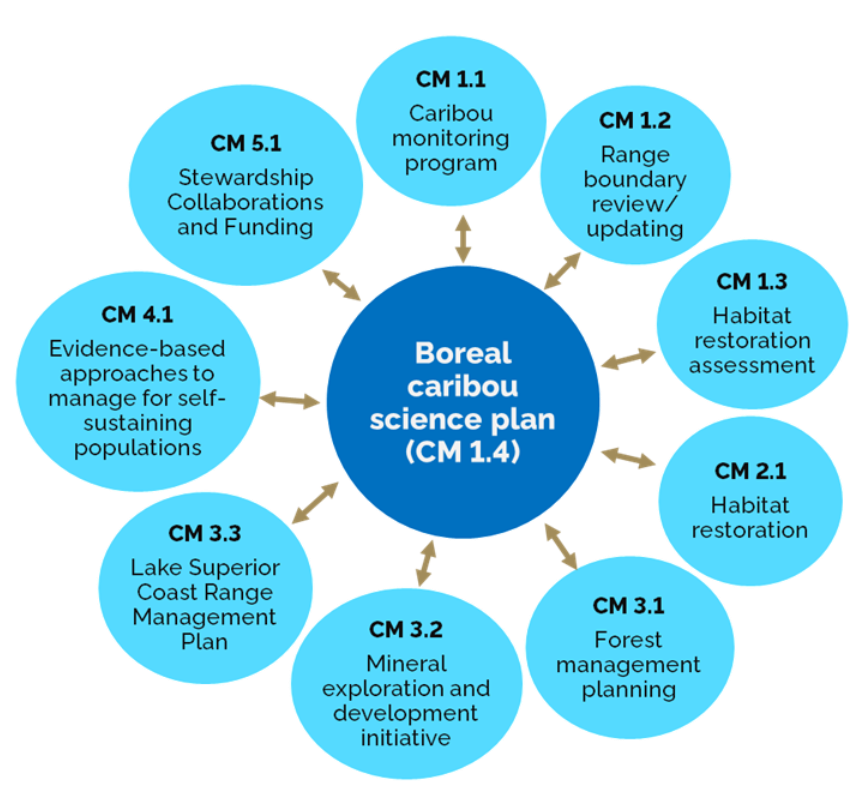
Figure 1: This diagram shows that the CCA Boreal caribou science plan is linked to 9 conservation measures:
- 1.1 Caribou monitoring program
- 1.2 Range boundary review and updating
- 1.3 Habitat restoration assessment
- 2.1 Habitat restoration
- 3.1 Forest management planning
- 3.2 Mineral exploration and development initiative
- 3.3 Lake Superior Coast Range Management Plan
- 4.1 Evidence-based approach to manage for self-sustaining populations
- 5.1 Stewardship Collaborations and Funding
Context
Development Process
The development of the BCKP was led by the Ministry of Natural Resources (MNR) and MECP. The process for developing the BCKP included a knowledge review and several virtual and in-person workshops with follow-up surveys to identify knowledge gaps and needs and establish priorities for knowledge-gathering activities.
First, a review was conducted on the state of Boreal Caribou knowledge in Ontario. This review included the assessment of what has been learned about Boreal Caribou in Ontario over the last 15 years and identification of major knowledge gaps since Ontario’s Caribou Conservation Plan was finalized in 2009. The review included scientific literature and Indigenous perspectives. Questions identified and summarized from the review of scientific literature and Indigenous perspectives were categorized into topics that were used to guide subsequent presentations of results, discussions during virtual and in-person workshops, and follow-up surveys.
In July 2023, Ontario held virtual engagement sessions in preparation for upcoming in-person workshops. The virtual engagement sessions included participants from Indigenous communities and organizations (First Nations and Métis) and stakeholders (for example, municipalities, academics, consultants, industry and non-governmental organizations). An additional virtual session was held for government staff. The purpose of the sessions was to describe the purpose of the BCKP, provide highlights from research and other efforts already underway to identify knowledge gaps, provide an opportunity for participants to indicate whether and how they want to be involved in the development and implementation of the BCKP, and provide an opportunity for participants to share their interests and concerns. A survey was later distributed to all invitees to gather further information on priority areas of interest, especially from those who were not able to attend the virtual sessions.
In October 2023, in-person workshops were held with First Nations and Métis communities and stakeholders. The workshops were facilitated by an independent contractor. The list of invitees was the same as that of the virtual engagement sessions. The workshops involved a series of presentations on past and current caribou projects and state of knowledge, followed by discussion periods in which participants engaged in more focused discussions of caribou knowledge gaps and priorities. These discussions were organized around the topics identified in the review of scientific literature and Indigenous perspectives. Following this, a second virtual workshop was held for internal Ontario government staff, with participation from MNR, MECP, the Ministry of Mines (MINES) and the Ministry of Indigenous Affairs and First Nation Economic Reconciliation (IAFNER). The facilitator prepared summary reports for the First Nation, Métis and stakeholder sessions and the reports were distributed to all workshop invitees.
There were 149 suggested research actions identified through the knowledge review, workshops, follow-up surveys, and online submissions. To enable a meaningful discussion and prioritization, they were grouped into 51 consolidated research actions (CRAs). Over a two-day period in December 2023, an internal Ontario government team comprised of representatives from MECP, MNR, and MINES met in Thunder Bay to prioritize the CRAs. The priorities were refined over the next several months, culminating in the priorities identified in this BCKP.
State of Knowledge
Scientific Literature Review
The depth of science-based knowledge regarding Boreal Caribou in Ontario and across Canada has grown substantially over the last 15 years, due primarily to provincial and federal support for major monitoring, research and stewardship efforts, which have been led by government, academic researchers and non-governmental organizations, as well as local communities. While knowledge of Boreal Caribou ecology has improved, there are several key knowledge gaps.
What we have learned:
- Movement patterns and genetic evidence indicate that Boreal Caribou in Ontario are continuously distributed and relatively well-connected, except for an isolated population along the Lake Superior Coast.
- Ground lichens dominate Boreal Caribou diets (particularly in fall and winter).
- Boreal Caribou generally select mature conifer-dominated forests and peatlands, but avoid deciduous and mixed wood stands, recent regenerating disturbances and linear features.
- The probability that a Boreal Caribou population will persist is influenced by the amount of cumulative disturbance from natural as well as anthropogenic sources, such as forestry, mining, roads and transmission lines. As cumulative disturbance increases on the landscape, the likelihood of a caribou population persisting decreases.
- Disturbance-related increases in moose density and consequently, predator densities (for example, wolves) have served as the major cause of Boreal Caribou population declines (via "apparent competition") and these impacts can be exacerbated by predator use of linear features (for example, roads, utility lines, corridors), which can improve predation efficiency and increase prey encounter rates.
- Efforts to reduce the effects of landscape disturbance on Boreal Caribou include integrating caribou-related considerations into forest harvesting practices and restoring disturbed areas.
- Evaluations of alternative forest harvesting strategies indicate that including Boreal Caribou objectives can improve caribou habitat outcomes. Additionally, landscape management approaches that limit road density can reduce caribou mortality rates.
- Some silvicultural and linear feature decommissioning treatments have been successful at restoring caribou habitat and/or reducing predator use of linear features, but many evaluations have only documented short-term effectiveness.
- More invasive wildlife management approaches have been applied to improve caribou population status in other jurisdictions, with most examples coming from Western Canada and Québec — including predator and alternate prey management, maternal pens, predator-free enclosures, supplemental feeding and caribou translocations. These resource-intensive management actions typically require continual effort (for example, until a range becomes capable of supporting self-sustaining caribou populations) and may not be applicable in Ontario’s contiguous Boreal Caribou range context.
Key knowledge gaps
Some of the most critical areas of uncertainty, from a conservation and management perspective, are as follows:
- Current range conditions — including population and habitat state.
- Patterns of population structure and sub-structure, as well as current distribution, occupancy patterns and recovery potential, especially near the southern edge of the southern contiguous caribou ranges.
- The ecological mechanisms that influence caribou population status in northern ranges that are dominated by natural disturbance (in other words, wildfires), including predator and alternate prey behaviour and dynamics.
- The relative influence of predation (for example, by black bears, wolves) and other factors on caribou calf recruitment rates.
- Short and long-term behavioural and population responses of caribou to specific anthropogenic landscape disturbances — particularly those that are not forestry-related (for example, mineral exploration, mine construction, development and production disturbances, utility lines).
- Short-to-longer-term effectiveness of linear feature decommissioning and restoration techniques (for example, forestry roads, mineral exploration cutlines) — for mitigating the effects on behaviour and population responses of caribou, moose and wolves.
- The effects of industry-based sensory disturbance (for example, from vehicle traffic, road construction, drilling) on caribou behaviour and vital rates, as well as the relative effectiveness of sensory disturbance mitigation techniques.
- Potential climate change-related impacts: effects on predator and prey communities, effects of melting permafrost on caribou habitat selection and movement patterns, potential increases in disease incidence and parasite loads.
- The socio-economic effects of different caribou-related policies and management strategies — for example, thresholds for undisturbed habitat, alternative range boundary options.
Indigenous perspectives
First Nations, Métis and Inuit knowledge is often not well-documented in formal publications, and thus a formal review and synthesis of Indigenous Knowledge of Boreal Caribou could not be undertaken in the same way that a review of the scientific literature was. However, there are documents that include information on caribou-related interests, values and concerns expressed by Indigenous communities (primarily First Nations) in Ontario, including Community-based Land Use Plans, Workshop reports (regional, national), summaries of feedback from CCA Indigenous Engagement sessions and Species at Risk Stewardship Fund applications. A review of these documents identified several common themes.
- Interests in the long-term protection of habitat for both caribou and moose and in monitoring changes in habitat suitability, movement patterns and population status (in other words, knowing which caribou populations are declining).
- Interests in knowing more about rates of caribou harvest in different Indigenous communities.
- Interests in collaborating on Boreal Caribou conservation and monitoring efforts.
- Identification of the need for resources that support Indigenous-led conservation and stewardship activities and the potential role these initiatives can play in strengthening relationships within and between communities.
- Interests in celebrating examples of successful caribou conservation and management efforts.
- Concerns about cumulative effects of different development and resource extraction activities on caribou, their predators and alternate prey species (for example, moose), along with interests in achieving a balance between conserving caribou and other species and maintaining economic opportunities.
- Mixed support for further caribou-related research activities — some identified the need for more research and knowledge-gathering activities (for example, to build knowledge, improve existing policies), while others felt existing research is sufficient and limited conservation resources could be better spent elsewhere.
- Boreal Caribou-related interests, concerns and values varied across communities and regions; however, in general, there was a stronger interest in Boreal Caribou habitat protection and population declines around northern ranges, while concerns about the potential impacts of caribou-related policies on other species and activities were generally stronger in southern contiguous ranges.
Related Initiatives — CM 4.1 Evidence Based Approaches — Science Assessment Report
Conservation Measure 4.1 of the CCA commits Ontario and Canada to collaborate to review and refine existing and alternative evidence-based approaches to maintain or move towards self-sustaining local caribou populations within ranges and to validate, including through review by recognized experts, and integrate accepted evidence-based approaches, into provincial and federal Boreal Caribou conservation frameworks, that achieve equivalent outcomes (in other words, self-sustaining local populations) where appropriate.
As part of implementing CM 4.1, an Expert Group was convened by Ontario and Canada composed of individuals with scientific expertise related to caribou and caribou management in Ontario, including individuals employed by the provincial and federal governments, academia, non-governmental organizations, and industry. The mandate of the Expert Group was to aim to answer the following questions in regard to the federal and provincial Boreal Caribou conservation frameworks separately:
- Whether the framework is scientifically sound and supported by evidence; whether there are any information/knowledge gaps
- What the likelihood is that the framework will achieve self-sustaining local populations of Boreal Caribou in Ontario
The Expert Group submitted its final report to Ontario and Canada on February 12, 2024. This Science Assessment Report was then published on May 16, 2024. The observations and recommendations of the Expert Group were taken into consideration in developing the BCKP. More information about the Expert Group is available.
Boreal Caribou Knowledge Plan
Purpose
The purpose of the BCKP is to further enhance the knowledge-based foundation of Boreal Caribou conservation decision-making at a provincial and range-scale.
The BCKP provides strategic direction for future Boreal Caribou-related research in Ontario.
Principles
- Collaboration – the BCKP should be implemented in cooperation with Indigenous communities and organizations, academia, federal and municipal governments, non-government organizations, industry and other stakeholders.
- Relevance – the activities under the BCKP should be relevant to the current and future needs of those undertaking Boreal Caribou conservation. They should effectively and efficiently deliver on the key priorities of the CCA.
- Transparency – the activities under the BCKP should be conducted in an open manner and the results should be easily accessible.
- Responsiveness – the BCKP should be updated to anticipate, respond and adapt to new and evolving realities and priorities.
Priorities
The following are the priorities of the BCKP:
- Incorporating local and traditional knowledge in caribou management decisions
- Assessing caribou population and habitat state, including at the range-level
- Monitoring of population state, population trend and habitat state.
- Assessing cumulative disturbance effects.
- Refining caribou ecotype distinction, including to support understanding of population structure.
- Generating information to support undertaking range boundary review, including related to climate change.
- Evaluating disturbance impacts on caribou behaviour, including:
- Sensitivity and response to sensory disturbance.
- Use of calving and nursery areas.
- Ecological mechanisms in the Far North that may impact functional habitat use.
- Abandonment and re-occupancy of areas disturbed by forest fires and forest management.
- Evaluating effectiveness of methodologies to mitigate impacts and restore habitat, including in relation to:
- Linear features, including predator/prey relationships.
- Strategic direction guiding forest management.
- Mineral exploration and mine development.
Implementation and next steps
Implementation of the BCKP will be overseen by the Director of the Science and Research Branch, MNR and the Director, Caribou Conservation, MECP the Director of the Species at Risk Branch, MECP, and through collaboration with the Director of the Strategic Services Branch at MINES and the Director of the Indigenous Relations Branch at IAFNER.
These Directors will:
- Develop, approve and update a detailed operational Implementation Plan including actions, accountabilities, responsibilities, cost information and timelines.
- Prepare an annual progress report.
Appendix C: Caribou conservation activities underway in the Lake Superior Coast Range
Slate Islands, Michipicoten Island and Caribou Island
Monitoring the status of Boreal Caribou and its habitat.
- Biigtigong Nishnaabeg is monitoring for caribou presence and assessing population status in the areas that are within Biigtigong Nishnaabeg’s Aboriginal Title Area (2024–2026) to better understand Boreal Caribou and the threats they face. This work is supported by the CCSP.
- Michipicoten First Nation deployed 60 wildlife cameras on Michipicoten Island and Caribou Island in the fall of 2024, to increase the understanding of Boreal Caribou in the area. Camera deployment sites were selected with intent to sample multiple habitat types, and the 60 cameras were spread out between both islands. This work is supported by the CCSP and Environment and Climate Change Canada (ECCC).
- Trent University is completing genetic analysis on several Boreal Caribou Ranges, including the LSCR (2024–2027) to enhance the availability of genetic information on Boreal Caribou and the rigour of its collection. This work is supported by the CCSP.
- Ontario Parks is completing population estimates on the Slate Islands via trail cameras to better understand the population status. The camera cards were collected from Fall 2022 to 2024 and estimates were analyzed.
- An ESA permit holder conducted a Range-wide aerial survey in February 2025, including the Slate Islands and Michipicoten; and additional Range-wide aerial surveys will be conducted in Winter 2027 and Winter 2029, pending suitable environmental conditions.
- An ESA permit holder will undertake three research projects that focus on the current genetics, pathogens, microbiomes and diet and of the populations on the Slate Islands and Caribou Island involving pellet collection which commenced in Winter 2025.
Maintaining Boreal Caribou habitat
- Lakehead University is conducting research to improve knowledge of historical habitat changes and their impacts on Boreal Caribou on the Slate Islands and to develop habitat management recommendations relevant to the LSCR. Activities completed in 2024–2025 include a literature review of caribou population density ranges on the Slate Islands, the creation of a forest cover map, and planning to create a series of cover change maps using Landsat imagery. This work is supported by the CCSP.
- Michipicoten First Nation is completing aerial surveys for habitat mapping on the islands to assess habitat features including species diversity, cover, abundance, vegetation and land composition through 2025–2026. They will use this information to identify ideal potential habitat and create a mapping database (2026). This work is supported by the CCSP.
Monitoring for predators on Michipicoten and Slate Islands
- Biigtigong Nishnaabeg First Nation is monitoring ice conditions and predator presence via aerial surveys on the islands (2023–2026). This work is supported by the CCSP.
- Ontario Parks assessed the presence of predators via trail cameras, monitoring for ice bridges, and using aerial surveys.
Mainland
Monitoring the status of Boreal Caribou and its habitat
- Ontario Parks deployed four trail cameras in Neys Provincial Park and six trail cameras in Pic Island in 2023 to monitor for caribou presence. No caribou observations were recorded in 2024–2025, however cameras will stay active until the end of their life cycle.
- Parks Canada has deployed 45 trail cameras within Pukaskwa National Park’s management area which monitor for caribou presence, ongoing since 2010.
- Michipicoten First Nation deployed 60 wildlife cameras on Michipicoten Island and Caribou Island in the fall of 2024, to increase the understanding of Boreal Caribou in the area. Camera deployment sites were selected with intent to sample multiple habitat types, and the 60 cameras were spread out between both islands. This work is supported by the CCSP.
- An ESA permit holder conducted a Range-wide aerial survey in Winter 2025, including the Slate Islands and Michipicoten; and additional Range-wide winter surveys will be conducted in Winter 2027 and Winter 2029, pending suitable environmental conditions.
- An ESA permit holder installed trail cameras in the LSCR between Terrace Bay and Marathon from 2020 to 2027 to monitor for the presence of caribou.
- An ESA permit holder conducted a winter aerial survey over the LSCR mainland between the western boundary of the Lake Superior Coast Range and the mouth of the Pic River in 2020 and will do so again in 2025 and 2030, to monitor for impacts on caribou from the East-West Transmission Line Project.
Assessing where there is habitat that is suitable to support Boreal Caribou and where habitat could be restored
- Michipicoten First Nation is completing aerial surveys for habitat mapping on the mainland to assess habitat features including species diversity, cover, abundance, vegetation and land composition through 2025–2026. They will use this information to identify ideal potential habitat and create a mapping database (2026). This work is supported by the CCSP.
- Biigtigong Nishnaabeg First Nation completed a habitat assessment through a desktop analysis in 2024-25, to identify potential areas for habitat restoration and reintroduction locations. This work is supported by the CCSP.
- Parks Canada is monitoring the distribution of predators via trail cameras and alternative prey via aerial surveys, related to suitable ecological conditions for caribou persistence, in Pukaskwa National Park, ongoing since 2015.
- Parks Canada has mapped suitable caribou habitat within Pukaskwa National Park’s management area according to habitat requirements outlined in the federal Recovery Strategy for Boreal Caribou, boreal shield central region in 2024 and will compare these results to a habitat selection model using historical occurrence data by 2026.