

Pathways to Safety: progress highlights
Learn about Indigenous-led initiatives that are helping address the root causes of violence against Indigenous women and girls.
Overview
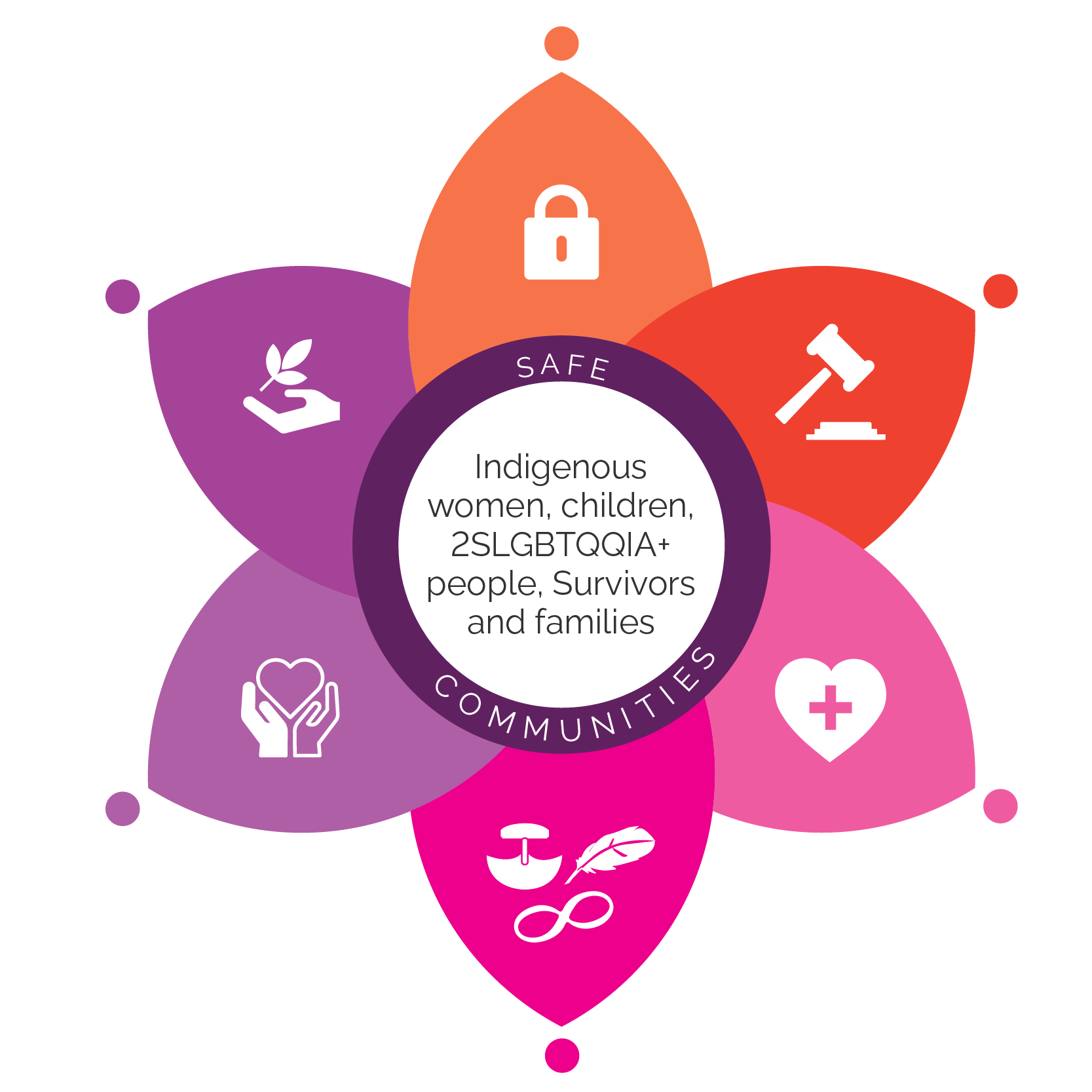
Pathways to Safety is our strategy in response to the Final Report of the National Inquiry into Missing and Murdered Indigenous Women and Girls. We focus on structural change across 6 key areas of action:
- the pathway to safety and security
- the pathway to justice
- the pathway to health and well-being
- the pathway to culture
- the pathway to addressing anti-Indigenous racism
- the pathway to responsibility and accountability
 Pathway to safety and security
Investing in resources and programs that promote safety, healing and wellness for Indigenous women and girls.
Indigenous Institutes Campus Safety Grant
The Ministry of Colleges, Universities, Research Excellence and Security invested $1.35 million from 2023-24 to 2025-26 ($450,000 annually) in the Indigenous Institutes Campus Safety Grant. This is part of the government’s ongoing commitment to supporting sexual violence prevention, building awareness of Missing and Murdered Indigenous Women and Girls and campus safety efforts on campuses.
Indigenous Institutes used this investment to:
- support safety programs and the implementation of findings from safety audits
- increase public awareness of sexual and gender-based violence
- provide information on campus supports available for students
- increase access to safety-related training and wellbeing resources on campus
Anti-Human Trafficking Indigenous-Led Initiatives Fund
The Anti-Human Trafficking Indigenous-Led Initiatives Fund continues to deliver Indigenous-led and designed services and supports to:
- Indigenous survivors of human trafficking
- Indigenous children and youth who have been sexually exploited
Programs are offered in 14 communities across Ontario.
- 5,000+
More than 5,000 Indigenous survivors of human trafficking or women at risk of trafficking have been connected to critical supports through Indigenous-Led Initiatives Fund service providers since 2020.
 Pathway to justice
Collaborating with Indigenous communities as we transform the justice, policing and child welfare systems.
Nishnawbe Aski Police Service
In December 2024, we signed a historic funding agreement with the Nishnawbe Aski Police Service Board, which is responsible for governing the largest First Nations police service in Canada, the Nishnawbe Aski Police Service.
This $341 million agreement is supporting the Nishnawbe Aski Police Service in continuing to provide culturally appropriate policing services, under the framework of provincial legislation that will ensure adequate and effective policing service standards for remote and Northern communities.
Culturally responsive support for victims and survivors of gender-based violence
The government is investing over $5.4 million annually through the Missing and Murdered Indigenous Women and Girls Fund to enhance responses to sexual assault, intimate partner violence and human trafficking, while assisting victims and their families.
This funding supports dedicated investigative resources within First Nation police services for abuse or gender-based violence.
These capacity-building efforts have led to measurable improvements:
- Between 2021-22 and 2024-25, the Missing and Murdered Indigenous Women and Girls Fund supported specialized, victim-centered policing on over 6,600 calls for service
- At least eight First Nation police services have hired social navigators (or equivalent) who help victims and at-risk individuals connect with the supports and services they need
- 87+
First Nation police services have built at least 87 partnerships with community organizations to advance culturally responsive and trauma-informed services and supports.
 Pathway to health and well-being
Improving access, promoting safety and increasing culturally grounded services across Ontario.
Family Well-Being program
The Family Well-Being program provides Indigenous-led, prevention-focused culturally responsive supports to help individuals, families and communities heal from the effects of intergenerational trauma and violence, and improve their health and well-being.
The program is delivered at over 200 sites across the province. Community-based programming and supports include:
- traditional land-based teachings and ceremonies
- trauma-informed counselling
- addictions support
- safe spaces
- coordination of services
Kenora CARE Unit
Renewed in 2025, the Anti-Human Trafficking Strategy strengthens Ontario’s efforts to protect vulnerable children and youth, including through the launch of the Children at Risk of Exploitation (CARE) Unit in Kenora. The CARE unit works to increase trauma‐informed and specialized supports in the region for children and youth who have been sex trafficked or are at risk of being trafficked.
The Kenora CARE Unit is led by Anishinaabe Abinoojii Family Services and Kenora-Rainy River Districts Child & Family Services, in collaboration with the Kenora Detachment of the Ontario Provincial Police (OPP) and the OPP’s Anti-Human Trafficking team assigned to the area.
Building Food Sovereignty and Food Security initiative
The Building Food Sovereignty and Food Security initiative supports Indigenous communities across Ontario to support traditional food systems.
Through community-led, land-based food initiatives, participating communities can:
- expand access to affordable, culturally appropriate and nutritious food
- strengthen traditional knowledge, agricultural skills and local food networks
- $4.36 million
We’re investing $4.36 million (2023–2025) to support Indigenous-led food initiatives that increase access to affordable, culturally appropriate and nutritious food. In 2024–2025, 15 First Nations groups across the province received funding for food security and sovereignty projects.
Indigenous Healing & Wellness Strategy
The Indigenous Healing & Wellness Strategy (IHWS) is a comprehensive, Indigenous-led strategy to reduce violence against Indigenous women and children and improve Indigenous health, healing and wellness through culturally responsive programs.
In 2024–2025, we invested:
- over $121 million through the IHWS to support 17 Indigenous-led programs at more than 250 sites across the province
- over $25 million in annual funding for IHWS program enhancements, including:
- increases to the Community Wellness Worker and Indigenous Healthy Babies Healthy Children programs
- expansions of the Health Outreach Worker program in urban Indigenous communities
 Pathway to culture
Focusing on Indigenous-led approaches to education, training, employment and language revitalization.
Youth Cultural Camps
The Youth Cultural Camps program empowers Indigenous youth and young adults to become future leaders in their communities.
Through hands-on, land-based activities, participants can:
- deepen their understanding of traditional knowledge and Indigenous languages
- build leadership skills in culturally grounded environments
Supporting the safety, well-being and success of Indigenous 2SLGBTQQIA+ youth
We funded the Ontario Native Women’s Association (ONWA) and Ganohkwasra Family Assault Support Services to strengthen the safety, well-being and success of Indigenous 2SLGBTQQIA+ youth.
This Indigenous-led initiative offers:
- mentorship, leadership and educational resources for Indigenous 2SLGBTQQIA+ youth, to support self-esteem, acceptance, and academic success
- competency training and resources for educators, parents, caregivers, and foster parents regarding Indigenous 2SLGBTQQIA+ identifies, with a focus on the barriers to safety for these Indigenous youth
Participants have reported:
- an increase in their understanding and awareness of traditional teachings
- improved cultural connectedness
 Pathway to identifying and addressing anti-Indigenous racism
Developing an Indigenous-led, gender-based approach to strengthen the safety and security of Indigenous women and girls.
Indigenous Cultural Safety training program
Indigenous Cultural Safety training program helps improve health care experiences and outcomes for Indigenous people across the province.
Ontario provides funding for many Indigenous-led organizations to design and deliver Indigenous Cultural Safety training that is tailored, trauma-informed and responsive to Indigenous communities.
This training helps create safer, more accessible health care environments for Indigenous clients by building cultural awareness and understanding.
- 27,000+
More than 27,000 people will receive
training between 2023 and 2026.
Indigenous Cultural Competency Training and trauma-informed education sessions
We invested $408,300 into the Ontario Federation of Indigenous Friendship Centres in 2024–2025 to deliver Indigenous Cultural Competency Training and trauma-informed education sessions.
These sessions support Indigenous students and families in Ontario’s public education system by providing leaders, educators and school staff with tools to implement trauma-informed practices. More than 508 people have participated in the sessions.
 Pathway to responsibility and accountability
Collaborating with Indigenous partners to strengthen accountability and deliver positive outcomes.
Support for Indian Residential School Burial Investigations
The Support for Indian Residential School (IRS) Burial Investigations program supports Indigenous-led, Survivor-focused efforts to identify, investigate, protect and commemorate burials and unmarked graves at former Indian Residential School sites across Ontario.
We committed $32.1 million in funding for 2025–2026, including:
- up to $17.1 million to support Indigenous communities conducting planned and ongoing burial investigations
- up to $15 million to support mental health, addictions and trauma impacts arising from this work
We’re committed to continue supporting meaningful reconciliation with Indigenous peoples in the search for missing ancestors who never made it home from Residential School.
Since 2021, we have invested up to $144 million to support Indigenous-led processes guided by the wishes of Survivors, affected families, Indigenous Elders, leaders and communities to:
- conduct IRS burial investigations, including community engagement and communication supports for Indigenous communities, Survivors and their families involved in the ongoing work
- provide culturally appropriate, trauma-informed mental health supports for Survivors, families and members of Indigenous communities impacted by burial investigations
- increase public education and awareness about the history and legacy of the residential school system, including the challenges of denialism