


Rabies in Ontario
Ontario’s Wildlife Rabies Program works to control and eliminate raccoon and fox variant rabies in Ontario (except in the Far North where rabies is endemic – common and widespread). Our approach has been so effective that other jurisdictions — such as, New York, West Virginia, Québec, New Brunswick — have adopted similar strategies.
This work not only protects people, pets, livestock and wildlife, but also saves Ontario millions of dollars in:
- reduced post-exposure treatments
- rabies testing
- livestock compensation
Learn more about the rabies variants found in Ontario.
While we have made significant progress towards our goal of eliminating raccoon and fox rabies variants from Southern Ontario, we need to remain vigilant. Rabies can move to new areas of the province:
- through the natural movement of wildlife
- when animals are moved to new areas intentionally or unintentionally
Areas of concern include:
- Niagara Region, Southwestern and Eastern Ontario due to the ongoing risk of raccoon rabies from across the U.S. border
- Northern Ontario due to the ongoing risk of Arctic fox rabies variant from the Far North
We will continue testing wildlife that exhibited strange behaviour or signs of illness, from anywhere in the province because of the ongoing risk from translocation. Given these ongoing risks, we will continue to monitor for, and work to prevent, the spread of terrestrial rabies in Ontario. Surveillance helps us ensure that:
- rabies hasn't moved into new areas of the province
- we are targeting prevention and control efforts in the right areas
Learn more about rabies in wildlife.
Raccoon rabies
The latest outbreak of raccoon variant rabies started in 2015 when an animal was inadvertently moved to Ontario from over 500 kilometres away. This was the first time raccoon rabies had been detected in Ontario in over a decade.
There have been no cases of raccoon variant rabies detected in Ontario since 2023. However, cases of raccoon variant rabies have been circulating in the Northeastern United States close to the border of Eastern Ontario and it re-entered Southern Quebec in 2024.
Arctic fox rabies
Arctic fox variant rabies is widespread across Arctic and sub-Arctic habitats in Canada, but thanks to rabies control operations it has been successfully eliminated from Southern Ontario. This is a landmark achievement that protects public safety and animal health. No cases have been detected since 2018.
In 2025, 5 cases were found near the James and Hudson Bay coasts, where this variant is common and widespread. While this appears to represent an increase in cases from previous years, this may be a result of limited testing. Rabies surveillance in the North is very limited due to:
- the small, dispersed human population
- low wildlife population densities
- limited to no veterinary or animal services in many communities
- logistical challenges with obtaining and transporting samples
Broadscale oral vaccines bait distribution across the Far North is not feasible for several reasons, including:
- habitat type
- the large home-ranges and long-distance movements of Arctic and red foxes
- cold weather conditions which can cause the liquid vaccine to freeze
In response to these cases, we continue to work with partners to protect human and animal health by providing guidance and support to communities and increasing surveillance in the Far North and Northern Ontario.
Bat rabies
Bats rabies variants persists at low levels across Ontario. Although the overall percentage of rabid bats is low, any bat you encounter should be considered rabid unless the bat is captured and tests negative for rabies.
The ministry does not track bat rabies cases because management actions (such as vaccination) aren't possible. The Canadian Food Inspection Agency (CFIA) is the lead for tracking rabies cases, including bats.
Find information on rabies cases in Canada, including bats, on the Canadian Food Inspection Agency (CFIA) website.
Learn more about rabies in wildlife.
Annual cases of terrestrial rabies in Ontario
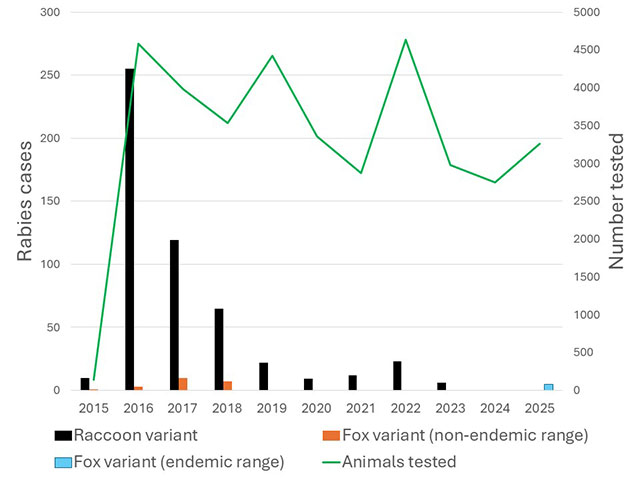
Graph of the annual number of raccoon and fox rabies variant cases detected and number of animals tested by the ministry in Ontario from 2015-2025. The trend shows a 100% decline in cases since 2016 (black), despite similar numbers of animals tested annually (green).
Find a complete listing of rabies cases including variant and affected species.
Ontario rabies surveillance map
To request a copy of the our Wildlife Rabies Control Program annual report please contact the Wildlife Research and Monitoring Section.
How we control rabies
We have been working to control and eliminate terrestrial rabies (raccoon and fox variants) in Southern Ontario since the 1980s.
Every year throughout the summer and fall, we:
- distribute oral rabies vaccine baits (PDF) by hand, bait station, helicopter and airplane preventatively along the U.S. border and in response to any new cases detected outside of endemic areas in Ontario
- conduct Trap-Vaccinate-Release of wildlife in high-risk areas
- test dead, sick, and strange acting wildlife
- conduct research to help improve the effectiveness of rabies control operations
Find out about our 2026 rabies control operations.
Ontario’s Wildlife Rabies Program is a joint effort. Our partners include:
- other provincial ministries
- federal agencies
- regional public health units
- municipalities
- wildlife custodians, veterinarians, licensed wildlife trappers and wildlife control agents
- Indigenous communities and organizations
Oral rabies vaccine baits
The ONRAB oral vaccine bait was developed in Ontario. It underwent a significant safety review before it was licensed for use in wildlife in 2013.
ONRAB is effective for both fox and raccoon variant rabies control. Animals are immunized against rabies about two weeks after they chew the rabies vaccine bait.
We distribute ONRAB oral vaccine baits:
- by hand
- using bait stations
- by helicopter in green spaces in urban areas, such as parks and ravines
- from yellow airplanes in rural agricultural and forested areas
Baits are distributed:
- in a 50 km area around all positive cases detected over the previous two years
- along the border with New York State where the raccoon rabies strain is common
Baits are not distributed near schools, playgrounds, or in yards with toys where children are likely to be present.
Exposure to the bait is not harmful to people or pets. However, in the unlikely event that people or pets come in contact with the vaccine contained in the bait, contact a doctor or veterinarian as a precaution.
In Ontario, rabies vaccine baits can only be distributed by ministry staff. If you are in an area where rabies cases have recently occurred or in a preventative baiting area, annual baiting will occur in your area in the summer or fall.
Find out where and when rabies baiting occurs.
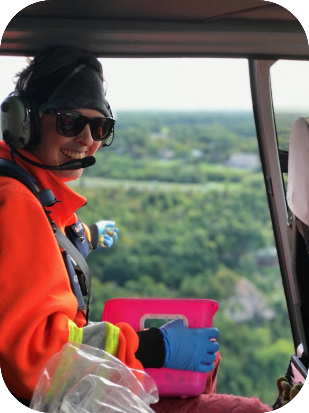
Distributing rabies vaccine baits from a helicopter
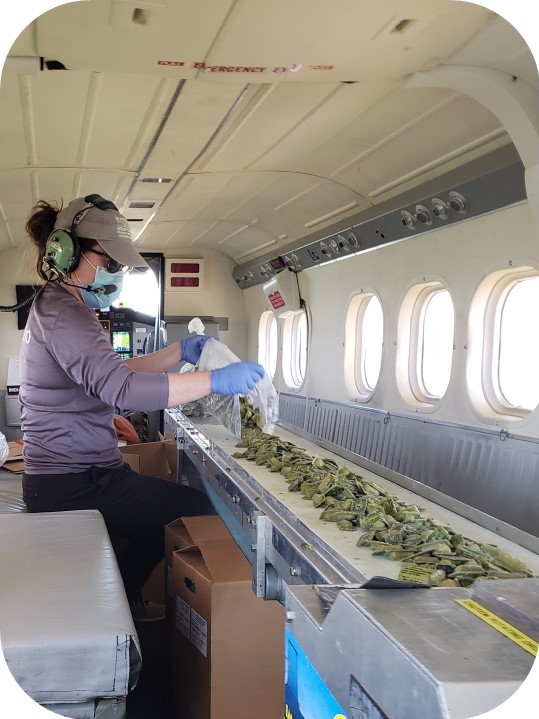
Distributing rabies vaccine baits from a twin otter aircraft
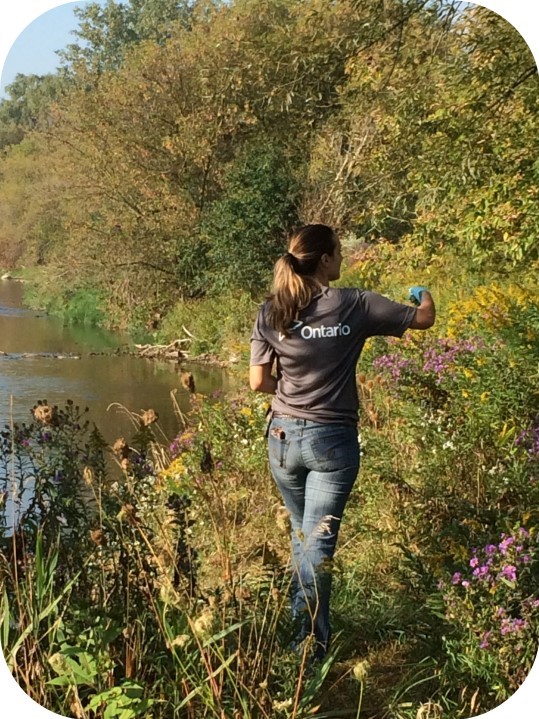
Distributing rabies vaccine baits by hand
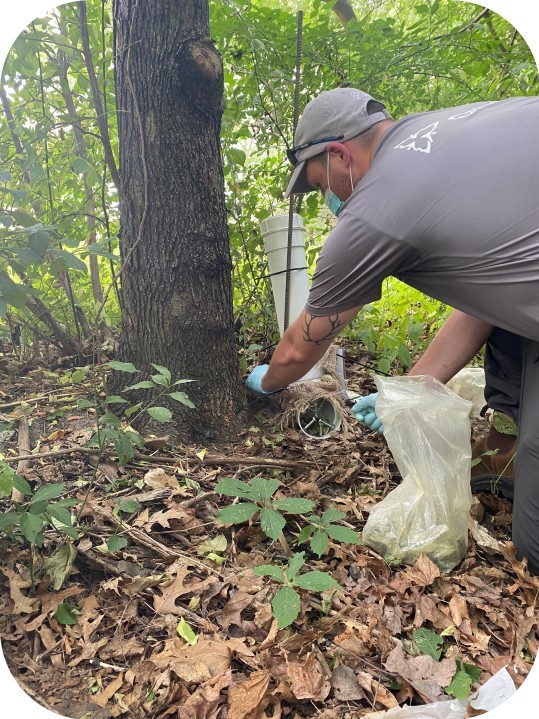
Refilling bait stations
Descriptive transcript: How does Ontario distribute the rabies vaccine baits
Rabies vaccine bait identification
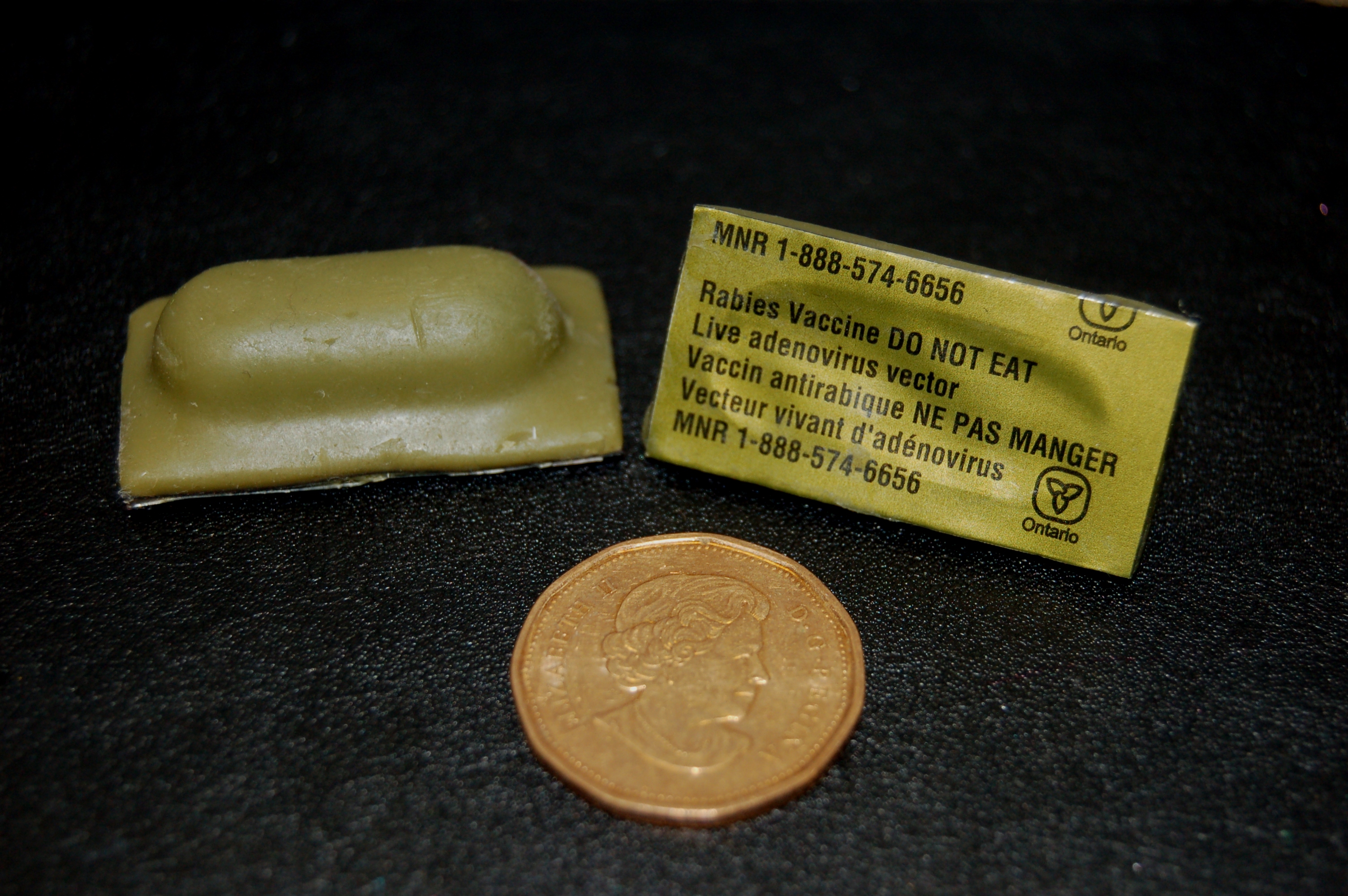
ONRAB baits are made of a small blister pack. The pack contains the oral vaccine which is coated in a bait formula. This formula consists of:
- vegetable based fats
- wax
- icing sugar
- vegetable oil
- artificial marshmallow flavour
- dark-green food grade fat-soluble dye
Download Rabies vaccine bait information (PDF)
Baits and wildlife
Raccoons, skunks and foxes have been known to eat more than one bait.
Before we distribute baits, we consider the home ranges of skunks, foxes and raccoons to decrease the chance that a single animal will encounter a large number of baits.
Even if an animal is already vaccinated or eats a bait more than once, it is not harmful.
Most baits are eaten by wildlife within a couple of days. Baits that are not found and eaten will dissolve and expose the vaccine. Sunlight and exposure to air inactivates the vaccine.
Baits and domestic animals
Wildlife vaccine baits are not meant for humans, livestock or pets.
The effectiveness of the oral vaccine baits has not been tested on domestic animals. However, they have been tested to ensure they are safe if they are accidentally eaten by domestic animals.
To make sure your pet is properly vaccinated, your pet must be vaccinated by a licensed veterinarian. The rabies vaccine that your veterinarian provides has been tested and is effective in vaccinating domestic animals against rabies.
If your livestock or pet eats a bait packet, they may get an upset stomach but there is no need to worry. In very rare cases, it could be a risk to immunocompromised individuals or those with severe allergies including pets, livestock and/or humans.
If they eat more than one, call your veterinarian as a precaution.
Descriptive transcript: What to do if my pet accidentally eats a bait
Contact:
Wildlife Research and Monitoring Section
rabies@ontario.ca
If you find a bait
If you find a bait packet in an area where it shouldn’t be (such as your yard):
- do not open it
- place a plastic bag over your hand to keep your scent off the bait
- move it to an area where wildlife may find it (such as a forested area)
Trap-Vaccinate-Release of wildlife
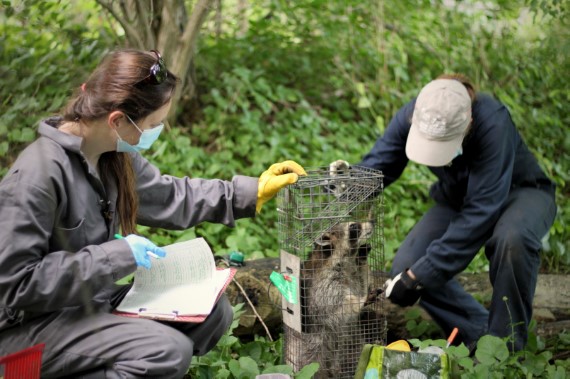
We vaccinate raccoons, skunks, and foxes by hand with injectable rabies vaccine in high-risk areas through the Trap-Vaccinate-Release program. This program is one of the most effective ways to vaccinate urban wildlife.
Animals are captured and vaccinated against rabies with an intramuscular injection, like the one used to vaccinate pets. We also give each animal an ear-tag with a unique identification number to identify it as vaccinated if the animal is re-captured.
After they are vaccinated, we release the animals where we captured them. These animals will then defend their home territory against other potentially unvaccinated animals, which helps prevent the spread of rabies.
Vaccination areas
With cooperation from the public, municipalities and various organizations, we get permission to set live traps on private and public land.
The program targets strategic areas where rabies cases are ongoing. Our goal is to create a buffer of vaccinated animals in urban areas to prevent the spread of rabies and help keep wildlife, people and pets safe.
Find out where and when we vaccinate urban wildlife.
Surveillance
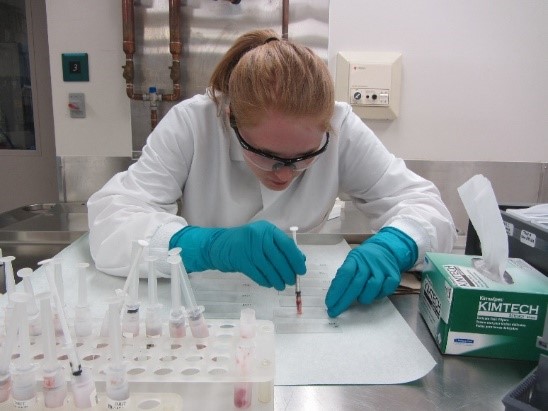
We work with partners to conduct surveillance for terrestrial rabies across Ontario by testing:
- rabies vector species such as raccoons, skunks and foxes and sometimes other mammals
- dead wildlife that are found dead, are roadkill or showed signs of disease or strange behaviour consistent with rabies
We test the brain tissue of these animals using an indirect immunohistochemical test (iRIT) or or quantitative Polymerase Chain Reaction (qPCR). All inconclusive and positive samples are sent to CFIA for confirmation through fluorescent antibody test (FAT).
We do not test:
- cases of human or domestic animal contact with wildlife
- bats
Visit the reporting section to find out who to call if you suspect a wild animal may have rabies.
Surveillance testing helps us:
- detect cases of rabies
- direct rabies control efforts to where cases are occurring
- evaluate the effectiveness of the rabies control program
2026 Rabies prevention operations
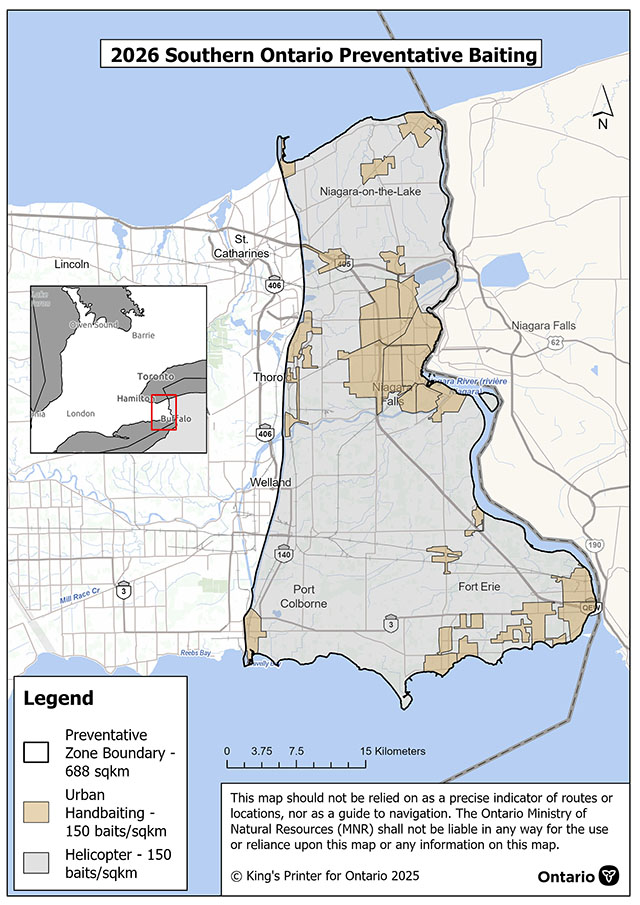
Map of planned 2026 rabies prevention operations in Southern Ontario
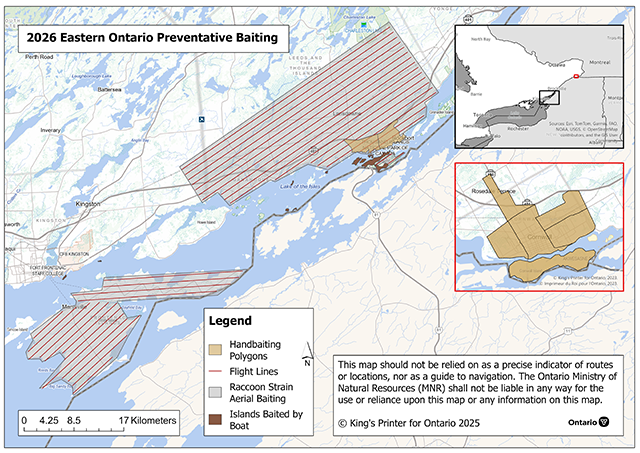
Map of planned 2026 rabies prevention operations in Eastern Ontario
2026 Summer and fall schedule
| By | Where | When |
|---|---|---|
| Hand baiting | Southern Ontario: Urban areas in the Niagara Region | July to mid-September |
| Helicopter baiting | Southern Ontario: Green spaces within urban areas in the Niagara Region | Mid-late August |
| Twin Otter aircraft | Eastern Ontario: St. Lawrence in Frontenac, Leeds & Grenville and Stormont, Dundas & Glengarry counties | Early August |
| Twin Otter aircraft | Southern Ontario: in the Niagara Region | Mid-late August |
For more information on this program, call the Wildlife Health Information Line at