

FASD coordination services tiered service model
FASD Coordinators support families/support networks and local cross-sector partners by providing advice, facilitating access to existing government-funded services and informing those services of FASD-informed approaches and the individual child/youth’s unique strengths and needs.
FASD Coordinators are expected to:
- Provide service navigation and coordination for children/youth and their family/support network;
- Build awareness and understanding of FASD and capacity to support children/youth living with FASD through knowledge mobilization among local cross-sector partners and families/support networks; and
- Apply FASD-informed, child- and family-centred, strengths-based, trauma-informed, and culturally responsive approaches to service coordination.
FASD Coordinators do not provide direct services such as therapy, clinical supports, or respite.
FASD Coordination Services are delivered through a tiered service model that allows families/support networks to access the level of support they need.
Each tier outlined below represents a different set of supports designed to address varying levels of need among children/youth, as well as their family/support network and communities.
FASD tiered service model
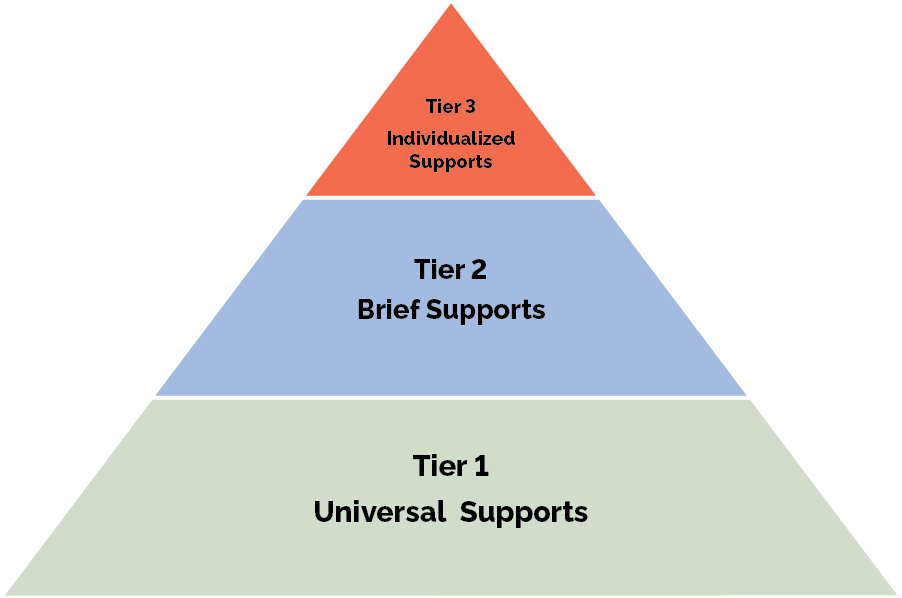
Tier 1 universal supports
FASD Coordinators provide general information, educational resources, training, and group-based consultations on FASD to children/youth, family/support networks, and local cross-sector partners.
Tier 1 expectations
- Build community awareness of FASD through knowledge mobilization (e.g., developing and distributing educational materials developed by experts, researchers, or individuals with lived experience).
- Deliver group-based consultations that provide an opportunity for children/youth and their family/support network to:
- Learn from other individuals with lived experience;
- Discuss common challenges or goals (e.g., accessing specific services available in the community such as summer camps, respite, mental health services etc.);
- Share effective strategies; and
- Support one another and strengthen their capacity.
Tier 2 brief supports
FASD Coordinators provide time-limited, 1:1 consultation with children/youth and their families/support networks to support the achievement of specific and/or short-term service coordination goals. Developing an FASD Service Plan is optional. Examples of specific and/or short-term service coordination goals may include supporting a child/youth and their family/support network in obtaining an FASD diagnosis or helping their educator better understand FASD and how to support the child/youth in the classroom.
Tier 2 expectations
- Use FASD-informed approaches to strengthen the capacity of families/support networks, educators, and health and community service providers to support children/youth in achieving specific and/or short-term service coordination goals.
- Use FASD-informed approaches to strengthen the capacity of children/youth to achieve specific and/or short-term service coordination goals.
- Provide 1:1 consultations to answer questions, provide guidance on navigating available resources, and offer to connect individuals with peer supports.
- Coordinate services, including referrals to respite services, occupational therapy, speech and language therapy, physiotherapy, behavioural consultants, and other existing community-based services that may be available.
- Support children/youth and families/support networks in obtaining an FASD diagnosis, if requested.
Tier 3 individualized supports
FASD Coordinators work with families/support networks to develop and maintain an individualized FASD Service Plan. Service coordination is supported through ongoing 1:1 meetings with FASD Coordinators, the family/support network, and local cross-sector partners, as needed.
Tier 3 expectations
- Develop an individualized FASD Service Plan with the child/youth and their family/support network that addresses their unique service coordination needs and goals.
- Coordinate services, including referrals to respite services, occupational therapy, speech and language therapy, physiotherapy, behavioural consultants, and other existing community-based services that may be available.
- Use FASD-informed approaches to strengthen the capacity of families/support networks, educators, and other service providers supporting the child to support children/youth in achieving the goals outlined in the FASD Service Plan.
- Use FASD-informed approaches to strengthen the capacity of children/youth to achieve the goals outlined in the FASD Service Plan.
- Monitor the child/youth and family/support network’s FASD Service Plan, connect families/support networks with locally available services, and support them in obtaining an FASD diagnosis, if requested.
As the needs of the child/youth evolve, the FASD Coordinator can work with the child/youth and their family/support network to move them between tiers to help ensure they receive the most appropriate level of support.
Coordinated Service Planning for children/youth with multiple and/or complex special needs
Children/youth who are or may be living with FASD but have multiple and/or complex needs (e.g., multiple diagnoses and complex behaviours) and require more intensive, dedicated coordination across sectors and service monitoring than FASD Coordination can provide may be referred to CSP services. When CSP begins, the child/youth is fully transitioned onto a Coordinated Service Plan (instead of a FASD Service Plan) and the CSP Service Planning Coordinator becomes the primary service provider responsible for service coordination, communication with the family/support network, performance measurement/reporting, and maintaining the child/youth’s service plan. The FASD Coordinator may stay involved a member of the child’s service provider team, providing FASD-related information and expertise to inform the Coordinated Service Plan.